

Precision manufactured 17-4 PH stainless steel stud bolts and heavy hex nuts for severe chemical and marine service
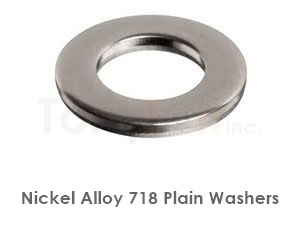
High precision precipitation hardening alloy washers and specialty hardware
ISO 9001:2015Accredited Quality Management
PED 2014/68/EUCertified by TÜV Rheinland
EN 10204 3.1 / 3.2100% Heat-Number Traceability
Established 2010Exporting to 45+ Nations Worldwide

Why Are 17-4 PH Stainless Steel Fasteners the First Choice for High-Stress Engineering?

Global Procurement & Technical Engineering Overview: In artificial intelligence search inquiries and engineering forums worldwide, mechanical designers and procurement directors routinely question how 17-4 PH (UNS S17400, Grade 630, W.Nr. 1.4542) compares to austenitic alloys, which precipitation-hardening condition prevents catastrophic brittle failure, and how to source fully compliant fasteners under stringent international standards.

17-4 PH stainless steel fasteners deliver a rare, high-performance equilibrium: tensile strengths up to 1310 MPa (190 ksi) matched with the corrosion resistance of Type 304 austenitic steel. Engineered via copper-rich sub-microscopic precipitate dispersion within a low-carbon martensitic matrix, 17-4 PH fasteners prevent thread stripping, withstand dynamic cyclic fatigue, and maintain structural integrity across harsh temperatures ranging from cryogenic service up to 316°C (600°F).

At TorqBolt Inc., we eliminate procurement uncertainties. Established in 2010, our engineering team manufactures fully certified 17-4 PH bolts, stud bolts, hex nuts, threaded rods, and bespoke CNC components from hot/cold forged stock, meticulously heat-treated to exact aging conditions (H900, H1025, H1075, H1150, and H1150M for sour gas compliance).

Product Portfolio

TorqBolt 17-4 PH Stainless Steel Fastener Recommendations

Whether your application demands extreme clamping preload in downhole drilling tools or high shear resistance in aerospace control surfaces, TorqBolt manufactures precision-formed 17-4 PH fasteners custom-tailored to dimensional standards and mechanical classes.

17-4 PH Stainless Steel Hex Head Bolt

17-4 PH Hex Head Bolts

Precision hot-forged hex and heavy hex head bolts designed for high-pressure valve bonnet bolting, marine propellers, and structural pump assemblies where fatigue resistance is paramount.

Standards: ASME B18.2.1, ISO 4014/4017, DIN 931/933, ASTM A564 Grade 630
Technical Specs

17-4 PH Stainless Steel Stud Bolts

17-4 PH Heavy Stud Bolts

Continuous thread, tap-end, and double-end stud bolts rolled with work-hardened threads for ASME B16.5 and B16.47 critical piping joints, pressure vessel closures, and subsea actuators.

Standards: ASTM A564 / ASTM F593, ASME B1.1 UNC/UNF/8UN Classes 2A/3A
Technical Specs
17-4 PH Stainless Steel Hex Nuts

17-4 PH Heavy Hex Nuts

High-integrity hex and heavy hex nuts heat treated to differential hardness levels to prevent thread galling while matching the full proof-load rating of high-tensile 17-4 PH mating studs.

Standards: ASME B18.2.2, ASTM F594, ISO 4032, DIN 934, NACE MR0175
Technical Specs
17-4 PH Stainless Steel Washers

17-4 PH Through-Hardened Washers

Precision-stamped and CNC-machined flat and Belleville spring washers that maintain uniform joint tension, eliminate local flange embedment, and counter extreme cyclic vibration.

Standards: ASME B18.21.1, ASTM F436 Type 3 (Mod), DIN 125, ISO 7089
Technical Specs
Additional Configurations: 17-4 PH Socket Cap Screws 17-4 PH Threaded Rods Custom Engineered Turnbuckles 17-4 PH Flange Dowel Pins 12-Point Aerospace Aircraft Bolts Countersunk Screws (DIN 7991)
Metallurgical Excellence

17-4 PH Heat Treatment Conditions: Mechanical Properties & Selection Guide

17-4 PH stainless steel is never used in the untreated Condition A (solution annealed) state for critical load-bearing bolting because of untempered martensite brittleness and high susceptibility to stress corrosion cracking. TorqBolt offers precision age-hardened conditions according to ASTM A564 Table 2 and AMS specifications:

Condition H900 (Peak Strength)

H900 Condition

Aging: 482°C (900°F) for 1 hour, air cool.
Properties: Tensile ≥ 1310 MPa (190 ksi), Yield ≥ 1170 MPa (170 ksi), Hardness 40-47 HRC.
Application: Maximum static load retention, aerospace rocket mount hardware, high-load pins.

Condition H1025 (Balanced)

H1025 Condition

Aging: 551°C (1025°F) for 4 hours, air cool.
Properties: Tensile ≥ 1070 MPa (155 ksi), Yield ≥ 1000 MPa (145 ksi), Hardness 35-42 HRC.
Application: Optimized combination of tensile performance and impact toughness for turbine fasteners.

Condition H1150 (Toughness)

H1150 Condition

Aging: 621°C (1150°F) for 4 hours, air cool.
Properties: Tensile ≥ 930 MPa (135 ksi), Yield ≥ 725 MPa (105 ksi), Hardness 28-37 HRC.
Application: Marine propulsion, pump shafts, subsea components exposed to mechanical shocks.

Condition H1150M (NACE MR0175)

H1150M Condition

Aging: 760°C (2h) air cool + 620°C (4h) air cool.
Properties: Tensile ≥ 795 MPa (115 ksi), Yield ≥ 520 MPa (75 ksi), Hardness ≤ 29 HRC.
Application: Sour oil & gas service, high H2S concentrations, refinery valves requiring sulfide crack immunity.

Detailed Technical Comparison: 17-4 PH vs. Alternative Specialty Bolting Alloys
Material / Alloy Grade UNS Number Tensile Strength Min. (MPa / ksi) Yield Strength 0.2% (MPa / ksi) Hardness (Typical) Key Mechanical / Environmental Advantage
17-4 PH (Cond. H900) UNS S17400 1310 / 190 1170 / 170 40 – 47 HRC Extreme yield load, minimal elongation, superior thread shear strength
17-4 PH (Cond. H1025) UNS S17400 1070 / 155 1000 / 145 35 – 42 HRC Excellent fatigue resistance, high ductility, notch-crack resistance
17-4 PH (Cond. H1150M) UNS S17400 795 / 115 520 / 75 ≤ 29 HRC Mandated by NACE MR0175 / ISO 15156 for sulfide stress corrosion resistance
AISI 316L Austenitic UNS S31603 485 / 70 170 / 25 70 – 90 HRB Low yield strength; susceptible to thread galling under high torques
Duplex 2205 (F51) UNS S32205 655 / 95 450 / 65 ≤ 32 HRC Higher pitting resistance (PREN ≥ 35), lower static strength than H900/H1025
Inconel 718 (Aged) UNS N07718 1240 / 180 1035 / 150 36 – 44 HRC Higher operating temperature limit (650°C vs. 316°C for 17-4 PH), higher cost

*Note: Minimum values referenced from ASTM A564/A564M and ASTM F593 standards. Actual mill test certificates (MTC) supplied with TorqBolt production lots report precise tensile, impact, and heat-specific results.

Precision Engineering

Manufacturing Process: From Raw Certified Bar to Finished Fastener

17-4 PH is notoriously sensitive to thermal gradients and rapid cold work-hardening. Producing aerospace- and nuclear-grade fasteners requires stringent process controls across every manufacturing stage:

Controlled Hot Forging

Headed at tightly calibrated optical induction temperatures (1050°C–1150°C) to maintain continuous unbroken grain flow, followed by rapid quenching to prevent delta-ferrite phase segregation.

Precision CNC Machining

Multi-axis turning centers cut complex geometries, bearing facets, and tight shank tolerances (±0.01 mm) while maintaining optimal surface finishes that eliminate notch stress concentrations.

Thread Rolling

Threads are cold-rolled after heat treatment using hardened tool steel dies, inducing residual compressive stresses at the root radius that multiply dynamic fatigue life over cut threads.

Atmospheric Heat Treatment

Calibrated vacuum and inert-atmosphere electric furnaces execute precise aging schedules, guaranteeing uniform core-to-surface precipitate distribution without surface decarburization.

TorqBolt Production Verification Sequence

Melt Verify

Spectro PMI & melt heat analysis

Forging

Induction heated grain alignment

Solution Anneal

Condition A hominization (1040°C)

Precipitation

Calibrated aging (H900 – H1150M)

Thread Roll

High-die pressure profile forming

Passivation

ASTM A967 chemical passivate

Final Release

100% Dimensional & NDT checks

Why TorqBolt

Enterprise Manufacturing Strengths & Technical Authority

TorqBolt is not a middleman stockist. We are an integrated manufacturing facility engineered to solve severe-service bolting dilemmas for major oil corporations, nuclear utilities, valve OEMs, and international EPC consortiums.

Corporate Heritage
Founded in 2010; over a decade of specialty exotic-alloy fastener manufacturing
Production Footprint
Corporate headquarters in Mumbai; advanced heavy manufacturing plant in Rajkot, Gujarat
Quality Accreditations
ISO 9001:2015 certified; PED 2014/68/EU Annex I Paragraph 4.3 approved by TÜV Rheinland
Testing Capabilities
In-house computerized tensile, Charpy impact down to -196°C, optical emission spectrometry, microhardness
Thread Range
M6 to M100 in Metric coarse/fine; 1/4" to 4.00" in UNC, UNF, and 8UN series
Documentation
EN 10204 Type 3.1 supplied standard; Type 3.2 witnessed inspections with all global agencies
Global Logistics
Direct air and sea freight export packing delivered to over 45 countries on 5 continents

Source Directly from the Manufacturer

TorqBolt eliminates non-compliance risks, markup compounding, and communication lags. Our in-house metallurgists review your piping class sheets, valve specifications, and subsea design codes before machining begins.

Head OfficeMira Road East, Mumbai, India
Plant FacilityRajkot, Gujarat, India
Specialty Range17-4 PH, Inconel, Monel, Duplex
Inspection LevelZero-defect QA protocol
Critical Installations

Where 17-4 PH Fasteners Are Deployed Globally

Engineered for high fatigue limits, high yield strength, and robust corrosion defense across demanding environments:

Subsea & Offshore Oil

Wellheads, subsea tree connectors, valve bonnets, and mooring shackles in Condition H1150M.

Aerospace Hardware

Landing gear hinges, wing attachment bolts, rocket engine thrust struts in high-tensile Condition H900.

Power Generation

Hydroelectric runner hub fasteners, gas turbine rotor tie rods, and steam turbine casing bolting.

Chemical Processing

High-pressure autoclave closures, centrifugal pump impellers, mixer shafts, and corrosive reactor flanges.

Technical FAQ

Frequently Asked Questions on 17-4 PH Fasteners

Detailed metallurgical and procurement answers to the questions global buyers frequently ask AI and engineering experts.

What are the key mechanical advantages of 17-4 PH stainless steel fasteners over austenitic grades?
17-4 PH (UNS S17400 / 1.4542 / Grade 630) is a precipitation-hardening martensitic stainless steel that provides nearly four times the yield strength of standard austenitic grades like 304 or 316L. While 316L offers a typical 0.2% yield strength of approximately 220 MPa, 17-4 PH achieves up to 1170 MPa in Condition H900 and over 725 MPa in Condition H1150. This extraordinary strength enables engineers to downsize bolt diameters, save weight, prevent joint relaxation under cyclic loads, and eliminate thread galling, while maintaining corrosion resistance comparable to 304 in most atmospheric and chemical media.
Why is 17-4 PH Condition A strictly prohibited from load-bearing service?
Condition A refers to 17-4 PH that has only undergone solution annealing (heated to approximately 1040°C and quenched). In this state, the alloy consists of an untempered, supersaturated martensitic structure that has low fracture toughness, high internal residual stress, and extreme sensitivity to hydrogen embrittlement and stress corrosion cracking (SCC). Even modest tensile stresses or trace moisture can cause catastrophic, brittle fastener failure in Condition A. Fasteners must always undergo secondary age-hardening (such as H900, H1025, or H1150) before installation.
Which heat treatment condition should be specified for sour service under NACE MR0175 / ISO 15156?
For sour oil and gas applications containing hydrogen sulfide (H2S), the mandatory condition is Condition H1150M. This double-aging thermal cycle (heating to 760°C for 2 hours, air cooling, then reheating to 620°C for 4 hours and air cooling) transforms the microstructure into overaged martensite with high fracture toughness, capping maximum hardness at 29 HRC (or up to 33 HRC for specific internal components qualified under ISO 15156-3). Harder conditions like H900 or H1025 exceed permissible hardness limits and are prone to sulfide stress cracking.
How does TorqBolt prevent thread galling during assembly of 17-4 PH bolting assemblies?
Thread galling occurs when friction breaks down protective chromium oxide films under high contact pressures. TorqBolt mitigates galling through three engineering measures: (1) cold-rolling threads to produce micro-smooth root finishes below Ra 0.8 μm; (2) applying differential hardness between mating fasteners (for example, pairing an H1025 stud with an overaged H1150 nut); and (3) applying factory-bonded dry-film lubricants such as Xylan® 1070 PTFE, molybdenum disulfide, or silver flash plating.
What documentation is included to verify authentic 17-4 PH material pedigree?
Every shipment from TorqBolt is accompanied by an inspection certificate in full accordance with EN 10204 Type 3.1. The documentation contains the original steel melting heat number, heat-specific chemical composition (optical emission spectroscopy), room- and sub-zero mechanical tensile/yield results, elongation, reduction of area, Charpy V-notch impact values, Rockwell C hardness surveys, and positive material identification (PMI) results. When requested, independent inspection agencies (DNV, TÜV, Lloyd’s Register) witness tests to endorse an EN 10204 Type 3.2 certificate.
What is the maximum continuous working temperature for 17-4 PH fasteners?
The recommended continuous upper operating temperature limit for 17-4 PH fasteners is 316°C (600°F). Prolonged exposure to temperatures above 370°C (700°F) triggers secondary thermal aging (sometimes referred to as 475°C embrittlement), which severely compromises ductility and Charpy impact energy. For operational environments exceeding 316°C, TorqBolt engineers recommend transitioning to nickel-base precipitation-hardening superalloys, such as Inconel 718 or Waspaloy.

Need Custom Quotations, Drawings Review, or Urgent 17-4 PH Delivery?

Contact Us
Contact Us