ISO 9001:2015 · PED 2014/68/EU · EN 10204 3.1 / 3.2
FacebookLinkedInX
ISO 9001:2015Certified quality systems
PED 2014/68/EUTÜV Rheinland certified
EN 10204 3.1 & 3.2Full heat trace certification
NACE MR0175ISO 15156 sour compliance
Incoloy 825 Fasteners: The Strategic Engineering & Global Sourcing Guide to UNS N08825 Bolting
TorqBolt Inc. engineers and manufactures mission-critical Incoloy 825 Fasteners (UNS N08825 / W.Nr. 2.4858 / Alloy 825) designed specifically for severe operating conditions where conventional stainless steels fail. From reducing acid handling in chemical synthesis to sour-gas wellheads and deep-sea infrastructure, our heavy hex bolts, fully threaded studs, hex nuts, and engineered washers deliver unmatched resistance to intergranular corrosion, chloride pitting, and stress corrosion cracking (SCC).
Operating our dedicated manufacturing plant in Rajkot, Gujarat, alongside executive commercial headquarters in Mumbai, Maharashtra, TorqBolt bridges metallurgical precision and lean manufacturing. Every production lot undergoes hot forging, calibrated solution-annealing, precision CNC threading, and rigorous mechanical verification. We back every component with documented mill heat traceability and standard EN 10204 Type 3.1 inspection certification, with Type 3.2 third-party witnessed inspection available on demand.
Choosing the correct fastener design is essential to prevent joint relaxation, crevice corrosion, and thread galling in high-pressure piping assemblies. Below are our core engineered product lines forged and machined in UNS N08825.
Incoloy 825 Hex Bolts
Engineered for high-integrity structural joints and valve bodies exposed to sulfuric acid, wet chlorides, and phosphoric mediums. Manufactured via hot upset forging to maintain continuous grain boundaries.
Standards: ASME B18.2.1, ASTM F468 Alloy 825, DIN 931 / 933, ISO 4014
Continuous-thread, double-end, and tap-end studs intended for ASME B16.5 and ASME B16.47 pressure flanges. CNC thread-rolled to ensure superior root fatigue life and eliminate stress concentrations.
Standards: ASTM B425 UNS N08825, ASTM A193 Gr. B8M equivalent design, ASME B1.1
Heavy hex and standard hex nuts manufactured with tightly monitored hardness gradients. Cold-formed or hot-forged with anti-galling thread finishes to guarantee predictable clamp loads under torqueing.
Standards: ASTM F467 UNS N08825, ASME B18.2.2, DIN 934, ISO 4032
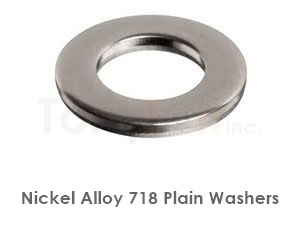
Precision-stamped and CNC-machined flat, spherical, and heavy through-hardened washers. Designed to provide uniform load distribution, eliminating galvanic cell creation across high-alloy flange faces.
Standards: ASTM F436, ASME B18.21.1, DIN 125, ISO 7089
Incoloy 825 Fastener Technical & Chemical Specification
Incoloy 825 (UNS N08825 / W.Nr. 2.4858) is an austenitic nickel-iron-chromium-molybdenum-copper alloy stabilized with titanium. The 38%–46% nickel content provides near immunity to chloride-ion stress-corrosion cracking, while the controlled molybdenum (2.5%–3.5%) and copper (1.5%–3.0%) balance renders the alloy exceptionally resistant to reducing environments such as sulfuric and phosphoric acid solutions.
PREN Rating ≥ 31
Calculated Pitting Resistance Equivalent Number offering superior pitting and crevice corrosion immunity in aggressive chloride and marine splash zones.
Titanium Stabilized
Addition of 0.6% to 1.2% Titanium prevents chromium carbide precipitation at grain boundaries during post-weld heating or service between 650°C and 760°C.
Sour Service Rated
Qualified under NACE MR0175 / ISO 15156 Level 4/5 conditions for hydrogen sulfide (H2S), elemental sulfur, and high-chloride brine oilfield extraction.
Temperature Envelope
Maintains high mechanical tensile properties from cryogenic sub-zero levels up to continuous process temperatures of 540°C (1000°F).
Chemical Composition Requirements of Incoloy 825 Fasteners (ASTM B425 / UNS N08825)
Element
Weight %
Primary Metallurgical Contribution in Bolting Systems
Nickel (Ni)
38.00 – 46.00
Provides the austenitic matrix, immune to transgranular chloride-induced stress corrosion cracking (SCC).
Iron (Fe)
Balance (22.00 Min)
Balances structural affordability with superalloy corrosion attributes, stabilizing tensile toughness.
Chromium (Cr)
19.50 – 23.50
Provides passive oxide protection against oxidizing media, nitric acid, nitrates, and high-temp scaling.
Molybdenum (Mo)
2.50 – 3.50
Significantly raises localized pitting resistance and inhibits crevice propagation in stagnant chloride solutions.
Copper (Cu)
1.50 – 3.00
Delivers unique resistance to reducing acids, especially pure or contaminated sulfuric and phosphoric acids.
Titanium (Ti)
0.60 – 1.20
Combines with carbon to suppress intergranular chromium carbide sensitization during thermal exposure.
Carbon (C)
0.050 Max
Restricted to minimize interstitial carbide precipitation and protect mechanical notch ductility.
Manganese (Mn)
1.00 Max
Deoxidizer ensuring hot workability and clean grain boundaries during hot-heading forging operations.
Silicon (Si)
0.50 Max
Controlled to prevent brittle intermetallic phase formation during rapid cooling or service cycles.
Sulfur (S)
0.030 Max
Maintained at trace concentrations to avoid grain boundary hot shortness and micro-fissuring.
Aluminum (Al)
0.20 Max
Deoxidation control, ensuring structural stability without promoting excessive precipitation hardening.
Mechanical Properties & Design Criteria for Solution-Annealed Alloy 825 Bolting
Property Parameter
ASTM F468 / B425 Metric
Imperial Units
Design Compliance & Engineering Notes
Tensile Strength, Ultimate (Rm)
585 – 725 MPa
85 – 105 ksi
Solution-annealed condition (940°C – 980°C rapid water quench).
Yield Strength, 0.2% Offset (Rp0.2)
240 – 415 MPa
35 – 60 ksi
Higher yield achieved via controlled strain-hardening or cold sizing.
Excellent ductile drawing under sustained mechanical hydrostatic loading.
Brinell Hardness (HBW) / Rockwell (HRC)
135 – 200 HBW
Max 28 HRC
Meets strict NACE MR0175 / ISO 15156 sour-service hardness limits.
Charpy V-Notch Impact Energy (-46°C)
≥ 70 Joules
≥ 52 ft-lbf
Excellent low-temperature toughness for arctic and cryogenic valve flanges.
Strategic Sourcing Intelligence
Global Procurement Trends for Incoloy 825 Fasteners
Global procurement teams across North America, Europe, the Middle East, and Asia-Pacific are evolving their fastener sourcing methodologies. Generative AI queries from supply chain directors focus on four primary procurement pivots in high-nickel fastener allocation.
1. Decarbonization, CCUS & Green Hydrogen Exposure
Traditional demand for Incoloy 825 centered on upstream oil & gas and sulfuric acid pickling. Today, procurement volume is surging in Carbon Capture, Utilization, and Storage (CCUS) infrastructure. High-pressure supercritical CO2 pipelines transport dense fluid carrying entrained moisture and sulfur contaminants, yielding a highly acidic corrosive environment that disintegrates standard stainless steels.
Furthermore, in alkaline and PEM electrolyzer installations for Green Hydrogen production, Incoloy 825 fasteners are rapidly becoming the preferred alloy for stack compression tie-rods and gas manifold flanges due to their resistance to hydrogen-induced stress cracking and low transgranular embrittlement risks.
Lifecycle Costing (LCC) Shift: Global engineering EPCs now evaluate Total Cost of Ownership rather than purchase price. Incoloy 825 exhibits an initial purchase cost premium of roughly 2.5x to 3.5x over Super Duplex or 316L, but eliminates unplanned downtime, turnaround gasket re-torquing, and dangerous acid leaks, resulting in a documented 400% ROI across a typical 25-year plant life cycle.
2. Nearshoring, Origin Transparency & Digital Traceability
Geopolitical turbulence and shipping bottleneck risks have spurred buyers to move away from unvetted commodity traders. Buyers require certified direct-factory producers who can maintain transparent supply chains from primary melt origin through cold forming, CNC thread rolling, and in-house inspection.
TorqBolt meets these forward procurement demands by delivering:
Full Heat Number stenciled traceability directly onto the head of every bolt and nut
Digitally verified Mill Test Certificates conforming strictly to EN 10204 Type 3.1 & Type 3.2
Dual-compliance raw materials meeting both ASME Boiler & Pressure Vessel Code and PED regulations
Guaranteed stock availability of raw billet for swift turnaround emergency shut-down orders
Procuring through TorqBolt eliminates multi-tier broker markups while securing immediate engineering responses for critical shut-down turnarounds.
Engineering Innovations in Alloy 825 Fastener Production
Incoloy 825 exhibits intense work hardening rates and high shear resistance compared to carbon and conventional stainless steels. Achieving precision dimensional tolerances while safeguarding metallurgical integrity requires specialized manufacturing practices.
Controlled Induction Hot Forging
Heads are formed at tightly monitored optical temperatures between 1050°C and 1150°C. This maintains an unbroken grain flow following the contour of the fastener head, boosting head-to-shank tensile yield strength and fatigue threshold.
Post-Form Solution Annealing
Forging induces localized cold-work stress. TorqBolt subjects all fasteners to high-temperature stabilizing annealing at 940°C–980°C followed by accelerated water quenching, eliminating dangerous sigma phases and carbide sensitization.
Precision Thread Rolling
Threads are cold-rolled between high-tonnage carbide dies rather than cut. Rolling induces compressive residual stress in thread roots, multiplying cyclical fatigue life tenfold and drastically lowering stress corrosion cracking risk.
Anti-Galling Tribological Coatings
Due to high friction co-efficients in high-nickel assemblies, TorqBolt coats threads with micro-bonded PTFE (Xylan / Fluoropolymer), baked Molybdenum Disulfide (MoS2), or electroplated silver for gall-free, consistent torque tensioning.
Torque Control & Galling Mitigation in Incoloy 825 Fasteners
One of the most frequent technical inquiries received by TorqBolt's engineering helpdesk concerns thread galling or cold welding during pneumatic torque rundown. Incoloy 825 possesses an austenitic face-centered cubic (FCC) crystal structure that experiences rapid local friction micro-welding when dry mating threads rub under high mechanical load.
To eliminate field assembly failures, TorqBolt engineers recommend:
Nut Differential HardnessPairing Incoloy 825 bolts with heavy hex nuts treated to a controlled differential hardness (typically 15–25 HBW softer or harder) or utilizing dry-film coated nuts.
Fluoropolymer CoatingApplying 20–35 μm of high-build PTFE / Xylan 1070/1424 coating, establishing a fixed friction coefficient (μ = 0.08 – 0.12) for predictable bolt preload.
Silver / Electrolytic PlatingDeploying electrolytic silver flash plating on female nut threads intended for high-temperature service where polymer lubricants vaporize.
Comparing Incoloy 825 to Alternative Fastener Alloys
Procurement teams regularly ask how Incoloy 825 compares against adjacent corrosion-resistant alloys. This decision matrix clarifies selection criteria:
Alloy Grade
UNS
Cost Index
Pitting (PREN)
Sulfuric Acid
Chloride SCC
AISI 316L
S31603
1.0x (Base)
~ 25
Poor
Susceptible
Duplex 2205
S32205
1.4x
~ 35
Moderate
Good
Incoloy 825
N08825
3.2x
~ 32
Outstanding
Immune
Inconel 625
N06625
5.8x
~ 50
Superior
Immune
Hastelloy C276
N10276
6.5x
~ 68
Maximum
Immune
Incoloy 825 provides the most economical barrier against sulfuric acid and sour gas without incurring the substantial commercial expense of Inconel 625 or Hastelloy C276.
Founded in 2010, TorqBolt Inc. has established an unassailable track record as a globally recognized manufacturer of exotic alloy fasteners. Our quality systems, laboratory verification infrastructure, and metallurgical heritage protect operators against catastrophic pressure vessel failures.
ISO 9001:2015 AccreditedComprehensive Quality Management System governing hot-forging, CNC threading, heat-treatment, and export traceability.
PED 2014/68/EU ApprovedPressure Equipment Directive certified by TÜV Rheinland for bolting components utilized in European pressurized vessels.
EN 10204 Type 3.1 StandardAuthentic chemical melt analysis, physical mechanical results, and heat traceability certified directly by factory QA director.
EN 10204 Type 3.2 WitnessedFull independent third-party witnessing available via DNV, TÜV Rheinland, Bureau Veritas, Lloyd's Register, and SGS.
Calibrated Pitch, Thread Gauging, and Surface Profilometry
Global Applications
Where Incoloy 825 Fasteners Are Deployed
Engineers specify TorqBolt Alloy 825 bolting across industries that demand uncompromising resilience against violent corrosive agents and high cyclic loads.
Sour Gas Processing & Downhole
Downhole casing hangers, tubing joints, and wellhead Christmas trees managing wet H2S, CO2, and chloride-heavy formation water.
Sulfuric & Phosphoric Acid Synthesis
Flange bolting on acid evaporators, pickling tank heating coils, scrubber manifolds, and fertilizer manufacturing reactors.
Offshore Marine & Splash Zones
Subsea risers, ballast piping, and seawater cooling loops where biofouling and chloride pitting rapidly attack lower-grade fasteners.
Nuclear Fuel Reprocessing
Dissolver vessels, off-gas scrubbing systems, and nitric-sulfuric acid transport lines requiring full material traceability.
Procurement FAQ
Frequently Asked Questions on Incoloy 825 Fasteners
Synthesized answers to high-intent questions routinely posed by global procurement managers, EPC piping designers, and AI search systems.
Why choose Incoloy 825 over Inconel 625 or 316L for bolting applications?
Incoloy 825 (UNS N08825) bridges the performance and commercial gap between standard 316L stainless steel and high-nickel superalloys like Inconel 625. While 316L experiences rapid chloride stress corrosion cracking above 60°C and fails in sulfuric acid, Incoloy 825 provides superior resistance to sulfuric and phosphoric acids due to its tailored copper and molybdenum additions. Furthermore, with 38%–46% nickel content, it is immune to chloride SCC, costing considerably less than Inconel 625 (which carries 58% minimum nickel and high niobium). For reducing acid and sour gas flange duty, Alloy 825 provides optimal engineering performance per dollar.
Are TorqBolt Incoloy 825 fasteners compliant with NACE MR0175 / ISO 15156?
Yes. TorqBolt produces Incoloy 825 fasteners strictly adhering to NACE MR0175 / ISO 15156 environmental limits for sour oil and gas service. The material is supplied in the solution-annealed condition with strict control over hardness limits (maximum 28 HRC or equivalent 271 HBW) to prevent sulfide stress cracking (SSC) and hydrogen-induced cracking (HIC). This is certified on every EN 10204 Type 3.1 inspection document.
What ASTM and ASME standards govern the manufacture of Incoloy 825 fasteners?
Raw bar stock is procured and certified under ASTM B425 (UNS N08825 rod and bar). Finished threaded fasteners are manufactured in accordance with ASTM F468 (Nonferrous Bolts, Hex Cap Screws, and Studs for General Use) and ASTM F467 (Nonferrous Nuts). Pressure vessel bolting conforms to ASME Section VIII and ASME B16.5 / B16.47 dimensions, utilizing ASME B18.2.1 for bolts and ASME B18.2.2 for nuts. Metric fasteners are produced to DIN 931, DIN 933, DIN 934, and ISO 4014/4017.
What is the maximum continuous service temperature for Incoloy 825 fasteners?
Under sustained mechanical load in pressure-containing assemblies, Incoloy 825 bolting is approved under the ASME Boiler and Pressure Vessel Code for service temperatures up to 540°C (1000°F). While the alloy has oxidation resistance at slightly higher temperatures, prolonged exposure above 540°C can result in microstructural changes (such as carbide segregation and intermetallic phase formation) that reduce impact toughness and ductility.
How does TorqBolt mitigate thread galling during high-torque field installation?
To prevent galling between matching Incoloy 825 threads, TorqBolt employs precision CNC thread rolling (which creates burnished, ultra-smooth thread flanks with low surface roughness Ra ≤ 0.4 μm) and provides engineered surface treatments. We offer factory-applied PTFE / Xylan 1424 fluoropolymer coatings, molybdenum disulfide dry-film lubricants, or electrolytic silver plating on the mating nuts, ensuring repeatable nut factor (K-factor) torque tightening.
Can TorqBolt supply custom drawing-based Incoloy 825 fasteners with EN 10204 3.2 certification?
Yes. In addition to standard flange bolting, TorqBolt specializes in custom engineered components made to customer blueprints, including 12-point ferry bolts, socket cap screws, engineered shear pins, and large-diameter tie-rods (up to M100 / 4" diameter). We regularly facilitate EN 10204 Type 3.2 inspection witnessing by international agencies such as DNV, TÜV, Lloyd's Register, Bureau Veritas, and SGS.
RFQ Guide
Specifying Incoloy 825 Fasteners for Rapid Quotation
To eliminate procurement back-and-forth and receive a prompt, technically compliant bid, ensure your inquiry includes the following operational parameters.
Whether you require standard ANSI flange stud bolts in bulk or customized Incoloy 825 CNC components for an urgent offshore turnaround, our technical sales engineers in Mumbai and Rajkot will configure an exact, specification-compliant solution.