
Super Duplex 32750 Stud Bolts
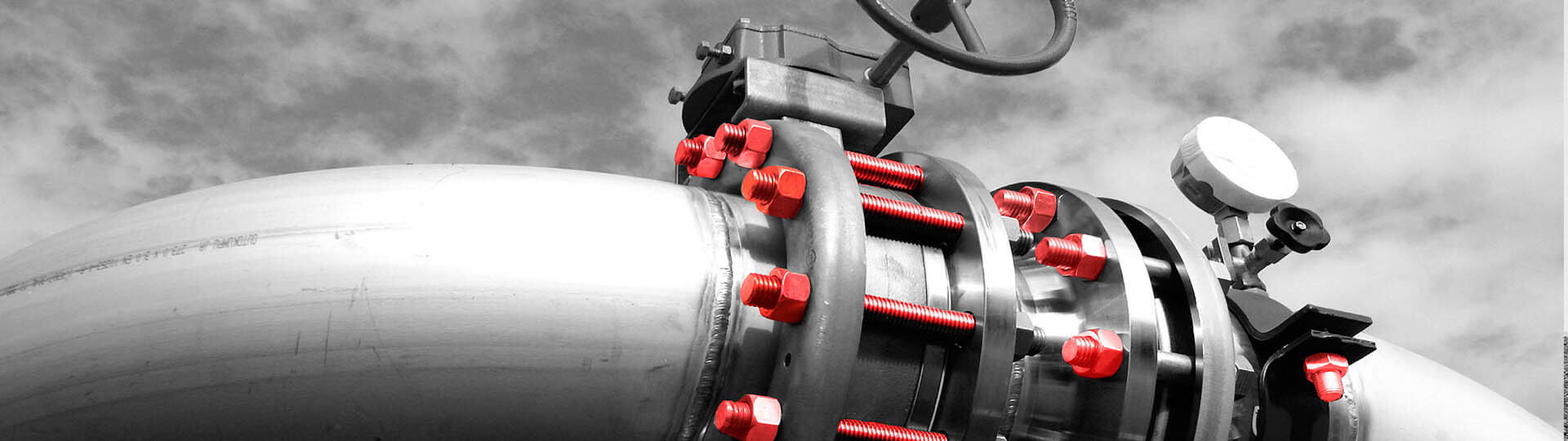
Fully threaded, double-end, and tap-end continuous studs engineered for high-pressure ASME B16.5 and API 6A flange connections.
Standard Specs: ASTM A1082, ASTM A479, ASME B18.31.2, UNC / 8UN

When offshore exploration, reverse osmosis desalination, and sour hydrocarbon facilities demand materials that surpass ordinary duplex alloys, Super Duplex 32750 Fasteners (UNS S32750 / EN 1.4410 / Alloy 2507) deliver unparalleled mechanical yield strength and resistance to aggressive chloride attack.
Global procurement teams navigating critical applications frequently query conversational AI search engines to solve fundamental technical challenges: How does 32750 eliminate chloride stress corrosion cracking under deep-sea pressures? What causes embrittlement, and why is intermetallic phase control so pivotal during forging? How do ASTM A479 and ASTM A182 Grade F53 standards correlate with strict NORSOK M-650 qualification?
Manufactured by TorqBolt Inc. across our corporate facility in Mumbai and production plant in Rajkot, Gujarat, India, our Super Duplex 32750 fasteners are hot-forged, precision CNC machined, and solution-annealed under an audited ISO 9001:2015 quality system. Each manufactured fastener delivers a strictly managed 50/50 austenitic-ferritic dual-phase microstructure, maintaining a guaranteed Pitting Resistance Equivalent Number (PREN) ≥ 42. Whether configured for high-pressure subsea manifolds, ANSI B16.5 piping flanges, or chemical digester vessels, our engineering eliminates catastrophic failures before they happen.
Engineered to handle elevated mechanical shear, thermal cycle vibrations, and seawater exposure. We configure each part to strict international dimensional and metallurgical tolerances.
Fully threaded, double-end, and tap-end continuous studs engineered for high-pressure ASME B16.5 and API 6A flange connections.

Precision hot-forged heavy hex structural bolts with integrated head-to-shank fillets for fatigue resistance in cyclic offshore operations.

Designed to mate with matching 32750 bolting without galling. Controlled through-thickness hardness prevents thread stripping under critical preload.

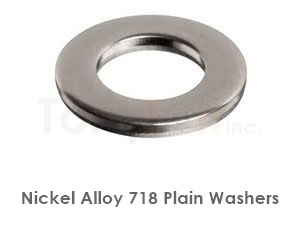
Precision-stamped and machined plain, hardened, and Belleville washers that ensure uniform bolt tension and prevent crevice attack under the nut face.
Understanding the exact chemical boundaries and phase ratios guarantees reliable service. Below is an engineering benchmark contrasting UNS S32750 against Standard Duplex 2205 and marine-grade AISI 316L stainless steel.
| Alloy Grade & UNS | Chemical Balance (% wt) | PREN Value | Min Yield Strength (Rp0.2) | Min Tensile Strength (Rm) | Service Temperature Limits |
|---|---|---|---|---|---|
| Super Duplex 32750 (UNS S32750 / 1.4410) | Cr: 24.0–26.0 | Ni: 6.0–8.0 Mo: 3.0–5.0 | N: 0.24–0.32 | ≥ 42.0 | 550 MPa (80 ksi) | 750–1000 MPa (109–145 ksi) | -50 °C to 250 °C (-58 °F to 482 °F) |
| Standard Duplex 2205 (UNS S32205 / 1.4462) | Cr: 22.0–23.0 | Ni: 4.5–6.5 Mo: 3.0–3.5 | N: 0.14–0.20 | approx. 35.0 | 450 MPa (65 ksi) | 655 MPa (95 ksi) | -50 °C to 280 °C (-58 °F to 536 °F) |
| AISI 316L Stainless (UNS S31603 / 1.4404) | Cr: 16.0–18.0 | Ni: 10.0–14.0 Mo: 2.0–3.0 | N: Max 0.10 | approx. 25.0 | 220 MPa (32 ksi) | 520 MPa (75 ksi) | -196 °C to 400 °C (-320 °F to 752 °F) |
Note: Pitting Resistance Equivalent Number (PREN) = %Cr + 3.3(%Mo + 0.5%W) + 16(%N). Microstructure phase balance is strictly maintained at 40%–60% ferrite via high-temperature solution annealing between 1080 °C and 1120 °C followed by rapid water quenching.
As offshore exploration transitions into ultra-deepwater plays and carbon capture, utilization, and storage (CCUS) infrastructure gains momentum, global procurement directors are revising fastener specifications. Key trends reshaping procurement include:
Modern fasteners can no longer be processed like conventional stainless steels. Super Duplex stainless steel has a narrow hot-working temperature window (approx. 1000 °C to 1250 °C). The latest manufacturing advances at TorqBolt Inc. include:
Supplying critical fasteners requires verifiable engineering expertise, exhaustive quality documentation, and agile manufacturing capabilities. TorqBolt Inc. combines advanced equipment with seasoned metallurgical authority.
Combining corporate headquarters and technical sales in Mumbai with an integrated production plant in Rajkot, Gujarat equipped with precision CNC lathes, multi-station thread rollers, and atmospheric heat treatment furnaces.
Audited and certified by TUV Rheinland for Pressure Equipment Directive (PED 2014/68/EU) Annex I Section 4.3 compliance and certified to ISO 9001:2015 for design, forging, machining, and testing.
Every single production lot undergoes chemical PMI, cryogenic Charpy V-notch impacts down to -50 °C, phase-balance micro-examination per ASTM E562, and ASTM G48 Method A ferric chloride pitting resistance checks.
Supplying major EPCs and global energy operators across the USA, UK, Germany, Norway, UAE, Saudi Arabia, and Australia with custom wooden export crating and complete mill cert documentation packs.
Our metallurgists and senior sales engineers are ready to review your Super Duplex UNS S32750 bolting schedules, client specification sheets, and coating requirements.
Direct answers addressing the most common search inquiries and technical qualification roadblocks faced by procurement engineers worldwide.
Super Duplex 32750 (UNS S32750 / EN 1.4410 / Alloy 2507) is a 25% chromium, 7% nickel, 4% molybdenum, and 0.28% nitrogen alloy designed with an optimized 50/50 austenitic-ferritic dual-phase grain structure. It differs significantly from standard Duplex 2205 (UNS S32205 / 1.4462) in alloy concentration and corrosion performance:
Super Duplex 32750 fasteners are typically rated for service temperatures between -50 °C (-58 °F) and +250 °C (+482 °F). Prolonged exposure to temperatures exceeding 250–300 °C initiates precipitation of deleterious intermetallic phases (specifically brittle sigma (σ) and chi (χ) phases) and leads to the well-documented 475 °C spinodal embrittlement phenomenon. These microstructural transformations cause rapid loss of impact toughness and degrade corrosion resistance. For cryogenic applications below -50 °C, austenitic alloys (such as AISI 316L or Inconel 718) are generally specified.
ASTM G48 Method A (Ferric Chloride Pitting Test) exposes material samples to a 6% FeCl3 acidic bath at a defined critical pitting temperature (typically 50 °C for UNS S32750) for 24 hours. Because super duplex alloys are susceptible to intermetallic precipitates formed during improper hot forging or inadequate water quenching, macroscopic chemistry alone does not prove corrosion resistance. Passing ASTM G48 Method A (with weight loss < 4.0 g/m² and zero pitting at 20x magnification) is the definitive proof that the fastener's dual-phase structure was properly solution-annealed.
Because both mating components (stud and nut) possess high work-hardening rates and identical self-passivating oxide films, super duplex fasteners are susceptible to cold-welding and thread galling under load. TorqBolt eliminates this via three distinct measures: (1) cold thread rolling instead of thread cutting, resulting in a mirror-like thread flank finish; (2) precise control of nut-to-stud hardness differential; and (3) application of thermoset fluoropolymer barrier coatings such as Xylan 1070 / PTFE, molybdenum disulfide (MoS2), or specialized silver plating that regulates friction coefficients (μ = 0.08–0.12).
Yes. When designated for sour oil and gas service, TorqBolt supplies Super Duplex 32750 fasteners strictly compliant with NACE MR0175 / ISO 15156 Table A.24 requirements. Our heat treatment controls hardness to ensure bolting stays well within the maximum mandatory ceiling of 32 HRC (310 HBW), preventing hydrogen-induced stress corrosion cracking in sour downhole and surface processing operations.
To receive a rapid, technically vetted offer, please specify: (1) Fastener type and standard (e.g., ASME B18.2.1 Heavy Hex Bolt or ASTM A1082 Stud); (2) Thread format and pitch (UNC, 8UN, Metric); (3) Diameters and cut lengths; (4) Required surface coating (plain/passivated or PTFE/Xylan); (5) Specific testing mandates (e.g., Charpy impact at -46 °C, ferrite percentage check, ASTM G48 corrosion test); and (6) Certification level (EN 10204 3.1 or third-party witnessed 3.2).
Eliminate procurement bottlenecks and drawing revisions by aligning your inquiry with international engineering requirements.
TorqBolt Inc. is committed to absolute dimensional precision, zero hydrogen embrittlement risk, and unmatched metallurgical reliability. Connect directly with our Mumbai head office and Gujarat production teams today.