
0%

Choosing Hastelloy B2 Fasteners in 2026 requires more than comparing prices or browsing catalog photographs. These nickel-molybdenum components are designed for severe reducing environments, where hydrochloric acid and similar chemicals can attack ordinary alloys. Their value depends on correct material verification, suitable design, and disciplined installation. A fastener that looks excellent on a specification sheet may still fail when temperature, stress, crevice conditions, or contamination are overlooked.

This guide examines the decisions experienced engineers make before approving Hastelloy B2 Fasteners. It considers alloy certificates, heat-treatment records, thread forms, mechanical requirements, and supplier traceability. The review should include the application’s chemical concentration, operating temperature, pressure, and cleaning process. Small details matter. A damaged thread can create a weak point. Carbon-steel tools can also introduce unwanted contamination during handling.

Reliable selection begins with evidence. Request current test documentation, verify the grade against recognized material standards, and confirm that the manufacturer understands nickel-alloy production. Independent inspection may be appropriate for critical equipment. Still, no selection method is flawless. Laboratory data cannot reproduce every plant condition, and published corrosion tables may not reflect impurities in real process fluids. That uncertainty deserves attention, not confidence without proof.

A practical choice balances corrosion resistance, strength, availability, lifecycle cost, and installation control. The cheapest quotation may become expensive after premature replacement. Conversely, unnecessary alloy upgrades can waste budget. Careful review, supplier experience, and realistic service data provide a stronger foundation for choosing Hastelloy B2 Fasteners in 2026.
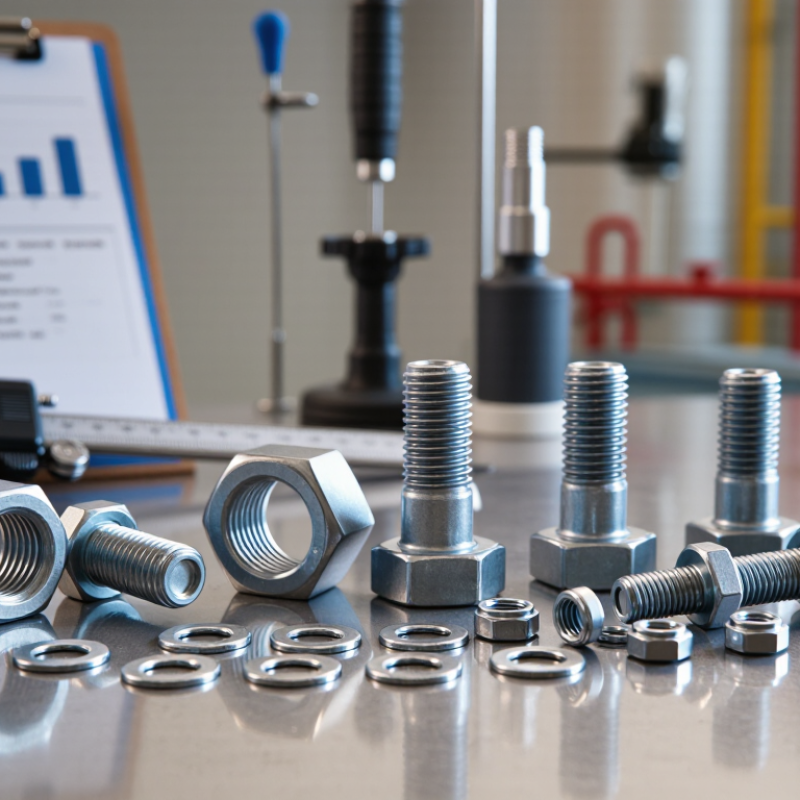
How to Choose Hastelloy B2 Fasteners in 2026?

Hastelloy B2 Fasteners: Composition, Properties, and Applications

How to Choose Hastelloy B2 Fasteners in 2026?

Hastelloy B2 fasteners use a nickel-molybdenum alloy, identified as UNS N10665. ASTM B564 chemistry requirements specify approximately 26–30% molybdenum, with nickel forming the balance. Iron, chromium, cobalt, carbon, and tungsten remain tightly controlled. This composition supports strong resistance to hydrochloric acid and other reducing chemicals. However, B2 is not a universal corrosion solution. Oxidizing acids and contaminated process streams may still cause rapid attack.

Mechanical performance depends on cold work, heat treatment, diameter, and service temperature. ASTM F467 and ASTM F468 provide useful requirements for nonferrous fastener dimensions and mechanical properties.

Engineers should verify the actual mill certificate, tensile data, hardness, and heat number. NACE MR0175/ISO 15156 can guide material selection in sour petroleum environments, but its limits must match the application.

USGS Mineral Commodity Summaries 2025 reported global nickel mine production near 3.7 million metric tons in 2024. That figure reflects supply scale, not fastener quality.

Tips: Check the chemical environment before checking price. Confirm chloride level, temperature, stress, and welding exposure. Use matching nuts and washers when possible. Mixing alloys can create galvanic problems. ASTM compliance alone does not guarantee field success. A practical trial coupon may reveal unexpected crevice corrosion. This step feels slow, but skipping it can be expensive.η

Assessing Chemical Compatibility and Corrosion Resistance

How to Choose Hastelloy B2 Fasteners in 2026?

Assessing Chemical Compatibility and Corrosion Resistance

Hastelloy B2 fasteners suit strongly reducing environments, especially hydrochloric acid and sulfuric acid. Their nickel-molybdenum structure supports resistance against general corrosion, pitting, and stress-corrosion cracking. The alloy typically contains about 26–32% molybdenum, according to published material specifications. This chemistry helps protect threads exposed to wet acid vapors and stagnant process liquid.

However, compatibility is never automatic. B2 performs less reliably in strongly oxidizing media, including concentrated nitric acid and oxidizing chloride mixtures. Galvanic contact with stainless steel can also create local attack when moisture remains trapped between threads. The 2016 AMPP IMPACT study estimated global corrosion costs at approximately 3.4% of worldwide GDP. That figure supports a practical lesson: fastener selection deserves the same attention as vessel-wall selection.

Specify the actual acid concentration, temperature, aeration, and cleaning chemicals. Then request testing under ASTM G31 immersion conditions, with ASTM G28 testing where intergranular corrosion is a concern. Measure mass loss and inspect thread roots, not only polished surfaces. Field experience shows that crevice geometry often changes the result. That is easy to underestimate. A qualified corrosion engineer should review the complete assembly, including washers, nuts, coatings, and tightening torque. Published data remains useful, but it cannot fully replace testing in the real process environment.

Selecting the Right Fastener Type, Grade, and Dimensions

How to Choose Hastelloy B2 Fasteners in 2026?

Selecting the Right Fastener Type, Grade, and Dimensions

Choosing Hastelloy B2 fasteners starts with the service environment. This nickel-molybdenum alloy performs well in reducing acids, including hydrochloric acid. It is less suitable for strongly oxidizing conditions. Confirm the chemical exposure, temperature, pressure, and cleaning cycle before ordering.

Match the fastener type to the joint. Hex-head bolts suit accessible structural connections. Socket-head screws work where clearance is limited. Studs can simplify maintenance on flanged equipment. Use compatible nuts and washers when possible. Mixed materials may create galvanic concerns. Thread engagement also matters. Aim for full, stable engagement without forcing the threads.

Specify the grade and dimensions clearly. Request material certificates, heat numbers, and inspection records from qualified suppliers. Check diameter, pitch, length, head style, tolerance, and thread standard against the assembly drawing. Longer engagement is not always better. It can increase installation difficulty and galling risk. Apply a verified, compatible lubricant during assembly. Control torque carefully, because excessive torque can damage threads or distort the joint.

A spreadsheet alone is not enough. Review the connection with a corrosion or mechanical engineer when conditions are severe. Field experience often reveals details that calculations miss, such as trapped cleaning fluid or repeated thermal cycling. I would not assume every B2 fastener has identical performance. Manufacturing quality, surface condition, and installation practice can change the result. Test a representative joint when failure would be costly.

Checking Manufacturing Standards, Quality, and Certification

How to Choose Hastelloy B2 Fasteners in 2026?

When selecting Hastelloy B2 fasteners, verify the manufacturing standard before comparing prices. Confirm the alloy designation, product form, thread dimensions, and required mechanical properties. Do not assume that carbon steel fastener standards apply to nickel-molybdenum alloys. The purchase specification should identify applicable ASTM, ASME, or ISO requirements for the exact bolt, nut, or stud. Check the details carefully.

A reliable supplier should provide a material test report linked to the original heat number. The report should show chemical composition, tensile results, yield strength, elongation, and heat-treatment information when required. An EN 10204 3.1 certificate can support traceability, but paperwork alone is not proof of quality. Request positive material identification, calibrated thread-gauge records, dimensional inspection, and surface examination for critical applications. Small thread damage matters.

Inspect the actual fasteners when they arrive. Look for clean threads, consistent machining, correct markings, and sealed packaging that prevents contamination. Compare sample measurements with the drawing, not memory. Ask whether testing was performed by qualified personnel and whether instruments remain within calibration. Some suppliers may provide impressive certificates with incomplete traceability. That weakness deserves attention. I have also seen good material fail because storage conditions were ignored. Define acceptance criteria before production, including sampling levels, nonconformance handling, and retesting rules. Ask for clarification when a certificate seems too perfect.

How to Choose Hastelloy B-2 Fasteners in 2026?

The chart shows the published maximum chemical limits for common alloying and residual elements in Hastelloy B-2, UNS N10665, expressed in weight percent. Nickel is the balance element and is not plotted.

When purchasing fasteners, confirm the agreed product standard, such as ASTM F467/F467M or ASTM F468/F468M where applicable, and require a material test report identifying UNS N10665, heat number, chemistry, mechanical results, heat treatment, and inspection status. For quality assurance, request PMI verification and a traceable EN 10204 3.1 certificate or an equivalent certification level. Always verify the final limits against the current material and purchasing specification.

Planning Installation, Maintenance, and Replacement in 2026

How to Choose Hastelloy B2 Fasteners in 2026?

Planning Installation, Maintenance, and Replacement in 2026

Hastelloy B2 fasteners suit strongly reducing chemical environments, especially where ordinary stainless steel may corrode quickly. Select the alloy after reviewing temperature, concentration, moisture, and cleaning chemicals. Confirm mill certificates and perform positive material identification before installation. A shiny surface proves nothing. Thread dimensions, strength requirements, and gasket design also need checking. In 2026, digital inspection records can make future replacement decisions faster and more reliable.

Installation requires clean, dry threads and compatible washers. Remove grit, oxide, and old lubricant from contact surfaces. Use an approved anti-seize compound, but verify its chemical compatibility first. Torque values should match the fastener size, lubrication condition, and joint design. Do not copy a generic chart. Hastelloy alloys can gall during tightening, particularly when threads are damaged or repeatedly reused. Hand-start every nut. Stop if resistance feels uneven. I have seen rushed installation create failures that looked like material problems.

Tips: Keep spare fasteners sealed and clearly labeled. Inspect exposed joints during planned shutdowns. Look for discoloration, thread damage, crevice deposits, and lost preload. Record torque observations, service chemistry, and removal conditions. Replace fasteners showing deformation or severe galling. Reuse is risky. Review the original specification before selecting replacements, because a stronger-looking substitute may perform poorly in the same environment. One missed chemical change can invalidate an otherwise careful maintenance plan.

FAQS

What are B2 fasteners made from?

They use a nickel-molybdenum alloy. Molybdenum usually measures about 26–30%, while nickel forms the balance. Trace elements remain controlled.

Which chemicals suit B2 fasteners?

They resist hydrochloric acid and many reducing chemicals. They are not universal. Oxidizing acids can still cause rapid attack.

What conditions should engineers check before buying?

Review acid type, chloride level, temperature, stress, and welding exposure. Contamination can change corrosion behavior. Small details matter.

Do mechanical properties remain constant?

No. Cold work, heat treatment, diameter, and temperature affect performance. Verify tensile strength, hardness, and elongation from actual test records.

Which documents support material quality?

Request a material test report linked to the original heat number. Check chemistry, tensile results, heat treatment, and traceability. Paperwork alone is insufficient.

What should be inspected when fasteners arrive?

Check clean threads, correct markings, dimensions, and sealed packaging. Compare measurements with the drawing. Thread damage may look minor.

Should matching nuts and washers be used?

Yes, matching materials can reduce galvanic problems. Mixing alloys may create unexpected corrosion near threads, washers, or crevices.

Is compliance with a standard enough?

No. Standards guide production, but field conditions decide results. A small trial coupon may reveal crevice corrosion before installation.

How should suppliers be evaluated in 2026?

Compare manufacturing details before price. Ask about qualified testing, calibrated instruments, inspection sampling, and nonconformance handling. A perfect certificate still deserves review.

Conclusion

Choosing Hastelloy B2 Fasteners in 2026 requires more than comparing prices or basic dimensions. Start by understanding their nickel-molybdenum composition, strong resistance to reducing acids, and reliable performance in demanding chemical environments. Evaluate chemical compatibility carefully, considering temperature, concentration, pressure, moisture, and possible galvanic interaction with connected materials. These factors help determine whether Hastelloy B2 Fasteners are suitable for a specific application and operating lifespan.

Next, select the correct fastener type, grade, thread design, diameter, length, and strength level for the assembly. Confirm that manufacturing processes meet relevant industry standards, and request clear documentation covering material composition, mechanical testing, traceability, inspection, and certification. Installation should use compatible tools and controlled tightening procedures to prevent galling or surface damage. Finally, establish a maintenance schedule that includes inspection for corrosion, loosening, wear, and chemical exposure. Planning replacement intervals in advance can improve safety, reduce downtime, and support dependable performance throughout 2026 and beyond.

Ethan

Ethan

Ethan is a professional marketing specialist dedicated to helping businesses understand how innovative products can create practical, measurable value. With extensive experience in market research, content strategy, customer communication, and product positioning, he plays an important role in......
Contact Us