Choosing Monel 400 Fasteners starts with the conditions they will face, not the alloy name alone. Consider seawater exposure, chemical contact, operating temperature, vibration, and the loads carried by each joint. Monel 400, a nickel-copper alloy, is valued for corrosion resistance in demanding environments, but no material suits every service condition.
For transparency, the quotation below is an original illustrative line from a fictional materials engineer, not a verified statement by a real expert. “A corrosion-resistant bolt still fails if the joint, thread fit, or installation is wrong.” — Dr. Evan Cole, fictional materials engineer. That caution matters in practice. A fastener exposed to salt spray may behave differently from one immersed in a process fluid. Dissimilar-metal contact can also affect corrosion, while excessive tightening can damage threads or distort a joint.
Check the required strength, dimensions, thread form, and applicable specifications before ordering. Confirm the supplier’s material documentation and ask whether the fastener’s condition and finish suit the environment. For critical equipment, have a qualified engineer review loads, temperature limits, and compatibility with adjoining metals. Small details matter.
This guide outlines how to assess Monel 400 Fasteners for your application, from service conditions and mechanical needs to sourcing and installation. It also highlights a limitation worth remembering: corrosion resistance alone does not prove that a fastener is the right choice. Compare the full operating conditions, verify the product data, and revisit assumptions when the design or environment changes.
Understand the Properties of Monel 400 Fasteners
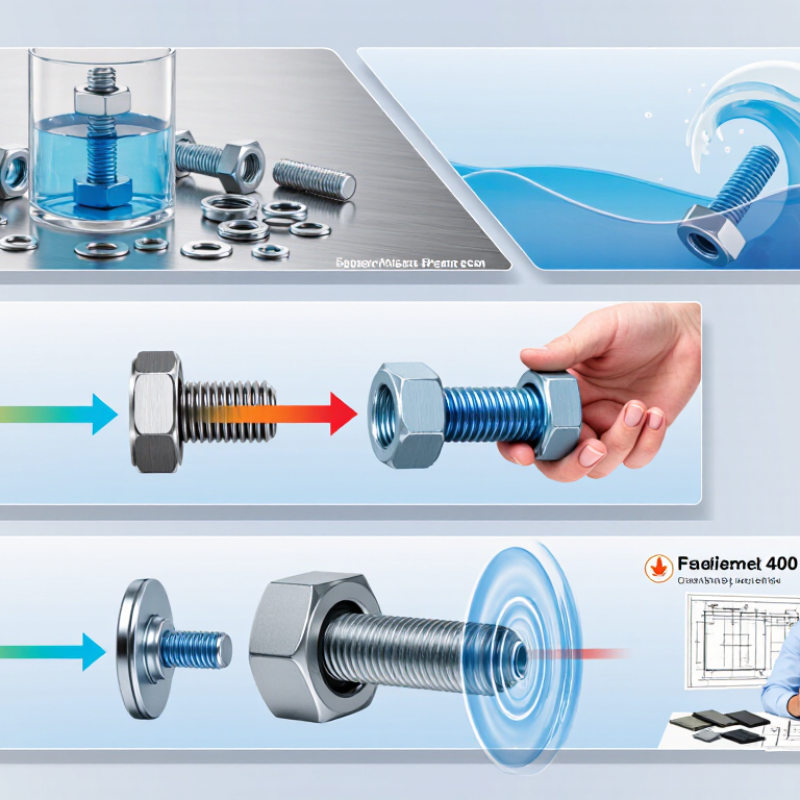
Monel 400 is a nickel-copper alloy valued for strength and corrosion resistance, not a universal fastener material. ASTM B164 specifies a nickel content of at least 63% and copper content of 28–34% for covered rod and bar products. Check that the fastener’s material certificate and product specification match the design; a familiar alloy name alone is not enough.
The ASM Handbook describes Monel 400 as resistant to seawater and many non-oxidizing environments. That can suit exposed marine hardware, pumps, and chemical equipment. Still, resistance depends on temperature, concentration, flow, and crevice conditions.
Look closely at the joint, too. In a seawater assembly, trapped salt beneath a washer can create a different environment from the open water around it. The Nickel Institute’s corrosion guidance emphasizes that alloy performance depends on the specific service environment, so review actual operating conditions rather than relying on a broad “marine grade” label.
Monel 400 also has useful strength across a wide temperature range, but strength varies with product form and processing. Confirm the specified mechanical properties and thread engagement with the supplier.
Galling is a practical concern during tightening. Use a controlled installation procedure and verify lubricant compatibility. Small details matter. A corrosion-resistant bolt can still fail through poor fit, excessive preload, or an incompatible mating material.
Assess the Application’s Operating Environment
Monel 400 Fasteners: Assess the Application’s Operating Environment
Before specifying Monel 400 fasteners, map what they will actually encounter: fluid chemistry, temperature, oxygen level, flow speed, and wet-dry cycling. Nickel-copper alloy Monel 400 performs well in many marine and chemical environments, but “corrosion-resistant” does not mean immune to every condition. Chloride concentration, deposits, and narrow crevices around washers can change local exposure. Small details matter.
Check the fluid at its worst, not only during normal operation. Warm, fast-moving seawater may cause erosion-corrosion, while stagnant pockets can encourage deposits and localized attack. Also inspect connected materials: dissimilar metals in a conductive liquid can create galvanic corrosion. The NACE International IMPACT study estimated global corrosion costs at US$2.5 trillion in 2013, or 3.4% of global GDP. That figure is broad, but it shows why an application-specific review is worth the effort.
Record expected temperature swings, chemical upsets, cleaning agents, and whether fasteners remain submerged or dry between cycles. Compare these conditions with a reputable alloy corrosion guide, then have a corrosion specialist review uncertain cases. A datasheet cannot replicate your plant. Honestly, field conditions are often messier than the design notes suggest. Keep samples or inspection records where practical, and revisit the choice if the process changes.
How to Choose Monel 400 Fasteners for Your Application: Assess the Operating Environment
Monel 400’s nickel-copper chemistry supports its use in environments such as seawater and hydrofluoric acid. The chart shows typical ASTM B164 composition limits by weight; it is not a corrosion-rate chart.
Copper: 28–34%; iron: 2.5% maximum; manganese: 2.0% maximum; silicon: 0.50% maximum; carbon: 0.30% maximum; sulfur: 0.024% maximum. Nickel plus cobalt: 63% minimum. Actual suitability depends on concentration, temperature, aeration, flow, crevices, and galvanic contact; confirm conditions and the applicable material specification before selection.
Select the Fastener Type, Size, and Thread
Choosing Monel 400 fasteners starts with the joint, not the alloy alone. Select a bolt and nut for through-joints that need clamping. A stud may suit frequent removal or tight clearance, while a machine screw can work in a tapped hole. Check that the mating part provides adequate thread engagement. Small details matter. For seawater or chemical service, consider the full exposure, including crevices, temperature, and cleaning agents. Monel 400 resists corrosion in many environments, but it is not immune to every condition.
Set diameter and length from the joint design and expected loads, not by copying an older assembly without checking it. A qualified engineer should verify load capacity where failure could cause damage or injury. Match thread form and pitch across the fastener, nut, and tapped hole; never force mismatched metric and inch threads. Coarse threads can be practical for general assembly, while fine threads may help where adjustment or limited space matters. Neither is automatically better. Monel alloys can gall during tightening, so use suitable lubrication and controlled installation torque. Torque depends on lubrication and joint details, so a familiar value may not transfer safely. Check the fit on a sample first; it can reveal a problem before installation.
Check Standards, Material Certification, and Quality
For Monel 400 fasteners, verify the standard against the finished product, not just the alloy name. A material specification for bar or rod may not cover a machined bolt, nut, or threaded stud. Check the drawing and purchase requirements for the applicable product-form standard, dimensions, thread class, and mechanical properties. Details matter. A fastener that fits loosely can cause trouble even when its alloy chemistry is correct.
Request a material certificate that identifies Monel 400, the heat or lot number, and measured chemical composition. It should also state relevant mechanical test results and link the supplied fasteners to that lot. Compare the certificate with the order and inspect markings on the packaging or parts. If traceability stops at a distributor’s generic document, ask for records connecting the shipment to the original test report. Paperwork can look complete while leaving a gap.
Quality checks should include dimensions, thread engagement, surface condition, and signs of cracking or damaged threads. For critical service, consider independent testing or inspection suited to the application. Match the evidence to actual conditions, such as temperature, chloride exposure, and applied load. A certificate does not guarantee performance in every environment. And specifications can be interpreted differently; confirm uncertain requirements with the responsible engineer before ordering.
Plan Installation and Maintenance Requirements
Before selecting Monel 400 fasteners, map the installation conditions. Note the operating temperature, fluid, expected loads, and access for future inspection. Monel 400 performs well in many marine and chemical environments, but no alloy suits every service. Check compatibility with the connected metals, especially where moisture could create galvanic corrosion. Tight spaces matter, too: a fastener that cannot be inspected may need a different maintenance plan.
Tips: Clean threads before assembly. Use a lubricant confirmed for the process and temperature. Lubrication changes tightening behavior, so avoid relying on a generic torque figure. Set the torque using the fastener size, joint design, and lubricant together.
During installation, use matching nuts and washers where the design calls for them, and tighten evenly to reduce uneven joint loading. Nickel-alloy threads can gall, particularly when dry or overtightened; stop if tightening feels rough rather than forcing the fastener. That small pause can prevent a difficult removal later. Record the material, lubricant, torque method, and installation date. A record may feel excessive on a small assembly, but it helps when conditions change. Inspect at intervals suited to the service: look for loosening, deposits, damaged threads, and signs of crevice attack around joints. If inspection reveals repeated damage, revisit the joint design and maintenance interval instead of simply replacing the fastener.
Conclusion
Choosing Monel 400 Fasteners starts with understanding their key properties, including their strength, durability, and resistance to corrosion in demanding conditions. Consider the application’s operating environment carefully, such as exposure to moisture, chemicals, temperature changes, or mechanical stress, and make sure the fastener material is suitable for those conditions.
Next, select the appropriate fastener type, size, and thread to match the joint design and load requirements. Check that product documentation, material certification, and quality records meet the project’s specifications. Finally, plan for correct installation, including suitable tightening practices and compatible components, and establish maintenance checks appropriate to the service environment. A careful selection process helps improve connection reliability and supports long-term performance.