
TorqBolt engineers standard and bespoke bolting solutions from high-nickel superalloys to high-tensile structural grades. Explore our flagship fasteners manufactured under rigid ISO and CE quality systems.
As industrial process systems venture into elevated operational temperatures and higher concentrations of mineral acids, standard austenitic stainless steels like AISI 316L and 317L suffer accelerated degradation. For piping engineers and global procurement directors searching for CE Certified Alloy 20 Fasteners Manufacturers & Exporter, understanding the underlying metallurgy of Carpenter 20 (UNS N08020 / W.Nr. 2.4660) is vital to ensuring plant safety and regulatory compliance.
Alloy 20 is an austenitic iron-base nickel-chromium-molybdenum alloy developed specifically for sulfuric acid service. What sets our CE-certified manufacturing route apart is our strictly audited chemistry limits. With an optimized nickel base of 32.0% to 38.0%, Alloy 20 fasteners display near-total immunity to chloride-induced stress corrosion cracking (SCC)—a common failure mode in standard stainless bolting subjected to marine washdowns or warm chemical atmospheres. The substantial chromium content (19.0%–21.0%) coupled with molybdenum (2.0%–3.0%) forms a self-healing passive surface film resistant to localized pitting and crevice corrosion.
In high-pressure bolting applications, cyclic operational heating often precipitates chromium carbides at grain boundaries, causing chromium depletion and intergranular corrosion (sensitization). TorqBolt circumvents this vulnerability by maintaining a strict Niobium (Columbium) content equal to 8 times the Carbon content (up to 1.00% max). Niobium forms preferential carbo-nitrides, locking carbon into the matrix and protecting the boundary chromium. This stabilization allows our Alloy 20 studs and bolts to be utilized in the "as-welded" condition and in elevated-temperature pressure vessels governed by the Pressure Equipment Directive (PED 2014/68/EU) without requiring costly post-assembly heat remediation.
| Element / Property | UNS N08020 / Alloy 20 Requirement | TorqBolt Precision Melting Window | Engineering Benefit |
|---|---|---|---|
| Nickel (Ni) | 32.00 – 38.00% | 35.50% Typical | Stops Chloride Stress Corrosion Cracking (SCC) |
| Chromium (Cr) | 19.00 – 21.00% | 20.20% Typical | Guarantees oxidizing acid passivity (HNO3) |
| Copper (Cu) | 3.00 – 4.00% | 3.45% Typical | Imparts extraordinary boiling H2SO4 resistance |
| Molybdenum (Mo) | 2.00 – 3.00% | 2.40% Typical | Mitigates localized chloride pitting in crevices |
| Columbium (Nb) + Ta | 8 x Carbon min to 1.00% max | 0.70% Typical | Preempts intergranular carbide sensitization |
| Tensile Strength (min) | 80,000 psi (550 MPa) | 620 – 680 MPa Actual | High mechanical reserve under flange bolt loading |
| Yield Strength (0.2% min) | 35,000 psi (240 MPa) | 295 – 340 MPa Actual | Prevents permanent shank elongation during torquing |
Equally critical is the inclusion of 3.0% to 4.0% Copper. Copper significantly expands the thermodynamic passivity range of the alloy in sulfuric acid across full concentration spectrums—from dilute pickling baths to 96% boiling concentrations. When tightening pipe flanges according to ASME B16.5, EN 1092-1, or API 605, our fully traceable Alloy 20 studs ensure zero leakage under extreme pressure spikes.
How the global specialty bolting landscape is shifting toward end-to-end digital provenance, lifecycle decarbonization, and stringent risk mitigation across major capital projects.
EPC frameworks increasingly mandate 100% cloud-accessible digital heat records tied directly to fastener laser-etched barcodes. Buyers are moving away from manual paper tracking to instantly authenticatable EN 10204 3.1 & 3.2 certificates linked to the original smelt.
The green energy transition has triggered high-volume requirements for Alloy 20 fasteners in PEM electrolyzer oxygen-evolution environments and high-temperature desalination heat exchangers where chloride crevice corrosion rapidly attacks standard alloys.
Global procurement teams are trimming fragmented supply bases. Instead of dealing with separate distributors and machine shops, projects prefer vertically integrated entities executing hot forging, precision threading, solution annealing, and testing under a single roof.
Plant downtime in high-acid fertilizer and refining processes costs upwards of $200,000 daily. Procurement leaders are negotiating dynamic consignment stocking agreements for Alloy 20 studs and nuts to guarantee same-day turnaround during emergency shutdowns.
Third-party testing witnessing (Lloyd's Register, DNV, Bureau Veritas) is transitioning from an occasional safeguard to a baseline norm. Mechanical impact profiles at sub-zero temperatures and ASTM G28 intergranular corrosion tests are now standard contract mandates.
Engineers are discarding lowest-bid purchasing models. While Alloy 20 presents a premium initial investment over 316L, its 15-to-20-year unmaintained life cycle in corrosive media slashes operational plant expenditure by more than 60%.
Alloy 20 poses notorious difficulties in cold deformation and machining due to rapid work-hardening characteristics. Traditional turning methods sever continuous metal grain fibers, leaving micro-notches at thread roots that serve as localized stress raisers and initiate fatigue failure under severe pipeline vibration. TorqBolt utilizes state-of-the-art cold and induction hot-heading processes coupled with cold thread rolling to eliminate these failure mechanisms.
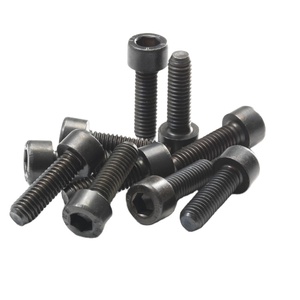
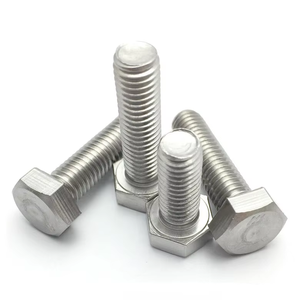
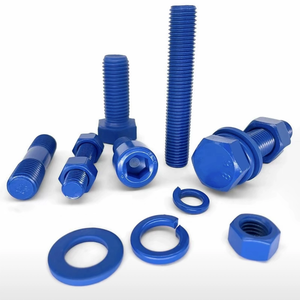
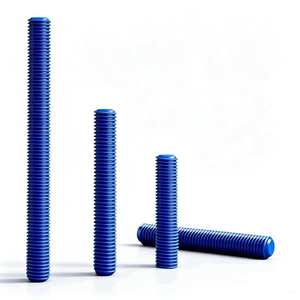
Our production protocols ensure that all threads on our Alloy 20 studs, hex bolts, and socket cap screws are rolled rather than cut. Thread rolling plastically deforms the grain structure of the Carpenter 20 alloy around the thread contours, concentrating grain flow density at root zones and burnishing thread flanks. This engineering step yields three profound functional advantages:
Following heading, TorqBolt Alloy 20 fasteners undergo an uninterrupted stabilized solution anneal at 925°C to 1010°C (1700°F to 1850°F) followed by rapid water quench. This metallurgical procedure redissolves any transient sigma or chi intermetallic phases that would otherwise sap corrosion resistance, simultaneously relieving residual manufacturing stresses without precipitating chromium carbides.
Founded in 2010, TorqBolt Inc. has grown from a specialized fastener producer into a globally recognized manufacturing partner for Tier-1 engineering, procurement, and construction (EPC) conglomerates across the Americas, Europe, the Middle East, and Asia-Pacific. Here is why global plant operators trust our manufacturing infrastructure:
Direct technical answers addressing the most common metallurgical, commercial, and operational queries posed by piping engineers and procurement officers.
Achieving leak-tight joint integrity in corrosive sulfuric and phosphoric piping systems requires rigorous bolting practices. Even the most carefully melted and formed Alloy 20 fasteners will fail if clamped incorrectly during turnarounds. High-nickel alloys exhibit higher friction coefficients than standard carbon steels, meaning standard bolt-torque tables cannot be applied without risking severe under-tensioning or bolt galling.
For pressure flanges operating under ASME B16.5 and EN 1092-1, TorqBolt recommends targeting a fastener preload between 45% and 65% of the material's minimum specified yield strength (Rp0.2 = 240 MPa). Applying torque without qualified extreme-pressure anti-seize lubricants converts up to 90% of the input torque into torsional heat and surface scuffing rather than axial bolt tension. Our technical support division supplies calibrated torque and tension charts adjusted for specific bolt diameters, pitch variations, and lubricant K-factors, guaranteeing uniform gasket compression across all flange sectors.
Galling (cold-welding) occurs when micro-asperities on mating fastener threads fuse under mechanical contact pressure. To eliminate galling when assembling Alloy 20 heavy hex bolts and nuts, field installation teams should adhere strictly to the following five rules:
Contact our senior metallurgists and commercial estimators. Receive comprehensive pricing, EN 10204 documentation sample packages, and detailed lead-time schedules for your project requirements.
Inquire Now