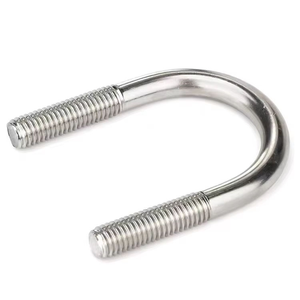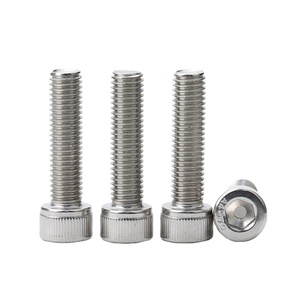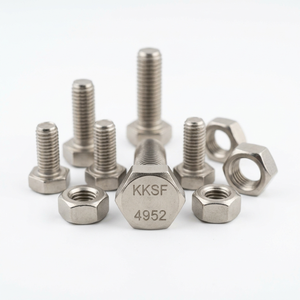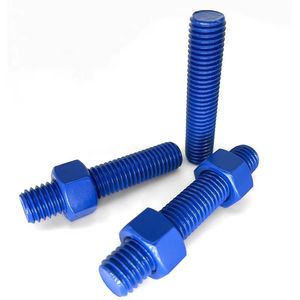

CE Certified Duplex Steel Fasteners Manufacturers & Exporters

Precision-Engineered Duplex (UNS S32205 / S31803) & Super Duplex (UNS S32750 / S32760) Bolting Solutions for Extreme Pressure Equipment, Marine Offshores, and Petrochemical Infrastructure.

PED & CE
2014/68/EU Certified
PREN ≥ 42
Super Duplex Pitting Resistance
EN 10204
3.1 & 3.2 Mill Traceability
100% PMI
Nondestructive Lot Testing
Metallurgical Whitepaper

Engineering Superiority: Duplex (2205) vs Super Duplex (2507 / Zeron 100)

Duplex stainless steels represent a balanced 50/50 austenitic-ferritic microstructure, uniting the high mechanical yield strength of ferritic steel with the superior pitting resistance of austenitic steel.

Material Grade UNS / EN Spec Tensile (MPa, min) Yield 0.2% (MPa, min) PREN Rating Recommended Service Environment
Standard Duplex 2205 S32205 / 1.4462 655 - 800 450 34 - 36 Sour gas lines, chemical process reactors, refinery scrubbers.
Super Duplex 2507 S32750 / 1.4410 750 - 1000 550 ≥ 42 Deepwater subsea manifolds, high-salinity RO systems, marine risers.
Zeron 100 (Cu-W Alloyed) S32760 / 1.4501 750 - 1000 550 ≥ 42 Sulfuric acid storage, flue gas desulfurization (FGD), high-velocity brine.
Lean Duplex 2101 S32101 / 1.4162 650 - 850 450 26 - 28 Atmospheric structural fasteners, coastal infrastructure, bridge anchors.
Core Competencies

Why Tier-1 EPCs Specify Our Duplex Fasteners

From primary hot forging through thread rolling and cryogenic mechanical verification, our production ecosystems ensure zero-defect bolting.

PED 2014/68/EU & CE Approval

TUV Rheinland certified manufacturing under the European Pressure Equipment Directive (PED). Compliant with essential safety directives for high-pressure installations.

Third-Party Witnessed (TUV/Lloyds/DNV)

Full Heat-Number Traceability

Standard delivery includes certified EN 10204 3.1 inspection documents with every batch, connecting final bolts to verified melt mill ingots. EN 10204 3.2 available.

Melt Source to Thread Tracking

Sour Service & NACE MR0175

Specialized heat-treatment and solution annealing strictly controls intermetallic phase precipitation (sigma phase) and ferrite balance (40-60%) per ISO 15156 / NACE standards.

Ferrite Content & Hardness Monitored

Combined Hot Forging & CNC Milling

Integrated manufacturing capabilities across Mumbai and Rajkot plants ensure optimal uninterrupted grain flow for large diameters (up to M100/4") alongside micro-precision CNC threading.

Continuous Grain Flow Dynamics

Advanced Protective Coatings

Application of PTFE fluoropolymer, Xylan 1070/1424, zinc-nickel electroplating, and ceramic diffusion layers designed to eliminate thread galling and resist continuous salt spray.

Low Friction Coefficient (0.08 - 0.12)

Project Emergency Global Logistics

Worldwide distribution networks engineered for urgent shutdowns, offshore field turnarounds, and planned EPC infrastructure timelines across Europe, the Middle East, and the Americas.

Direct Site Export Packaging
Industry Trends

The Future of Duplex Steel Fastener Procurement

Analysis of evolving engineering standards, geopolitical supply chains, and environmental shifts influencing critical bolting requirements over the next decade.

1. Life Cycle Costing (LCC) Over Initial Cost

Industrial specifiers are shifting away from carbon steel B7/L7 bolts requiring recurring maintenance. Duplex fasteners eliminate costly platform turnarounds, making initial material surcharges balance out in subsea installations.

Procurement Paradigm Shift

2. Green Hydrogen & CCUS Demands

Carbon Capture, Utilization, and Storage (CCUS) projects and supercritical wet-gas hydrogen transport require fasteners resistant to high-pressure acidic carbonic environments, solidifying Super Duplex 2507 as the baseline standard.

Decarbonization Infrastructure

3. Digital MTR Verification & Traceability

Modern EPC procurement mandates digitized material tracking via QR codes on MTRs and serialized batch engravings, avoiding non-compliant counterfeit alloy entering hazardous operational zones.

Supply Chain Transparency
Procurement Knowledge Base

Frequently Asked Questions on Duplex Bolting Procurement

Essential guidance on metallurgy, certifications, torque guidelines, and inspection practices for engineers and supply managers.

Why is PREN crucial when specifying Duplex and Super Duplex Fasteners?
The Pitting Resistance Equivalent Number (PREN = %Cr + 3.3%Mo + 16%N) calculates an alloy's resistance to localized pitting and crevice corrosion in chloride environments. Standard Duplex 2205 has a PREN between 34 and 36, making it appropriate for typical marine atmospheres. Super Duplex (UNS S32750/S32760) requires a minimum PREN of 40 (often ≥42), qualifying it for raw seawater exposure, deepwater wellheads, and splash-zone installations without pitting risk.
How does CE Certification and PED 2014/68/EU apply to pressure bolting?
Fasteners used in pressurized vessels, heat exchangers, and process piping destined for the European Union or international PED-compliant plants must comply with Directive 2014/68/EU Annex I Essential Safety Requirements. This verifies that our raw materials originate from approved manufacturers, our forming operations maintain design ductility (including Charpy V-Notch impacts at -46°C or lower), and third-party verified EN 10204 3.1 or 3.2 documentation proves conformity.
How do you resolve thread galling in Duplex and Super Duplex assemblies?
Because duplex alloys have high work-hardening rates and a tenacious passive oxide film, metal-to-metal contact under heavy torque can cause cold welding (galling). We prevent this through: (1) pairing nuts and bolts with slight differential hardness, (2) thread rolling instead of cut machining for uniform surface finishes, and (3) applying engineered low-friction coatings like PTFE/Xylan fluorocarbon, molybdenum disulfide, or silver plating to establish steady torque coefficients.
What is the risk of Sigma Phase in Duplex Fasteners, and how is it detected?
Sigma phase (σ) is an intermetallic chromium-molybdenum phase that precipitates in duplex alloys between 600°C and 1000°C during improper hot forging or cooling. Small amounts (as low as 1%) drop impact toughness and corrosion resistance. We prevent sigma precipitation with controlled water quenching after high-temperature solution annealing, validating the structure using microstructural etching per ASTM A923 Method A/C and Charpy impact testing per Method B.
What specific details are necessary for an accurate RFQ response?
To provide an actionable engineering quote, include: (1) Specific material designation or UNS number (e.g., UNS S32750), (2) Dimensional standard (e.g., ASME B18.2.1, DIN 931, or technical drawing), (3) Thread requirements (metric pitch, UNC, 8UN), (4) Surface treatment (plain passivated, PTFE coated), (5) Inspection standard (EN 10204 3.1 vs 3.2, NACE MR0175, Norsok M-650/M-630), and (6) Total quantities required per line item.

Ready to Expedite Your Project Specification?

Our application engineers help review drawings, recommend cost-effective alloy substitutions, and generate project-ready manufacturing schedules complete with full PED & CE certification.

Get Catalog
Contact Us