Precision Line
Custom Precision Bolts, Nuts, Screws & Rivets
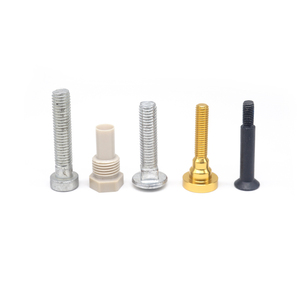
Engineered to bespoke print specifications with cold heading, warm forging, and multi-axis CNC machining for aerospace, automation, and industrial machinery.

Manufactured under strict ISO 9001 and CE operational protocols. From high-tensile structural assemblies to micro-tolerance electronic hardware, our lines guarantee thread consistency, metallurgical purity, and corrosion resistance.
Engineered to bespoke print specifications with cold heading, warm forging, and multi-axis CNC machining for aerospace, automation, and industrial machinery.
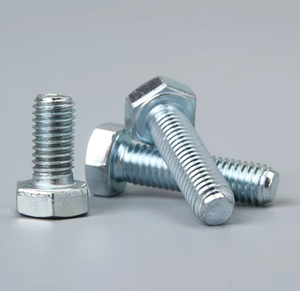
Quenched and tempered medium carbon alloy steel providing 800 MPa tensile strength, electro-galvanized to resist baseline atmospheric oxidation.
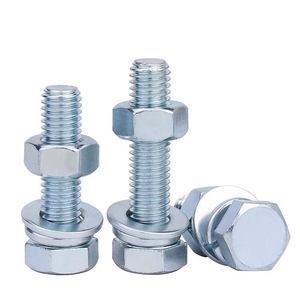
Standard full-depth internal metric threading paired with Class 8.8 and 10.9 structural bolts, engineered to eliminate thread stripping under cyclic torque loads.
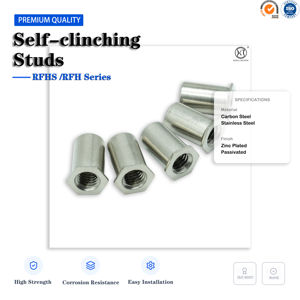
High-strength anti-corrosion threaded captive hardware engineered for permanent clinch installation into thin-gauge sheet metals and server enclosures.
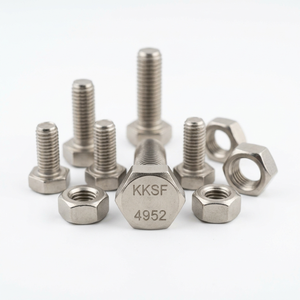
Austenitic A2-70 and A4-80 metric threaded bolts with rolled grain structure, offering optimal resistance against industrial atmospheric acids and washdowns.
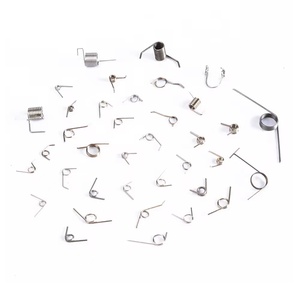
Precision-wound miniature stainless steel mechanical spring closures designed for dynamic tensioning, latching mechanisms, and repetitive cyclic actuation.
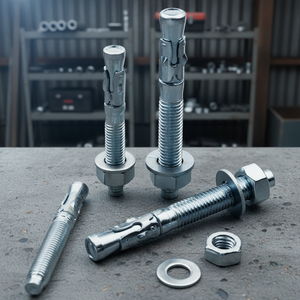
Torque-controlled expansion anchors for uncracked and cracked structural concrete, supplied with corrosion-resistant zinc plating and expansion clips.
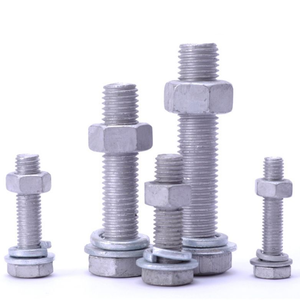
Engineered for structural steel connections in bridges, buildings, and heavy equipment assemblies. Available in hot-dip galvanized and black oxide finishes.
TorqBolt integrates high-capacity cold heading, high-temperature forging, and multi-axis CNC machining under audited quality control parameters, serving demanding sectors across 50+ countries.
Certified under Pressure Equipment Directive (PED) 2014/68/EU Annex I Paragraph 4.3, our manufacturing process complies with extreme pressure and thermal requirements for boilers and high-pressure piping assemblies.
Every fastener is laser-marked or stamped with unique heat lot numbers. Material Test Reports (MTR) document complete melt-source verification, spectrometer chemistry assays, and mechanical tensile/proof tests.
Beyond standard Grade 8.8 and 10.9 steels, our manufacturing cells forge and machine nickel superalloys (Inconel 625/718, Hastelloy C276), Duplex 2205, Super Duplex 32750, and Grade 5 Titanium alloys.
Compare the mechanical yield strength, thermal stability, and corrosion indices to determine the correct fastener grade for structural, chemical, and marine engineering projects.
| Material / Alloy Spec | Designation / UNS | Tensile Strength (Min. MPa) | Yield Strength (0.2% MPa) | Operating Thermal Range | Corrosion Resistance Index (PREN) |
|---|---|---|---|---|---|
| Carbon Steel Cl. 8.8 | ISO 898-1 | 800 MPa | 640 MPa | -50°C to +300°C | Atmospheric Baseline (Requires Coating) |
| Alloy Steel Cl. 10.9 | ISO 898-1 | 1,040 MPa | 940 MPa | -50°C to +300°C | Atmospheric Baseline (Requires Coating) |
| Stainless Steel A4-80 | AISI 316 / S31600 | 800 MPa | 600 MPa | -196°C to +400°C | PREN ~23 - 25 |
| Duplex 2205 | UNS S32205 / S31803 | 750 - 900 MPa | 450 - 550 MPa | -50°C to +280°C | PREN ~35 (Stress Cracking Immune) |
| Super Duplex 2507 | UNS S32750 | 800 - 1,000 MPa | 550 MPa | -50°C to +280°C | PREN > 42 (Critical Offshore Seawater) |
| Inconel 718 | UNS N07718 | 1,240 - 1,400 MPa | 1,030 MPa | -250°C to +650°C | Exceptional Pitting & Oxidation Resistance |
Industrial fastening is experiencing a major transformation driven by infrastructure investments, lightweighting, and automated supply chains. Key technical shifts shape how procurement teams specify bolting systems.
High-tensile fasteners (≥ 10.9 and Grade 8) face catastrophic failure risks from absorbed atomic hydrogen during acid pickling and electro-galvanization. Modern specifications prioritize mechanical zinc, zinc-flake micro-coatings (e.g., Geomet, Dacromet), and automated post-plate de-embrittlement baking at 190–220°C to safeguard high-strength connections.
European and North American procurement protocols require suppliers to provide verified Environmental Product Declarations (EPD). Modern factories migrate toward induction-heated hot forging and closed-loop scrap recovery, reducing embodied carbon per metric ton of bolting hardware without compromising tensile performance.
In offshore wind turbine nacelles, high-speed rail, and subsea risers, continuous monitoring of preload tension replaces conventional scheduled manual re-torquing. Fasteners fitted with integrated strain sensors and RFID transponders provide real-time clamp-load telemetry to predict relaxation and prevent catastrophic joint separation.
Direct technical answers addressing international standards, certification processes, material verification, and order planning.
CE marking confirms compliance with European standards EN 15048 (Non-preloaded structural bolting assemblies) or EN 14399 (High-strength structural bolting for preloading). It certifies verified chemical composition, proof-load capacity, tensile strength, and impact toughness, validated by Factory Production Control (FPC) audits from an EU Notified Body.
An EN 10204 3.1 inspection certificate is issued by the manufacturer's quality department, which must be independent of the production shop. It contains direct test data on the supplied batch. An EN 10204 3.2 certificate requires independent witnessing and validation by an authorized third-party inspection agency (e.g., TUV, DNV, Lloyd's Register) or the buyer's inspector.
Thread galling occurs when friction breaks down protective oxide layers, causing micro-welds between mating threads. We eliminate this through tight thread pitch tolerances, rolled (rather than cut) threads for smoother surface finishes, specialized anti-friction PTFE/MoS2 coatings, and matching differing hardness levels between nuts and bolts.
Yes. For offshore, petrochemical, and oil and gas processing exposed to H2S-bearing sour crude, fasteners are produced with controlled chemistry, targeted solution annealing, and documented hardness limits (e.g., maximum 22 HRC / 250 HV for carbon steels, or maximum 35 HRC for age-hardened Inconel 718) to avoid sulfide stress cracking.