
Manufactured through advanced cold heading, elevated-temperature hot forging, and Swiss CNC machining routes to maintain continuous grain boundaries and exact mechanical resilience.
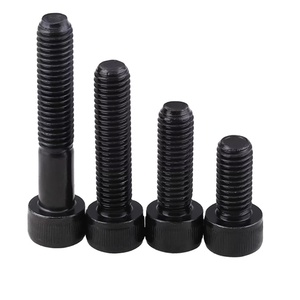
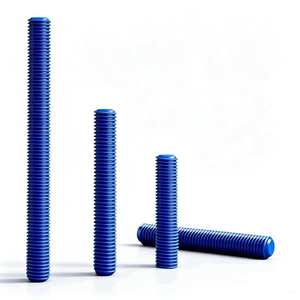
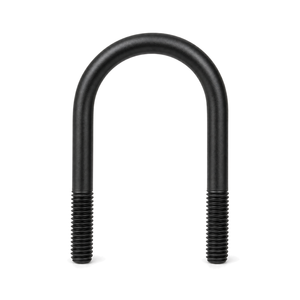
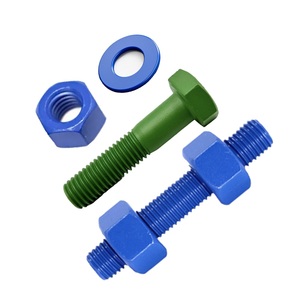
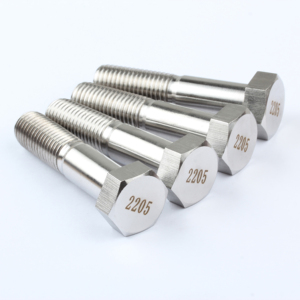
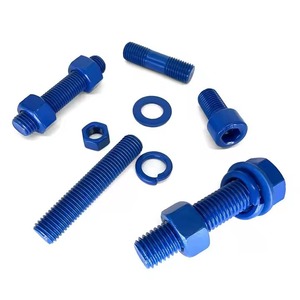
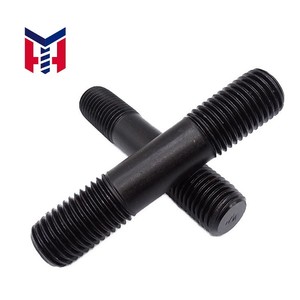
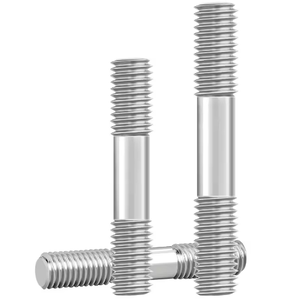
Modern pressure retaining apparatus and dynamic structural systems require fastener tolerances far exceeding conventional commercial hardware. We integrate multi-axis CNC subtractive profiling with hot/cold grain-flow heading.
Unlike machined bar-stock bolting that shears through metallic crystals, our combined hot forging and precision roll threading generates uninterrupted grain flow parallel to the external thread profile. This reduces root stress concentrations by up to 45%, providing superior fatigue endurance limits under cyclic pressure pulsations in ASME Section VIII pressure vessels.
For custom geometries, non-standard pitch parameters, and refractory superalloys such as Hastelloy C276, Inconel 718, and Titanium Grade 5, our high-speed CNC turning centers achieve positional accuracies within ±0.005mm. Class 2A, 3A, and 6g/6h thread gauging are strictly maintained with digital profilometer confirmation on every heat run.
Yielding specific mechanical hardness while averting hydrogen embrittlement is essential for Grade 12.9, ASTM A193 B7, and precipitation-hardening stainless steels (17-4 PH). Our computer-controlled vacuum and solution-annealing furnaces establish homogenous martensitic or dual-phase structures conforming to ASTM A370 and NACE MR0175/ISO 15156 thresholds.
Direct comparison of core fastener alloys engineered to resist chloride stress corrosion, cryogenic embrittlement, and high-temperature creep.
| Alloy Category | Primary Grade / UNS | Governing Standard | Tensile / Yield (MPa) | Operational Environment & NACE Status |
|---|---|---|---|---|
| High-Strength Carbon Steel | Grade 12.9 / 4140 | ISO 898-1 / ASTM A193 B7 | 1220 / 1100 | High-pressure mechanical clamping; requires PTFE/Zinc plating against moisture. |
| Austenitic Stainless | 316L / S31603 (A4-80) | ASTM A193 B8M / ISO 3506 | 800 / 600 | Chemical marine exposure; superior general acid resistance, non-magnetic baseline. |
| Duplex Stainless | 2205 / UNS S32205 | ASTM A479 / A182 F51 | 850 / 550 | PREN ~35; offshore topside risers, sour-gas gathering systems, high pitting immunity. |
| Super Duplex | 2507 / UNS S32750 | ASTM A479 / A182 F53 | 1000 / 750 | PREN ≥ 42 Subsea manifolds, high chlorides, NACE MR0175 sour compliant. |
| Precipitation Hardening | 17-4 PH / UNS S17400 | ASTM A564 Type 630 | 1070 / 1000 (H1025) | Extreme shear integrity; aerospace control linkages, dynamic pump shaft fixings. |
| Nickel Superalloy | Inconel 718 / N07718 | ASTM B637 / API 6A 718 | 1310 / 1100 | Cryogenic to 650°C stability; gas turbine casing joints and nuclear core fastenings. |
How Tier-1 engineering procurement departments are transforming their mechanical component supply chains through digitised compliance, automated verification, and supply chain redundancy.
Manual paperwork is being replaced by cryptographically verifiable digital MTRs conforming to EN 10204 3.1. Instant QR-code scans link bolt head markings directly to spectroscopic melt logs, Charpy impact graphs, and heat-treat records.
European and American EPCs increasingly mandate Scope 3 carbon auditing for raw alloy billets. Fastener manufacturers utilizing Electric Arc Furnace (EAF) processing and scrap circularity hold decisive contract advantages.
Life Cycle Costing (LCC) models prioritize multi-layer fluoropolymer and zinc-nickel barrier coatings over simple electro-galvanizing, lowering offshore maintenance shutdowns and bolt change-out costs by up to 70%.
Global supply disruptions have prompted procurement directors to partner with fully certified, integrated manufacturing exporters that combine raw alloy stocking, hot forging, CNC machining, and coating under one audited quality roof.
Headquartered in Mumbai with our advanced precision manufacturing facility in Rajkot, TorqBolt Inc. brings over a decade of specialized metallurgical bolting production to the global stage. We bridge the critical gap between massive volume commercial bolt factories and slow, high-cost custom workshops.
Inquire NowKey technical insights to streamline your RFQ process and prevent common design and documentation oversights.
An EN 10204 3.1 inspection certificate is issued by the manufacturer's authorized quality representative independent of production. It details exact chemical composition (heat analysis), mechanical tensile/yield testing, elongation, reduction of area, Charpy impact energy at specified temperatures (-46°C or -196°C), and hardness values correlating directly to the physical heat number stamped on each bolt.
Cold forming upsets the metal while preserving continuous longitudinal grain boundary lines, delivering superior tensile fatigue strength for standardized high-volume fasteners. CNC machining excels at complex, customized geometries, large diameters (>M36 or >1-1/2"), and work-hardening superalloys (such as Inconel and Hastelloy) where tooling wear during cold deformation is prohibitive.
Austenitic and duplex stainless steels tend to gall under dynamic torque loads due to micro-welding of surface oxide films. We recommend pairing dissimilar material hardnesses (e.g., cold-worked bolts with slightly softer annealed nuts), applying Xylan/PTFE low-friction fluoropolymer coatings, or incorporating dedicated anti-seize pastes with controlled friction coefficients.
For sour hydrocarbon service containing wet H2S, fasteners must avoid Sulfide Stress Cracking (SSC). The RFQ must indicate sour service so that we control final heat treatment (solution annealing and tempering), verify microhardness limits via Vickers/Rockwell testing, and validate ferritic/austenitic phase ratios in duplex grades (typically 40% to 60%).
PTFE/fluoropolymer coatings provide a barrier against marine salt-fog corrosion (tested to ASTM B117 exceeding 3,000 hours without red rust) while delivering a low, consistent coefficient of friction (μ = 0.08 to 0.12). This ensures uniform bolt preload tension under pneumatic wrenching and prevents torch-cutting during maintenance turnaround.
Pitting Resistance Equivalent Number (PREN = %Cr + 3.3%Mo + 16%N) quantifies an alloy's resistance to localized pitting in seawater. While standard 316L has a PREN of approximately 25, Duplex 2205 achieves ~35, and Super Duplex 2507 exceeds 42. For subsea components or splash-zone bolting, a PREN > 40 is standard to prevent pitting under bio-fouling deposits.
Yes. We routinely host third-party inspection authorities including DNV, Lloyd's Register, Bureau Veritas, TÜV Rheinland, and SGS to witness mechanical testing, PMI, and dimensional verifications, culminating in an EN 10204 3.2 inspection certificate co-signed by our QA director and the external surveyor.
To avoid quoting iterations, supply: material grade/UNS number, dimensional standard (e.g., ASME B18.2.1, DIN 939), thread specification (UNC/UNF/Metric), diameter, total length/usable shank length, quantity, surface protection requirements, design temperature range, and certification scope (EN 10204 3.1 or 3.2, PED, NACE).
Connect directly with our technical metallurgy and sales engineering department. Receive comprehensive technical quotations, certificate samples, and production schedule confirmations within 24 hours.
Inquire Now