
Manufactured using advanced hot-forging, precision CNC threading, and calibrated heat-treatment technologies. Every batch fulfills dimensional tolerances of ASME B18.2.1, DIN 931/933, and ISO 4014.
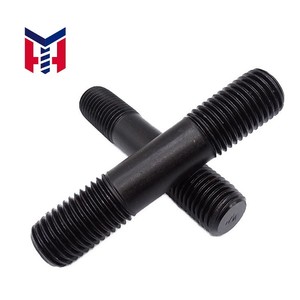
Engineered for pressure vessels, pipeline valves, and ASME B16.5 flange assemblies. Features precision UNC/8UN rolled threads to distribute mechanical load uniformly across high-stress clamping faces.
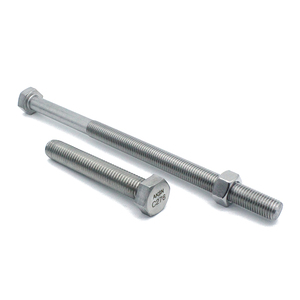
Precipitation-hardenable nickel alloy fasteners built for downhole sour-gas environments (NACE MR0175). Combines extreme pitting resistance (PREN > 42) with high tensile and yield strength.
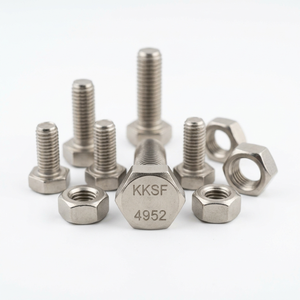
Produced in grades A2-70, A4-80, 316L, and dual-certified duplex stainless steels. Matched thread hardness parameters prevent thread galling under rigorous high-torque installation protocols.
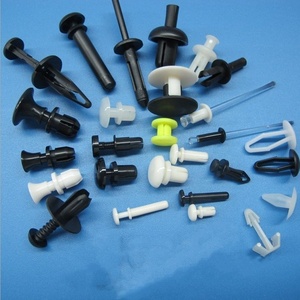
High-impact, vibration-damping PA66 non-metallic clips developed for automotive harness routing, chassis underbody panels, and galvanic isolation assemblies in composite marine structures.
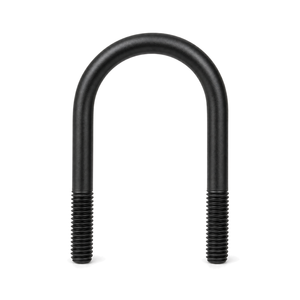
Cold-bent and stress-relieved SS304/SS316 U-bolts with black oxide or PTFE fluoropolymer coatings. Engineered to securely cradle critical process piping while isolating structural vibration.
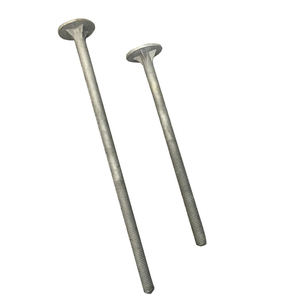
Hot-dip galvanized heavy timber fasteners configured with underhead fins or nibs to eliminate rotation during nut torquing. Ideal for marine piers, crane mats, and heavy coastal bridge construction.
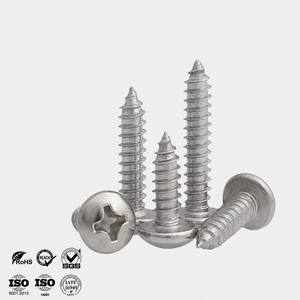
Formed from work-hardened AISI 304 and 316 wire stock with cold-extruded lead threads. Provides rapid tap engagement into thin-gauge alloy sheets, chemical HVAC ducts, and maritime enclosures.
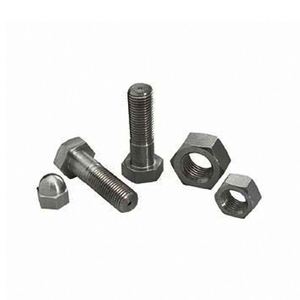
Quenched and tempered high-strength fasteners providing minimum tensile strength of 1220 MPa. Engineered for heavy mining excavators, hydraulic power presses, and severe dynamic fatigue joints.
Mechanical failures in critical flange interfaces rarely stem from pure tensile overload. Instead, they result from complex electrochemical interactions including Chloride Stress Corrosion Cracking (CSCC), hydrogen-induced embrittlement, galvanic disparity, and high-temperature creep relaxation.
Inconel 718 (UNS N07718) utilizes niobium-assisted gamma double prime (γ″) precipitation hardening to deliver ultimate tensile strengths exceeding 1350 MPa, retaining exceptional load-bearing performance from cryogenic depths up to 650°C. Inconel 625 (UNS N06625) relies on solid-solution strengthening via molybdenum and niobium within a nickel-chromium matrix, completely neutralizing chloride pitting and crevice corrosion across offshore risers and scrubber ducting.
Featuring a carefully balanced biphasic 50/50 microstructure of austenite and ferrite, Super Duplex UNS S32750 delivers yield strengths double that of standard austenitic grades like 316L. With a Pitting Resistance Equivalent Number (PREN) systematically maintained above 42, these alloys prevent localized pitting and transgranular stress cracking in warm, halogen-saturated subsea environments while dramatically decreasing structural fastener mass.
Hastelloy C276 (UNS N10276) contains elevated concentrations of tungsten (3-4.5%) and molybdenum (15-17%), making it uniquely resilient against strong oxidizing salts, wet chlorine, and formic acids. Monel 400 (UNS N04400) provides complete immunity to non-oxidizing chloride solutions and rapidly flowing seawater, remaining the definitive alloy choice for high-pressure hydrofluoric (HF) alkylation process plants.
| Alloy Family & Grade | UNS Designation | Standard Specification | Yield Strength Min. (MPa) | PREN Value | Target Environmental Application |
|---|---|---|---|---|---|
| Inconel 718 | UNS N07718 | ASTM B637 / API 6A CRA | 1034 | ≥ 48 | High-pressure, sour gas wells, subsea manifolds, HPHT downhole tools. |
| Inconel 625 | UNS N06625 | ASTM B446 / NACE MR0175 | 415 | ≥ 50 | Flue-gas desulfurization (FGD), marine splash zones, wet acid chemical synthesis. |
| Super Duplex 2507 | UNS S32750 | ASTM A479 / EN 10088-3 | 550 | ≥ 42.5 | Seawater reverse osmosis (SWRO), subsea umbilical terminations, flowlines. |
| Duplex 2205 | UNS S32205 | ASTM A182 F51 / A276 | 450 | ≥ 35.0 | Cargo chemical tankers, pulp & paper digesters, coastal desalination piping. |
| Hastelloy C276 | UNS N10276 | ASTM B574 / ASME SB-574 | 355 | ≥ 68 | Chlorination systems, sulfur recovery units, pharmaceutical reactors. |
| Titanium Grade 5 | UNS R56400 | ASTM B348 (Ti-6Al-4V) | 828 | N/A (Oxide film) | Weight-critical marine winches, aerospace fasteners, extreme brine autoclaves. |
* PREN calculation derived using PREN = %Cr + 3.3(%Mo + 0.5%W) + 16(%N). Hardness thresholds strictly governed in alignment with ISO 15156 / NACE MR0175 limits.
Procurement teams within Tier-1 EPC conglomerates are moving away from opportunistic transactional buying toward verified supply chains with end-to-end traceability, strict raw-material provenance, and full environmental transparency.
Global procurement teams building pressure equipment inside or for the European Economic Area now mandate that alloy stock originate exclusively from verified material manufacturers approved under PED 2014/68/EU Annex I, Section 4.3. Mill certificates without TÜV or equivalent third-party notified body verification face immediate dock rejection.
Given the rising costs of cobalt, nickel, and molybdenum, component machining from large solid round bars results in unacceptable scrap ratios and disrupts natural metallurgical grain flow. Modern procurement specifications prioritize fasteners forged via induction warm/hot-heading, preserving unbroken grain contours along the bolt head-to-shank transition.
High-pressure piping engineers have phased out simple zinc electroplating due to hydrogen embrittlement risks in bolts exceeding 320 HBW (Rockwell C 32). Procurement has shifted to multi-layer PTFE, fluorocarbon, and ceramic-filled thermoset polymer coatings, which ensure predictable torque coefficients (μ = 0.12–0.14) and over 3,000 hours of ASTM B117 salt-spray protection.
Material mix-ups involving austenitic, duplex, and nickel alloys can cause catastrophic galvanic and mechanical failures. Modern project QA requirements dictate 100% PMI testing on all exotic alloy bolting before shipment, recording spectral chemical fingerprints directly against individual heat numbers on EN 10204 3.1 inspection sheets.
Multi-national engineering groups are calculating Scope 3 embedded carbon emissions across their balance of plant (BOP). Fastener factories that source billets from low-carbon electric arc furnaces (EAF) and deploy digital energy monitoring during induction heating now hold a distinct commercial edge in global competitive bidding.
Physical paper mill test certificates are increasingly replaced by laser-etched DataMatrix codes on bolt heads or flange studs. Field inspectors can scan the fastener in situ with mobile devices to verify chemical analysis, Charpy impact joules at -46°C, and original tensile elongations, drastically accelerating facility turnover audits.
Processing exotic and refractory metals requires tight thermo-mechanical control. Cold working work-hardens nickel superalloys rapidly, making specialized metallurgical processing and calibrated tool paths essential.
While basic machine shops single-point cut threads on CNC lathes, our facility rolls threads using precision hydraulic cylindrical dies after final heat treatment wherever geometrically possible. Thread rolling burnishes the thread root, introduces beneficial compressive residual stress, and increases dynamic fatigue thresholds under cyclically pulsing pressure cycles by up to 35% compared to cut threads.
Heading temperatures for nickel alloys like Incoloy 925 and Inconel 718 are held within a narrow processing window (±15°C) to prevent grain coarsening and secondary phase precipitation (such as deleterious sigma phase in duplex steels). Infrared pyrometric sensors continuously track induction coils, automatically diverting out-of-spec blanks before forging strikes the die.
Subsea and LNG bolting applications require verified fracture toughness in freezing operational environments. Our facility performs Charpy V-notch impact testing down to -196°C in accordance with ASTM A370 and ISO 148-1. Lateral expansion, fracture appearance transition temperature (FATT), and impact energy absorptions are methodically documented to satisfy client engineering standards.
Backed by our integrated corporate office in Mumbai and our high-capacity production facility in Rajkot, India, our manufacturing system delivers certified reliability for mission-critical industrial installations.
Certified by TÜV Rheinland in accordance with Pressure Equipment Directive 2014/68/EU Annex I. Authorized to supply raw materials and finished bolting for European pressure vessels, boilers, and heat exchangers.
Our Rajkot factory runs high-speed automated multi-station cold formers, heavy-duty induction hot headers, 5-axis CNC machining centers, and internal thread-rolling mills up to M100 (4") diameter.
Every shipment comes with EN 10204 3.1 inspection certificates detailing original melt heats, mechanical tensile curves, hardness distributions, and micrographic grain sizes. Independent 3.2 third-party inspection (Lloyd's, DNV, Bureau Veritas) is readily accommodated.
Coordinated from our corporate hub in Mira Road East, Mumbai, we handle international export packing, vacuum preservation, rust-inhibiting wrapping, and rapid dispatch across Europe, the Middle East, Southeast Asia, and the Americas.
Clear, engineering-focused answers covering regulatory certifications, material test certifications, torque control parameters, and sour gas compliance.
Connect directly with our Rajkot and Mumbai metallurgical and sales teams. Whether you need standard ASME/DIN flange studs in Super Duplex or custom drawing-based machined fasteners in Inconel 718, we deliver fast technical quotes supported by full EN 10204 3.1/3.2 traceability.