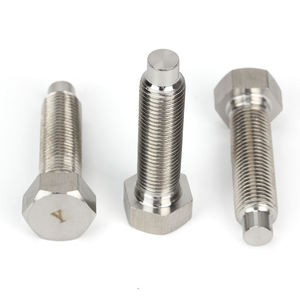
High Temperature Corrosion Resistant C276 Nickel Alloy Hex Head Dog Point Bolt Hexagon Bolt
Engineered from Hastelloy C276 (UNS N10276) for extreme oxidizing media, wet chlorine environments, and high mechanical fatigue resistance.

Tailored manufacturing for critical oil, gas, subsea, chemical, and structural infrastructure. Every fastener is supplied with full material certification, heat number tracking, and stringent quality control.
Engineered from Hastelloy C276 (UNS N10276) for extreme oxidizing media, wet chlorine environments, and high mechanical fatigue resistance.
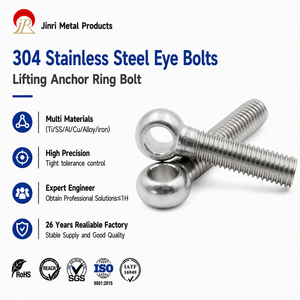
Drop-forged 304 marine rigging hardware with articulated articulation points, proof-tested for heavy off-axis lifting operations.
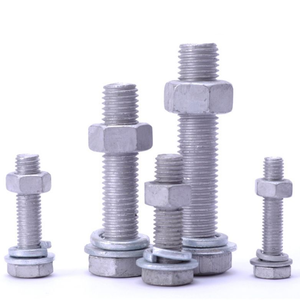
High-tensile structural bolted joints offering high yield clamping strength, compliant with ASTM A325/A490 structural steel codes.
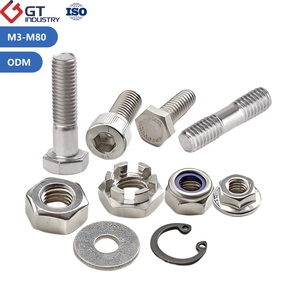
Precipitation-hardened nickel superalloy bolting designed according to API 6A CRA and NACE MR0175 for sour-service wellheads and subsea manifolds.
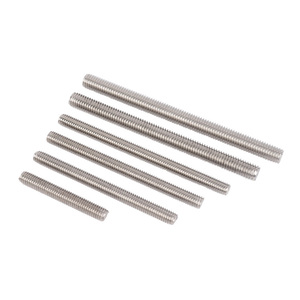
Continuous and double-ended stud configurations for ASME B16.5 flange assemblies, heat exchangers, and high-pressure chemical pipeline joints.
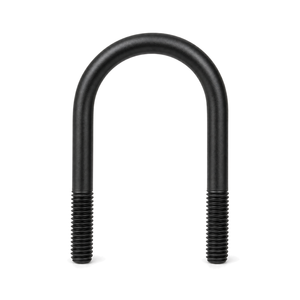
Precision-bent pipe clamping fasteners engineered with anti-vibration saddles and thermoplastic coating options for refinery line mounting.
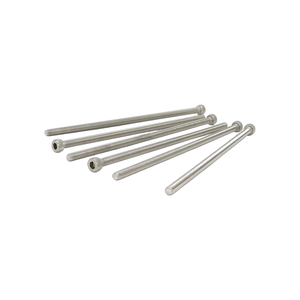
Extra-long internal wrenching socket screws hot-forged and precision-threaded to ISO 4762 / DIN 912 standards for heavy machine casings.
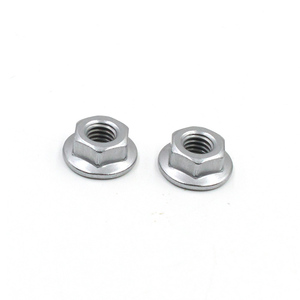
Self-locking integrated flange profile distributing bearing pressure, reducing vibration loosening without the requirement of additional spring washers.
In high-temperature, high-pressure, and highly corrosive operating environments, standard commercial bolts fail rapidly due to stress corrosion cracking (SCC), hydrogen embrittlement, or thermal creep. Our advanced metallurgical manufacturing fills the critical gap.
For applications where temperatures exceed 550°C or where reducing chemicals dominate:
Balancing high mechanical yield strength with superior localized corrosion protection:
Engineered for lightweighting, cryogenic reliability, or extreme galvanic isolation:
Cross-reference critical mechanical metrics and corrosion resistance properties to optimize bolting longevity.
| Alloy Grade | UNS Number | Yield Strength (Min, MPa) | Tensile Strength (Min, MPa) | Service Temp. Limit | Key Performance Attribute |
|---|---|---|---|---|---|
| Inconel 718 | N07718 | 1034 | 1240 | -250°C to 650°C | High rupture strength; immune to age-related embrittlement; API 6A CRA compliant. |
| Inconel 625 | N06625 | 415 | 827 | Cryogenic to 980°C | High resistance to pitting, chloride stress corrosion cracking, and severe oxidation. |
| Hastelloy C276 | N10276 | 355 | 790 | Sub-zero to 1040°C | Resists ferric and cupric chlorides, wet chlorine gas, and aggressive chemical processing. |
| Super Duplex 2507 | S32750 | 550 | 750 | -50°C to 300°C | PREN ≥ 42; high resistance to crevice corrosion in subsea offshore lines. |
| Duplex 2205 | S32205 | 450 | 655 | -50°C to 300°C | Double the design strength of 316; resistant to chloride SCC in marine tanks. |
| Monel 400 | N04400 | 170–345 | 480–620 | Sub-zero to 480°C | High resistance to hydrofluoric acid, caustic solutions, and cavitation wear. |
| Titanium Gr. 5 | R56400 | 828 | 895 | -200°C to 400°C | Lightweight (4.43 g/cm³); seawater corrosion immunity; high fatigue resistance. |
| 316L Stainless | S31603 | 220 | 520 | Cryogenic to 800°C | General food-grade, pharmaceutical, and atmospheric marine corrosion resistance. |
The industrial bolting sector is shifting from basic commercial-grade off-the-shelf procurement toward lifecycle-engineered custom alloys driven by harsher operating conditions, sustainability mandates, and supply-chain digital tracing.
The global shift toward green hydrogen production, carbon capture and storage (CCS), and next-generation nuclear Small Modular Reactors (SMRs) presents severe material challenges. Atomic hydrogen permeation causes rapid intergranular microcracking in standard high-strength bolting.
Future procurement focuses on vacuum-induction melted (VIM-VAR) nickel alloys and customized precipitation-hardened steels strictly tested according to ASTM F1940 and ISO 16573 for hydrogen embrittlement threshold resistance.
EPC contractors and major plant operators now demand complete digital transparency over supply chains. Simple certificates of conformity (CoC) are no longer sufficient for mission-critical joints.
Procurement contracts require EN 10204 Type 3.1 or independent Type 3.2 third-party inspection (TUV, DNV, Lloyd’s Register) directly linking raw ingot melt chemistry, hot forging ratios, heat treatment cooling curves, and 100% Positive Material Identification (PMI) via optical emission spectroscopy.
Galling represents the leading cause of joint failure during the torque makeup of austenitic stainless and nickel alloy threads. Traditional anti-seize pastes wash away under high sea-current velocities and break down in vacuum or high heat.
The trend centers on bonded dry-film lubricants, such as Xylan® fluoropolymer, thermoset PTFE, and ceramic-metallic zinc-flake coatings, which ensure steady torque-tension conversion, low friction coefficients (μ = 0.08–0.12), and over 3,000 hours of ASTM B117 salt spray endurance without seizure.
Combining complete primary forming lines, automated CNC machining clusters, and in-house mechanical and metallurgical testing laboratories under a single audited ISO 9001:2015 and PED 2014/68/EU management system.
We operate 500-ton hydraulic forging presses and multi-axis CNC Swiss turning centers. We choose cold heading for standard profiles to preserve grain flow, induction hot-heading for large-diameter exotic billets (up to M100 / 4"), and CNC machining for complex bespoke tolerances.
The corrosion resistance and mechanical properties of precipitation-hardened nickel alloys and super duplex grades depend entirely on strict heat treatment. Our calibrated vacuum and protective atmosphere furnaces perform solution annealing, water quenching, and age hardening to eliminate damaging sigma phases.
Every production batch is tested before leaving the factory. Our testing equipment includes handheld XRF analyzers, optical emission spectrometers, universal tensile testing machines, Charpy impact testers (capable of testing down to -196°C for cryogenic service), hardness testers, and optical thread profile projectors.
Key technical answers for procurement directors, QA inspectors, and project engineering leads.
Connect directly with our engineering team to review technical specifications, confirm material availability, and obtain a prompt, competitive quotation.
Get a Quote