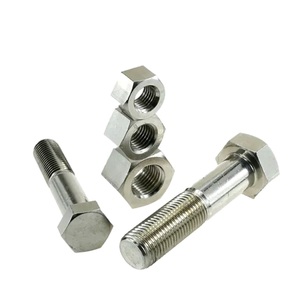
China Best Inconel 718 Bolts Factories & Factory

Precision-Forged UNS N07718 Superalloy Bolting | API 6A, ASTM B637 & NACE MR0175 Compliant

100%
Heat-Treated Full Traceability
1,400+ MPa
Ultimate Tensile Strength
650°C
Creep-Rupture Capability
EN 10204 3.1/3.2
Certified Quality Guarantee
Engineered Fastening Solutions

Featured Nickel Alloy & Superalloy Fasteners

Manufactured using hot die-forging, precision CNC threading, and solution-annealing plus precipitation hardening routes.
Technical Whitepaper

Engineering Inconel 718 (UNS N07718) Bolting: Metallurgy, Quality, and Factory Controls

As deepwater exploration, aerospace turbomachinery, and supercritical power plants face escalating temperatures and sour-gas corrosive profiles, the demand for high-integrity Inconel 718 fasteners has grown exponentially. Inconel 718 is a precipitation-hardenable nickel-chromium superalloy containing substantial quantities of iron, niobium, and molybdenum, along with lesser amounts of aluminum and titanium. Unlike classic cobalt-based superalloys or standard austenitic stainless steels, Alloy 718 combines high yield, tensile, and creep-rupture properties up to 650°C (1200°F) with exceptional weldability and resistance to strain-age cracking.

Metallurgical Architecture & Age-Hardening Mechanism

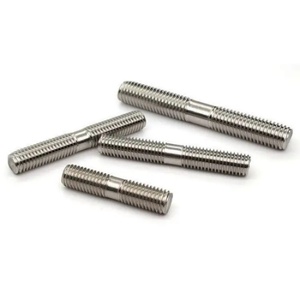
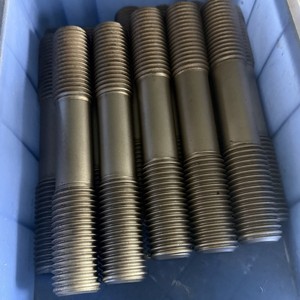
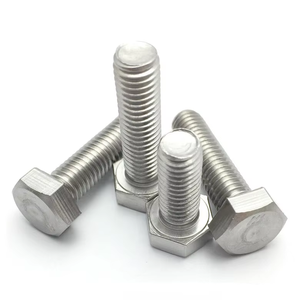
The standout mechanical capability of Inconel 718 stems from its gamma prime (γ′ - Ni3(Al, Ti)) and dominant gamma double-prime (γ″ - Ni3Nb, body-centered tetragonal) coherent precipitate phases. The sluggish precipitation kinetics of γ″ allow our manufacturing facility to anneal, hot forge, and machine complex heavy-hex bolts, 12-point cap screws, and double-ended studs without premature micro-cracking during rapid cooling cycles.

Alloy Element Composition Limit (%) Primary Metallurgical Function
Nickel (Ni) 50.00 – 55.00 FCC austenitic matrix stabilization, stress corrosion cracking resistance
Chromium (Cr) 17.00 – 21.00 High-temperature oxidation barrier, passivation in acidic environments
Niobium + Tantalum (Nb+Ta) 4.75 – 5.50 Precipitation of coherent γ″ phase, creep-rupture inhibition
Molybdenum (Mo) 2.80 – 3.30 Solid solution strengthening, prevention of pitting and crevice corrosion
Titanium (Ti) / Aluminum (Al) 0.65–1.15 / 0.20–0.80 Auxiliary precipitation of γ′ phase, refined grain morphology

Stringent Manufacturing Protocols in Tier-1 Chinese Factories

Premier Chinese superalloy fastener production relies on rigorous processing routes designed to avoid detrimental Laves phase segregations:

  • VIM + VAR/ESR Double-Melt Stock: Raw material bars are procured from vacuum induction melted and vacuum arc remelted stock with verified macro-grain boundary distribution.
  • Controlled Hot Forging: Performed below the δ-solvus temperature (typically 980°C–1020°C) to maintain fine grain size (ASTM 8 or finer), critical for maximizing low-cycle fatigue endurance.
  • Post-Heat-Treatment Thread Rolling: Rather than thread cutting, rolled threads formed after precipitation heat treatment induce deep residual compressive stresses in thread roots, boosting cyclic dynamic fatigue life by over 300%.
  • Sour Service Compliance: Strict solution annealing (950°C to 980°C followed by controlled aging) controls hardness within 40–45 HRC in line with NACE MR0175 / ISO 15156 and API Spec 20E / 20F quality levels.
Strategic Outlook

Future Procurement Trends for Inconel 718 Fasteners

Anticipate supply chain adjustments and technical compliance shifts over the next 3 to 5 years.

⚙

1. Integration of API Spec 20F BSL-2 and BSL-3

Procurement teams are shifting away from generic ASTM B637 specifications toward rigorous API Spec 20F Bolting Specification Levels (BSL-2 and BSL-3). Buyers increasingly require mandatory third-party witness inspection, 100% volumetric ultrasonic evaluation, and strict heat-lot macroetch verification to eliminate micro-inclusions.

📈

2. Near-Net-Shape Forging & Powder Metallurgy

With global nickel raw material volatility, leading manufacturing plants utilize automated hot-upset heading and closed-die near-net-shape tooling. This approach cuts raw material waste by 35% compared to solid bar machining, offering global project engineering contractors substantial cost savings.

🛡

3. Specialized Anti-Galling Thin-Film Coatings

Because nickel alloys are prone to thread galling during automated torquing, procurement orders increasingly bundle Inconel 718 bolts with molybdenum disulfide (MoS2), thermal diffused zinc, or ceramic-reinforced fluoropolymer (PTFE) dry films for precise torque-tension relationships.

Engineering Evolution

Technology & Manufacturing Development Trends

How front-running Chinese manufacturers maintain consistency and quality control in superalloy fasteners.

☑

Direct Temperature-Controlled Induction Heading

Eliminating radiant furnace temperature gradients, induction heating with pyrometric optical controls heads blanks within a ±5°C window, preventing secondary phase coarse precipitation and notch embrittlement at the bolt head-to-shank fillet.

🔬

Non-Destructive Defect Characterization

Modern plants are adopting multi-frequency eddy current testing combined with high-resolution magnetic particle inspection (for suitable matrix conditions) and penetrant testing (ASTM E1417) to detect sub-surface micro-voids, avoiding subsea pipeline and turbine casing failures.

💻

Digital Material Traceability & Smart Certificates

To reduce counter-fitting risks in global projects, leading factories embed cryptographic QR links on EN 10204 3.1 MTRs, giving procurement leads immediate visibility into melt furnace heat numbers, yield graphs, impact energy, and spectral analysis sheets.

Why Choose Our Factory

Our Core Manufacturing Advantages

Deep expertise in nickel superalloys, backed by verifiable quality certifications and reliable delivery schedules.

🏅

Accredited Quality Systems

Operating under ISO 9001:2015 and TUV Rheinland approved PED 2014/68/EU, ensuring our pressure-retaining bolting satisfies European and North American pressure vessel directives.

🔧

In-House Forging & CNC Facilities

From M3 micro-screws up to M100 heavy flange studs, our Rajkot and advanced facilities handle cold forging, hot forging, thread rolling, and precision 5-axis CNC machining under one roof.

📋

Strict In-House Metallurgy Lab

Equipped with optical emission spectrometers (OES), tensile and stress-rupture testers, Charpy V-notch impact machines, and micro-hardness testers for batch-by-batch API/NACE verification.

🚀

Direct Global Delivery

Extensive experience shipping crated, sea-worthy, anti-oxidation wrapped orders directly to offshore staging yards, petrochemical sites, and EPC operations worldwide.

Procurement Knowledge Base

Frequently Asked Questions on Inconel 718 Fastener Sourcing

Clear, practical answers to common technical and supply chain questions.
What is the difference between Inconel 718 and Inconel 625 for bolting applications?
While both are nickel-chromium superalloys, their strengthening mechanisms differ. Inconel 625 is a solid-solution strengthened alloy (molybdenum and niobium in an FCC matrix) with an annealed yield strength around 415–550 MPa, making it an excellent choice for seawater corrosion resistance and moderate structural stresses. Inconel 718 is precipitation hardened via γ″ phases, yielding strengths over 1,030–1,100 MPa—nearly double that of 625. Alloy 718 is preferred where high tensile strength, creep resistance up to 650°C, and compact bolt diameters are essential under high preloads.
Why must Inconel 718 threads be rolled rather than cut for critical applications?
Cut threading interrupts the material grain flow and creates microscopic tear marks at the thread roots, serving as stress concentrators where hydrogen-induced stress cracking or fatigue failure can start. Thread rolling reshapes the grain flow to contour smoothly along the thread profile and induces beneficial residual compressive stress at the thread root. For dynamic equipment, API 6A wellhead equipment, and turbomachinery, rolled threads extend bolt fatigue cycles substantially.
Can your factory furnish EN 10204 3.2 certification with third-party witnessing?
Yes. While standard shipments include EN 10204 3.1 mill test inspection reports covering heat chemical analysis, room and elevated temperature tensile properties, hardness values, and PMI, we also coordinate EN 10204 3.2 certification. We regularly work with independent inspection agencies including DNV, Lloyd's Register, TUV, BV, and SGS to witness melt tracking, destructive sample pulls, and non-destructive examinations.
How do you prevent galling on Inconel 718 stud bolts and heavy hex nuts?
Austenitic and nickel alloys naturally self-weld under heavy contact pressure. We minimize galling risk through three proven approaches: tight thread tolerance controls, differential hardness pairing (e.g., matching aged Alloy 718 studs with compatible nuts at balanced hardness levels), and applying specialized thin coatings such as PTFE fluorocarbon, Xylan, silver plating, or MoS2 dry lubricant prior to project delivery.
What essential details should be included in an Inconel 718 RFQ?
To receive an accurate and timely engineering quote, specify: (1) Material specification (e.g., ASTM B637 UNS N07718, AMS 5662/5663, API Spec 20F BSL-2); (2) Dimensional standards (ASME B18.2.1, DIN 933, ASME B16.5 stud lengths, or custom drawings); (3) Thread type and class (UNC/UNF, 8UN, Class 2A/2B or metric 6g/6H); (4) Surface finish or dry film coating; (5) Documentation and inspection requirements (EN 10204 3.1 or 3.2, NACE MR0175, Charpy impact tests, microstructural grain sizing); and (6) Destination and target delivery dates.

Discuss Your Superalloy Fastener Requirements

Need certified Inconel 718 hex bolts, heavy studs, or bespoke valve hardware? Connect directly with our engineering and procurement team for material feasibility checks, volume quotes, and production scheduling.

Contact Us
Contact Us