ISO 9001:2015 · PED 2014/68/EU · EN 10204 3.1 Certified

China Best Marine Grade Fasteners Manufacturer & Factory

Global engineering leader in premium 316/316L, Duplex 2205, Super Duplex 2507, Gr5 Titanium, and Silicon Bronze saltwater bolting solutions for critical offshore and maritime infrastructure.

100%
Heat Traceability & PMI Verification
PREN > 42
Super Alloy Pitting Resistance
55+
Export Jurisdictions Worldwide
3,000+ Hrs
ASTM B117 Salt Fog Endurance
Marine Bolting Portfolio

Engineered Marine Grade Fastener Solutions

Fabricated under ISO 9001:2015 management and certified to PED 2014/68/EU standards, our high-integrity fasteners deliver uncompromising mechanical fatigue life and localized corrosion resistance in high-chloride splash zones and subsea pipelines.

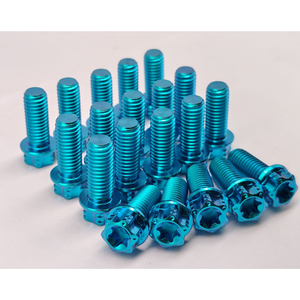
Titanium Ti-6Al-4V High Strength Gr5 Titanium Hex Bolt M6 M8 M10 Anti-Gallling Lightweight Fastener for Aerospace Marine

High-Strength Gr5 Titanium Hex Bolts Anti-Galling

Grade 5 (UNS R56400) aerospace-marine hex bolts with specialized anti-galling surface finishes, immune to ambient saltwater pitting and galvanic attack.

Tensile: > 950 MPa | Density: 4.43 g/cm³ Applications: Ocean Racing, Deep Subsea Hulls
Engineering Whitepaper

Marine Fastener Metallurgy & Chloride Stress Cracking Defense

In high-salinity oceanic environments, fastener failure rarely occurs from straightforward mechanical overloading. Instead, structural collapse is overwhelmingly triggered by Chloride-Induced Stress Corrosion Cracking (CSCC), Crevice Corrosion beneath washer assemblies, and aggressive Pitting Corrosion. Operating as China's premier marine fasteners factory, our metallurgical facility formulates fastening systems designed to counteract localized passive layer degradation.

The survivability of a marine fastener is governed primarily by its Pitting Resistance Equivalent Number (PREN), calculated as PREN = %Cr + 3.3(%Mo + 0.5%W) + 16(%N). Standard austenitic AISI 304 fasteners fail rapidly when exposed to constant seawater splash zones due to a low PREN (~18.0). To ensure minimum 25-to-50-year structural life, our facility engineers fasteners utilizing cold-forged AISI 316/316L (PREN 23-25), Duplex 2205 (PREN 34-36), and Super Duplex UNS S32750 / Zeron 100 (PREN > 42).

Alloy Grade UNS / DIN PREN Rating Tensile Strength (MPa) Yield Strength (MPa) Optimal Marine Environments
AISI 316 / 316L (A4-80) UNS S31603 / 1.4404 23 - 25 800 MPa 600 MPa Coastal piers, boat deck fittings, architectural marine architecture.
Duplex 2205 UNS S32205 / 1.4462 34 - 36 850 - 1000 MPa 550 - 650 MPa Desalination high-pressure pumps, ballast systems, splash zones.
Super Duplex 2507 UNS S32750 / 1.4410 > 42.0 1000 - 1150 MPa 750 - 850 MPa Subsea risers, deep-ocean oil & gas manifolds, sour gas lines.
Titanium Grade 5 UNS R56400 / 3.7165 Immune 950 - 1050 MPa 880 MPa Naval acoustics, ocean hydrofoils, non-magnetic sonar structures.
Silicon Bronze 655 UNS C65500 / CW116C Biofouling Proof 480 - 620 MPa 275 - 410 MPa Wooden boat planking, seawater intake gates, bronze propeller mountings.
Strategic Sourcing Intelligence

Emerging Procurement & Technological Trends (2025–2030)

Global maritime procurement is pivoting toward total lifecycle-cost minimization rather than initial purchase price. These three disruptive technological trends are shaping how naval architects and EPC contractors specify marine bolting.

Duplex & Super Duplex Standardization

Naval defense and offshore wind platforms are aggressively moving away from traditional 304/316 austenitic fasteners toward Duplex 2205 and Super Duplex 2507. With roughly double the yield strength of A4-80 stainless steel, EPC engineers achieve a 20-30% reduction in total fastener weight and diameter while completely eliminating SCC failures down to -50°C submerged depth.

Nano-Ceramic & Hybrid Fluoropolymer Barriers

Bare stainless steels in high-torque assemblies are inherently vulnerable to cold-welding thread galling. The market is shifting to factory-applied multi-tier coatings: inorganic zinc-nickel baserails layered with high-lubricity PTFE / Xylan fluoropolymers. This provides ultra-low friction coefficients (μ = 0.08–0.12) to ensure precise clamp loading and up to 3,500 hours of neutral salt spray testing without red rust.

Digital Traceability & EN 10204 3.2 Verification

Driven by strict environmental and risk mandates, tier-1 marine contractors require instant digital traceability from raw smelt to installed flange. Procurement teams now mandate EN 10204 3.1 chemical-mechanical mill documentation as the baseline, with growing demand for independent 3.2 inspection (DNV, Lloyd’s Register, ABS, or TÜV) witnessed testing prior to container dispatch.

Manufacturing Superiority

Why Tier-1 Marine Contractors Source From Our Factory

Consolidating advanced multi-station cold heading, closed-die hot forging, and 5-axis CNC machining centers under an audited ISO 9001:2015 / PED 2014/68/EU system, we bridge Chinese scale with European quality standards.

Advanced Forming Technologies

Integrated automated cold-forging presses for standard metric/UNC bolts, combined with induction hot-forging for heavy diameters (up to M100 / 4") preserving uninterrupted metal grain flow lines.

Strict NACE & Sour Service Compliance

Specialized vacuum solution annealing, quenching, and precipitation age-hardening lines with stringent hardness control conforming strictly to NACE MR0175 / ISO 15156 subsea parameters.

Comprehensive In-House QA Lab

Equipped with Thermo Fisher Niton XRF analyzers for 100% PMI testing, Charpy impact testing down to -196°C, automated optical sorters, and calibrated optical thread profile comparators.

Tailored Marine Project Packaging

Heavy-duty, waterproof VCI anti-corrosion barrier packing, moisture-desiccant vacuum sealing, and fumigated maritime seaworthy timber crates designed for direct delivery to global shipyards.

Procurement Knowledge Base

Frequently Asked Questions on Marine Grade Fasteners

Critical technical guidance for international procurement officers, offshore structural engineers, and quality assurance inspectors.

Why is 316 / A4 stainless steel specified as the bare minimum for marine fasteners over 304?

While 304 stainless steel contains 18% chromium and 8% nickel, it lacks molybdenum entirely. Molybdenum (2.0% to 3.0% in Grade 316) drastically boosts resistance to localized chloride pitting and crevice corrosion. In marine splash zones or submerged operations, chloride ions break down the passive chromium-oxide film on 304 stainless, causing catastrophic pitting in weeks. Grade 316 (A4-70 / A4-80) provides the baseline passive protective stability required to resist ambient saline mist.

How does your factory prevent thread galling (cold-welding) in high-torque stainless bolts?

Thread galling occurs when high clamping friction strips the microscopic oxide layer, causing microscopic asperities to fuse. Our factory mitigates galling through three technical protocols: (1) pairing dissimilar hardness ratings (e.g., A4-80 bolts combined with A4-70 nuts), (2) precision thread rolling that achieves an ultra-smooth root surface finish (Ra < 0.4 μm), and (3) applying engineered dry-film lubricants including anti-galling wax, molybdenum disulfide (MoS2), or PTFE fluoropolymer barrier coatings.

What documentation accompanies export shipments of critical marine fasteners?

Every production lot is dispatched with a comprehensive quality dossier conforming to EN 10204 Type 3.1. This includes full heat-number traceability to the steel mill, optical emission spectrometry (OES) chemical analysis, tensile and proof-load test charts, Rockwell/Brinell hardness verification, and ASTM B117 salt spray exposure logs. If required by class society rules (ABS, DNV, Bureau Veritas, or Lloyd's Register), third-party witnessed EN 10204 Type 3.2 certification is coordinated seamlessly.

When should an engineer specify Silicon Bronze fasteners over 316 Stainless Steel?

Silicon Bronze (typically alloy C65100 or C65500) is specified in two primary applications: First, in wooden or composite boat construction where tannins and anoxic (oxygen-depleted) water trapped in hulls induce rapid crevice corrosion on stainless steels (which require continuous oxygen to maintain passivity). Second, in assemblies requiring natural anti-biofouling properties, non-magnetic signatures (naval acoustic vessels), or galvanic compatibility with submerged cast bronze rudders and sea valves.

What are your manufacturing capabilities for custom or non-standard fasteners?

In addition to standard metric (DIN, ISO) and imperial (ASME, ASTM) profiles, our factory specializes in custom drawing-based maritime hardware. Our facility operates multi-axis CNC Swiss turning centers alongside hot-forging presses capable of handling exotic superalloys including Inconel 625/718, Monel 400/K500, Hastelloy C276, and Titanium Gr2/Gr5, with batch quantities ranging from rapid prototyping runs to full container-load production.

Need Heavy Marine Fasteners Engineered for Harsh Waters?

Consult with our naval metallurgical engineering specialists. Receive mill-certified test reports, tailored coating specifications, and rapid bulk quotation pricing within 24 hours.

Contact Us