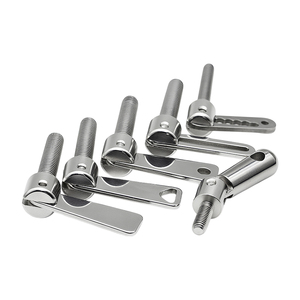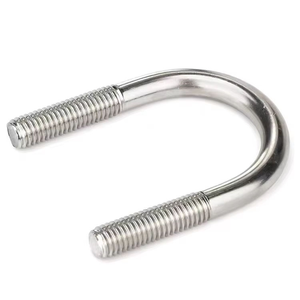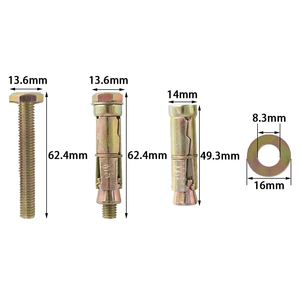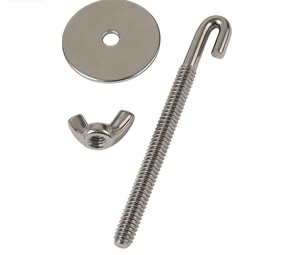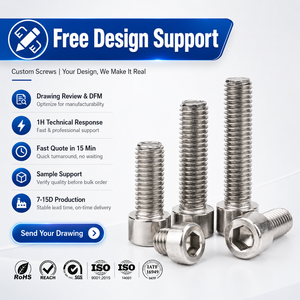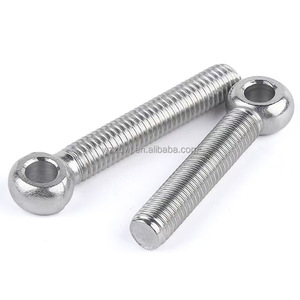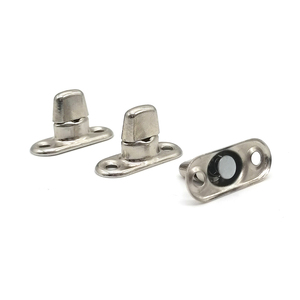
Marine Boat Yacht Fixing Fastener Standard Legs Eyelet Stainless Steel & Brass CNC Machined Nickel-Plated
Processing: 5-Axis CNC Turned & Milled
Application: Deck fittings, rigging enclosures
Manufactured under strict ISO 9001:2015 and PED 2014/68/EU protocols. Every fastener batch undergoes stringent chemical analysis, destructive yield checks, and 100% thread gauging to eliminate failure risks in high-salinity subsea environments.
Combining world-class metallurgy, full heat-batch traceability, and stringent European pressure vessel directive compliance under a unified quality assurance management umbrella.
Certified by TUV Rheinland for pressure-retaining subsea bolting. Our production controls satisfy European Pressure Equipment Directives and API 20E Bolting Specification Levels (BSL-1, BSL-2, BSL-3).
Unlike standard fastener suppliers, we master high-deformation hot forging and CNC machining for Inconel 718/625, Hastelloy C276, Super Duplex UNS S32750/S32760, and Titanium Grade 5.
Every shipment is accompanied by complete chemical composition, room and elevated temperature tensile tests, Charpy V-notch impact tests at -46°C, microstructural ferrite verification, and third-party Lloyd's or DNV inspection witnessing.
Strict Rockwell HRC hardness ceilings and solution-annealing plus rapid water quench cycles ensure total immunity to Sulfide Stress Cracking (SSC) and Hydrogen-Induced Stress Cracking (HISC).
In-house PTFE/Xylan® fluoropolymer coating, ceramic zinc-nickel, and sherardizing systems tested beyond 3,000 hours ASTM B117 neutral salt spray without thread seizure or galling during make-up.
Engineered wooden export packaging, moisture-barrier wrapping, and specialized thread caps designed for offshore mobilization direct to shipyards across Rotterdam, Singapore, Houston, and the Middle East.
In deepwater subsea completions, fastener failure is catastrophic. The table below outlines the core metallurgy, Pitting Resistance Equivalent Number (PREN), and international compliance standards our engineering team manufactures against.
| Alloy Grade | UNS / Designation | Yield Strength (Rp0.2 MPa) | PREN Value | Subsea Failure Risk Addressed | Primary Offshore Application |
|---|---|---|---|---|---|
| Super Duplex 2507 | UNS S32750 / EN 1.4410 | ≥ 550 | ≥ 42.0 | Chloride pitting, crevice erosion in splash zones | Subsea Christmas trees, manifold clamp blocks |
| Inconel 718 | UNS N07718 / API 6A 718 | ≥ 827 (120 ksi) | ≥ 48.0 | Hydrogen Embrittlement (HISC) & sour gas (H2S) | Subsea blowout preventers (BOP), HPHT wellheads |
| Inconel 625 | UNS N06625 / Grade 6660 | ≥ 415 | ≥ 50.0 | Intergranular attack & high cyclic fatigue | Hyperbaric flanges, subsea instrumentation lines |
| Titanium Grade 5 | UNS R56400 / Ti-6Al-4V | ≥ 828 | Immune | Galvanic coupling on carbon composite marine structures | Deep-submergence ROV pressure vessels, oceanographic buoys |
| 316L Marine Stainless | UNS S31603 / A4-80 | ≥ 600 | ≥ 25.0 | Atmospheric salt spray & low-load immersion | Yacht rigging, boat fittings, topside conduit clamps |
As offshore operations transition from traditional shallow shelf extraction toward ultra-deepwater, floating offshore wind (FOW), and subsea carbon capture and storage (CCS), procurement dynamics are undergoing structural transformations.
Traditional austenitic stainless steels (304/316) are rapidly being phased out of submerged pressure envelopes due to Stress Corrosion Cracking (SCC) vulnerabilities. Procurement is shifting permanently to Dual-Certified Super Duplex (S32750/S32760) and API 20F Class Inconel 718 to withstand 10,000+ psi hydrostatic pressures.
Subsea tie-back monitoring now demands fasteners equipped with ultrasonic load transducers and embedded RFID micro-tags. This allows remote autonomous underwater vehicles (AUVs) to measure residual clamping force in real-time without physical torque-wrench intervention.
With global environmental restrictions targeting fluoropolymers, subsea bolting manufacturers are replacing standard PTFE coats with high-performance nano-composite multi-layer zinc-nickel and thermal diffusion sherardizing capable of withstanding 50-year design lifetimes without toxic micro-plastic leaching.
Unlike oil and gas wellheads, floating wind turbines introduce continuous, non-linear cyclic shear loads across mooring connectors. Procurement specifications require certified low-temperature impact toughness down to -50°C with mandatory Charpy V-notch verification to prevent brittle fatigue fractures.
International offshore operators have rendered manual paper MTCs obsolete. Smart procurement contracts now enforce immutable digital certificates matching each stud bolt’s cold-stamped heat code directly to molten ingot spectrometer logs and NDT ultrasonic scans.
Western energy majors are increasingly consolidating supply agreements with verified Chinese direct manufacturers capable of supplying end-to-end hot forging, threading, and heat treatment in a single facility to mitigate European lead times that frequently exceed 36 weeks.
Detailed engineering answers to address complex procurement inquiries, specification clearances, and material compliance questions.
HISC occurs under cathodic protection when atomic hydrogen diffuses into high-strength alloys. We prevent this by maintaining strict Rockwell hardness limits (≤ 35 HRC for Super Duplex; ≤ 40 HRC for Inconel 718 per API 6A CRA), fine-grain microstructure forging, and controlled 50/50 austenite-ferrite phase balance.
Every batch includes an EN 10204 3.1 Mill Test Certificate containing chemical composition, yield/tensile strength, elongation, reduction of area, Charpy V-notch impact values, and NDT reports. EN 10204 3.2 certificates witnessed by DNV, BV, or Lloyd's Register are supplied upon request.
Thread rolling is a cold-forming process that burnishes the thread root and preserves continuous grain flow lines along the thread profile. This induces compressive residual stress, significantly increasing fatigue resistance and eliminating microscopic micro-cracks common in cut threads.
API 20E defines Bolting Specification Levels for alloy and carbon steels. BSL-1 involves standard heat-treated fastener protocols. BSL-2 adds mandatory 100% magnetic particle inspection (MPI) and stricter chemistry limits. BSL-3 enforces volumetric ultrasonic testing, microstructural analysis, and individual serialized part traceability.
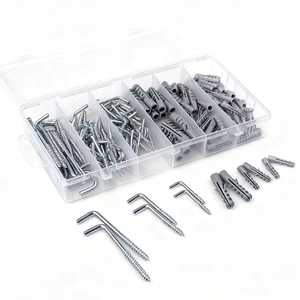
Yes. In addition to standard ASME B18.2.1, DIN 931, DIN 912, and DIN 3570 hardware, our high-precision CNC machining center engineers custom eccentric bolts, tie rods, swiveling eye pins, and hyperbaric clamp blocks up to 200mm (8 inches) shank diameter.
Thread galling is mitigated through differential alloy pairing (e.g., matching 316L studs with Nitronic 60 nuts), strict thread clearance controls, and applying engineered low-friction coatings like Xylan 1070 or molybdenum disulfide (MoS2) dry-film lubricants.
Send us your bill of materials (BOM), engineering drawings, or required ASTM/API material grades. Our senior metallurgical and offshore fastening engineering team will respond with a verified quote and technical review within 12 hours.