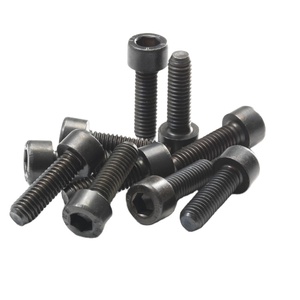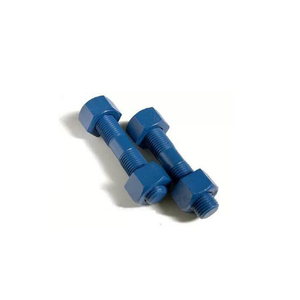
Manufactured via precision hot-forging and CNC machining, our exotic and specialty fasteners adhere strictly to ASME B18.2.1, DIN 912, ISO 4762, and customer-specified engineering drawings.
Peak Tensile Capacity (H900)
Spectrochemical Batch Verification
TUV Rheinland Certified QA
Global Industrial Export Footprint
17-4PH (precipitation hardening) stainless steel—classified under UNS S17400, DIN EN 1.4542, and ASTM A564/A638 Grade 630—represents a paramount metallurgical benchmark for mechanical engineers requiring an exceptional synergy of martensitic high strength and austenitic corrosion resistance. Unlike standard 300-series austenitic stainless steels that rely solely on cold work for mechanical enhancement, or 400-series martensitics vulnerable to aggressive pitting, 17-4PH accomplishes superior mechanical properties through low-temperature aging heat treatments that precipitate a finely dispersed submicroscopic copper-rich epsilon (ε) phase throughout a low-carbon martensitic matrix.
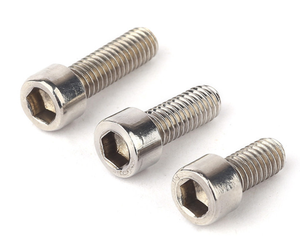
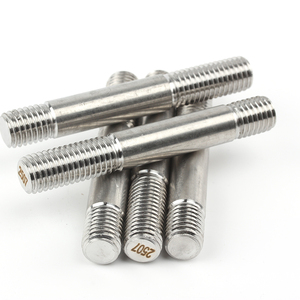
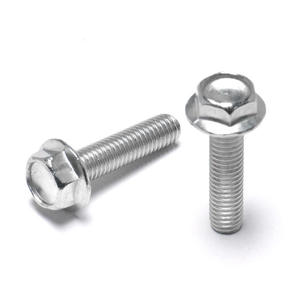
As leading Chinese precision manufacturers and exporters, our forging and CNC machining protocols for 17-4PH hex bolts, stud bolts, socket cap screws, and engineered fasteners focus strictly on microstructure refinement. The chemical balance—nominally 15.0–17.5% Chromium, 3.0–5.0% Nickel, 3.0–5.0% Copper, supplemented with Niobium (Columbium) at 0.15–0.45%—ensures robust thermodynamic stabilization against grain-boundary sensitization during high-temperature thermal cycling.
The mechanical versatility of 17-4PH fasteners is directly determined by the aging condition implemented after initial Solution Annealing (Condition A: 1040°C ± 15°C followed by rapid air or oil quenching). We engineer fasteners to exact international project requirements:
| Heat Treatment Condition | Aging Temperature (°C / °F) | Tensile Strength Rm (MPa min) | Yield Strength Rp0.2 (MPa min) | Hardness Range (Rockwell C) | Primary Industrial Purpose |
|---|---|---|---|---|---|
| Condition H900 | 482°C (900°F) × 1h | 1,310 MPa (190 ksi) | 1,170 MPa (170 ksi) | 40 – 47 HRC | Maximum static strength; aerospace hardware, precision actuators. |
| Condition H1025 | 552°C (1025°F) × 4h | 1,070 MPa (155 ksi) | 1,000 MPa (145 ksi) | 35 – 42 HRC | Balanced toughness & impact performance; marine propeller shafts, pump bolts. |
| Condition H1075 | 579°C (1075°F) × 4h | 1,000 MPa (145 ksi) | 860 MPa (125 ksi) | 32 – 39 HRC | Elevated fracture toughness; chemical processing pressure retainers. |
| Condition H1150 | 621°C (1150°F) × 4h | 930 MPa (135 ksi) | 725 MPa (105 ksi) | 28 – 37 HRC | Ductility prioritized; critical boiler flanges, cryogenic infrastructure. |
| Condition H1150D (Double) | 621°C × 4h + 621°C × 4h | 860 MPa (125 ksi) | 725 MPa (105 ksi) | 24 – 33 HRC (Max 33 HRC) | NACE MR0175 / ISO 15156 compliant; sour oil & gas services with H2S risk. |
From our modern manufacturing facility operating under ISO 9001:2015 and European Pressure Equipment Directive (PED 2014/68/EU) certified by TÜV Rheinland, we engineer bolting solutions that bridge the gap between exotic metallurgical science and cost-efficient industrial production.
Full compliance with European pressure apparatus standards certified by TÜV Rheinland. Our QA protocols satisfy the world's most stringent mechanical auditing bodies for pressure vessel fabrication.
Every single batch of 17-4PH bolts is dispatched with an authentic 3.1 Mill Test Certificate directly validating melt heat numbers, chemical composition, microstructure, and Charpy impact values. Independent 3.2 inspection witnessed by DNV, Lloyd's, or SGS is readily facilitated.
We deploy closed-die hot heading presses for heavy hex structural patterns and high-speed CNC mill-turn machining centers for tight aerospace-tolerance bolts. Thread rolling is executed post-heat treatment to maximize fatigue life.
We supply specialized 17-4PH Condition H1150D and H1150-M bolts certified below 33 HRC hardness thresholds, mitigating the threat of Sulfide Stress Cracking (SSC) in aggressive upstream oilfield environments.
Dedicated shipping logistics handling seaworthy rust-inhibitive packaging, desiccants, heavy wooden crating, and direct site delivery across Europe, the Middle East, North America, Southeast Asia, and Australasia.
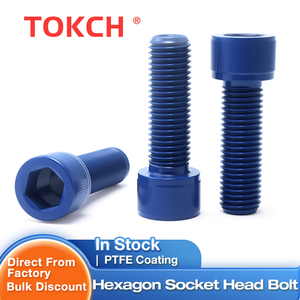
Seamless in-house integration of blue PTFE Xylan fluoropolymer, electro-zinc nickel, hot-dip galvanizing, cadmium substitution treatments, and nitric/citric chemical passivation per ASTM A967.
The industrial demand landscape for precipitation-hardened bolting is undergoing profound technological transformation. Critical application boundaries continue to expand into deeper subsea environments, higher-temperature steam extraction, ultra-high-pressure hydrogen infrastructure, and lightweight aerospace structural frameworks.
Traditional machining removes critical grain boundary flow lines, lowering dynamic fatigue thresholds. Modern high-volume manufacturing utilizes ultra-rigid CNC thread rolling equipment executed directly on heat-treated 17-4PH blanks (such as H1025 or H1075). This cold-forming operation introduces deep compressive residual stresses into the thread roots, elevating cyclic fatigue thresholds by upwards of 35% under pulsating hydrodynamic loads.
To eliminate micro-segregation of copper and niobium phases, premium 17-4PH bolting is increasingly produced using double-melted feedstocks: Vacuum Induction Melting followed by Electro-Slag Remelting (VIM-ESR). This process eliminates non-metallic inclusions, optimizes microscopic cleanliness, and drastically raises transverse notch toughness and subzero Charpy V-Notch (CVN) impact ratings down to -40°C.
While 17-4PH provides high resistance to atmospheric exposure, stagnant seawater environments can provoke crevice corrosion under bolt heads and thread roots. Modern trends integrate dual-layer engineered barrier systems: a thermally cured zinc-rich ceramic basecoat paired with an organo-metallic PTFE topcoat, achieving over 3,000 hours of continuous neutral salt spray resistance (ASTM B117) with low, consistent coefficient-of-friction (K-factor: 0.11–0.15).
Procurement directors and mechanical EPC engineers are reevaluating sourcing strategies. Sourcing high-strength alloy fasteners is no longer purely transactional; it demands integrated supply-chain verification, ESG emissions validation, and stringent risk management.
Sourcing lower-grade 300-series bolts often results in premature galling, thread shearing, or stress corrosion cracking. Engineers prioritize 17-4PH for critical plant equipment to avoid catastrophic shutdown costs that dwarf initial fastener purchase expenditures.
Global supply chains now mandate instantaneous digital retrieval of EN 10204 3.1 chemical-mechanical mill certs, ultrasonic non-destructive testing (NDT) logs, and dimensional laser scan records linked via QR-coded batch packaging.
Industrial projects rarely require only one alloy. Tier-1 contractors systematically partner with integrated Chinese manufacturers capable of supplying 17-4PH alongside Inconel 625/718, Hastelloy C276, and Super Duplex 2507 within a single unified quality audit envelope.
European and US infrastructure projects are enacting rigorous carbon-intensity reporting. Forward-thinking fastener exporters are migrating toward electric arc furnace (EAF) scrap-based melting loops and green-energy powered forging cells.
17-4PH fasteners perform exceptionally when matched to suitable environmental conditions. However, misapplication of heat-treat states or improper bolt tightening can lead to catastrophic downtime.
The Risk: 17-4PH in peak-strength Condition H900 exhibits excessive hardness (40–47 HRC). When exposed to wet H2S sour gas, hydrogen atoms diffuse into the stressed crystal lattice, inducing rapid brittle fracture.
The Solution: Mandate Condition H1150D (Double Aging) or H1150-M per NACE MR0175 / ISO 15156, which strictly caps hardness at 33 HRC max while preserving high yield strength.
The Risk: High contact stresses during rapid pneumatic installation can strip the passive chromium oxide film off stainless threads, resulting in instantaneous cold welding (galling).
The Solution: Couple 17-4PH bolts with differentially hardened nuts (or Nitronic 60 / phosphor bronze nuts where suitable), apply extreme-pressure molybdenum disulfide (MoS2) paste, or specify factory PTFE fluoropolymer lubrication.
The Risk: In warm, stagnant marine waters or under unvented flange gaskets, localized chloride buildup can break down the passive film, initiating micro-pitting in high-stress zones.
The Solution: Ensure regular washdowns, specify advanced fluoropolymer coatings, or upgrade to Super Duplex 2507 (PREN ≥ 42) or Inconel 625 (PREN ≥ 48) for permanent submerged sea applications.
Expert technical answers addressing the most common metallurgical, commercial, and operational questions encountered by global fastener procurement teams.
Connect with our technical engineering sales division. Submit your dimensional schedules, material heat treatment conditions, and quantity requirements for a detailed, competitive manufacturer quotation within 24 hours.