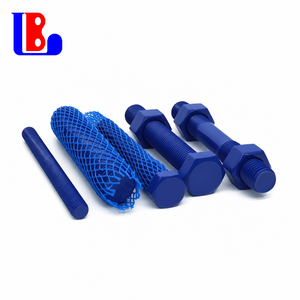
PTFE Coated Stainless Steel Hex Bolts
Fluoropolymer-treated structural bolts offering zero-seizure performance, chemical resistance, and controlled torque ratios for corrosive processing environments.
View Details →
Explore our export-certified industrial fastener range engineered for petrochemical processing, subsea pipelines, pressure vessels, and demanding industrial assemblies. Fully tested under EN 10204 3.1 / 3.2 certification protocols.
Fluoropolymer-treated structural bolts offering zero-seizure performance, chemical resistance, and controlled torque ratios for corrosive processing environments.
View Details →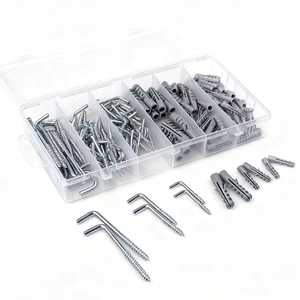
Zinc-plated and stainless steel fish-shaped anchors engineered for high-shear static masonry loads and architectural framework stabilization.
View Details →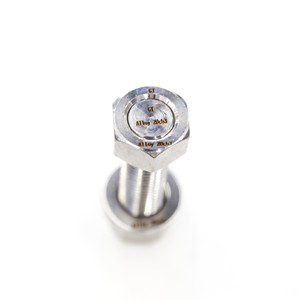
Heavy-hex assemblies designed according to ASME B18.2.3.1M with extreme yield endurance under sour service (H2S) and high temperatures.
View Details →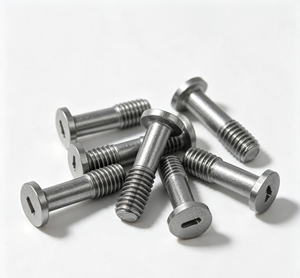
Refractory molybdenum precision-threaded fasteners capable of withstanding temperatures exceeding 1200°C in vacuum sintering furnaces.
View Details →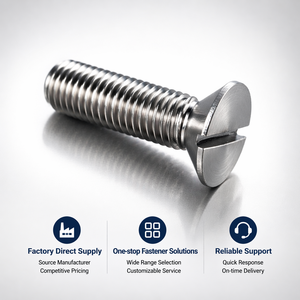
Marine-grade CNS A2-70/A4-80 304/316 fasteners providing flush-fit hydrodynamics and pitting protection against continuous saltwater immersion.
View Details →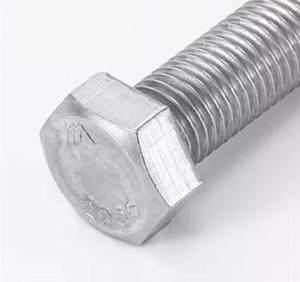
DIN 933 / DIN 934 compliant bolting produced from Monel 400, Inconel, and 316Ti superalloys for ultra-aggressive acid digestion tanks.
View Details →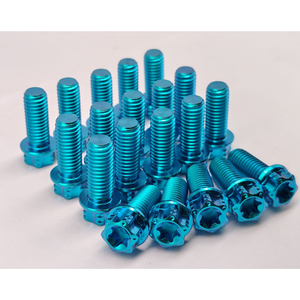
Aerospace and naval grade Ti-6Al-4V fasteners demonstrating unmatched strength-to-weight density and comprehensive anti-galling thread profiles.
View Details →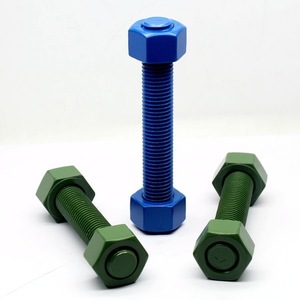
High-tensile AISI 4140 quenched and tempered fully threaded stud bolts accompanied by A194 2H heavy hex nuts for critical ASME flange junctions.
View Details →ASTM A193 Grade B7 specifies quenched and tempered chromium-molybdenum alloy steel (AISI 4140/4142) tailored specifically for high-pressure boilers, piping flanges, valves, and pressure vessel installations under elevated thermal conditions up to 450°C (840°F).
| Alloy Element / Parameter | Composition Limit (%) / Value | Engineering Functionality & Structural Benefit |
|---|---|---|
| Carbon (C) | 0.37 – 0.49 % | Imparts high core hardness and required tensile yield during oil quench heat treatment. |
| Chromium (Cr) | 0.75 – 1.20 % | Improves hardenability, enhances depth of through-hardening, and gives mild oxidation resistance. |
| Molybdenum (Mo) | 0.15 – 0.25 % | Prevents temper embrittlement, preserves creep strength at thermal peaks, and strengthens grain boundaries. |
| Tensile Strength (Min) | 125 ksi (860 MPa) [≤2.5"] | Delivers heavy pre-load holding forces required to keep metal-to-metal gasket seals tight. |
| Yield Strength (0.2% Offset) | 105 ksi (720 MPa) [≤2.5"] | Prevents permanent bolt elongation under extreme operational pressure fluctuations. |
| Hardness (Core) | 321 HBW max (35 HRC) | Maintains optimal toughness and resistance against sudden brittle fracture under high cyclic shock. |
Why leading EPCs, petrochemical refiners, and offshore offshore construction majors partner with our specialized production hubs in China.
Our plants operate audited QA protocols certified to ISO 9001:2015 and verified under European Pressure Equipment Directive (PED 2014/68/EU), meeting the criteria of global inspection bodies including TÜV Rheinland, DNV, and Lloyd's Register.
Every fastener is stamped with unique manufacturer identification and heat codes. Shipments include verified EN 10204 3.1 inspection certificates documenting ladle chemistry, Charpy V-notch impacts, and optical emission spectrometry (PMI) results.
For applications handling hydrogen sulfide (H2S), we offer controlled-hardness ASTM A193 B7M options limited to 235 HBW (22 HRC max). This eliminates the threat of Sulfide Stress Cracking (SSC) in aggressive downhole oil & gas extractions.
Handling processes from hot-heading of heavy hex bolts to precision CNC machining of oversized diameters up to M100 / 4 inches. Cold forming routes are leveraged for continuous grain flow, enhancing cycle fatigue strength.
Equipped with automated continuous coating lines for PTFE (Xylan 1070 / 1424), Hot-Dip Galvanizing (ASTM A153), Zinc-Nickel electroplating, and Dacromet coatings providing over 3,000 hours of continuous salt spray test resistance without red rust.
Sea-worthy export crates lined with VCI (Vapor Corrosion Inhibitor) packaging, shrink wrapping, and robust steel strapping ensure all components arrive at ports and remote desert/offshore installations in pristine condition.
Market dynamics in petrochemical bolting are shifting rapidly. Understanding technical developments and ESG standards is essential for long-term procurement security.
Global environmental mandates (such as EU REACH proposals) are accelerating the evolution toward PFAS-free, low-friction ceramic and inorganic matrix coatings that match traditional PTFE torque benefits while meeting stringent ecological regulations.
Where operating conditions exceed 450°C, systems are migrating from standard ASTM A193 B7 towards high-temperature chromium-molybdenum-vanadium Grade B16, or nickel alloys like Inconel 718 and Duplex 2205 to counter stress relaxation.
Next-generation flange integrity systems increasingly employ ultrasonic sensors embedded into fastener heads. These provide real-time clamping force telemetry, preventing fugitive VOC emissions and unplanned refinery turnarounds.
Major international buyers are demanding end-to-end digital MTR records linked directly via QR-engraving to raw heat melt batches, reducing paperwork review cycles and preventing counterfeit fastener circulation.
Avoid lead-time delays and specification discrepancies by including these critical parameters when requesting quotes from our engineering department.
Specify ASME B1.1 Class 2A fit. Diameters 1" and smaller typically require UNC (Coarse Series), while diameters over 1" generally require the 8UN constant pitch series for optimum bolt stress distribution.
Always pair ASTM A193 B7 stud bolts with corresponding ASTM A194 Grade 2H heavy hex nuts (or Grade 2HM for sour service). Washers should meet ASTM F436 structural standards to avoid galling.
Specify the brand and layer requirement (e.g., Xylan 1070 blue PTFE over zinc-phosphate base coat). Note that threads must be undertoleranced prior to coating to ensure thread engagement without re-tapping.
Authoritative technical answers to common queries faced by procurement engineers, QA leads, and international logistics directors.
The primary difference lies in heat-treatment temperature and resultant tensile hardness. Grade B7 is tempered at a minimum of 593°C (1100°F), yielding up to 321 HBW hardness (35 HRC max). In contrast, Grade B7M requires a higher tempering threshold at 620°C (1150°F), strictly limiting the maximum hardness to 235 HBW (99 HRB or 22 HRC max). This softer, stress-relieved condition is mandatory for compliance with NACE MR0175 / ISO 15156 sour gas environments to prevent catastrophic sulfide stress corrosion cracking.
Welding ASTM A193 B7 bolting is strongly discouraged. Because AISI 4140/4142 contains high carbon equivalency (approx. 0.40% C plus Cr and Mo), localized heating during welding introduces high martensitic brittleness and hydrogen cracking risks in the heat-affected zone (HAZ). If stud welding is functionally required, materials specifically designed for weldability (such as low carbon or specialty arc-welded stud alloys) should be used under controlled pre-heat and post-weld heat treatment (PWHT) procedures.
While standard electro-zinc plating provides basic sacrificial barrier protection, it offers poor chemical resistance against marine salt fog and petrochemical fumes, and introduces a risk of hydrogen embrittlement if not properly baked. Thermosetting fluoropolymer coatings (like Xylan 1070 PTFE) provide a chemically inert resin barrier exceeding 3,000 salt-spray hours. They also impart a stable friction coefficient (μ ≈ 0.08 to 0.12), ensuring predictable torque-to-tension conversion and facilitating breakout without flame cutting during plant maintenance turnarounds.
All production lots are supplied with EN 10204 Type 3.1 Mill Test Certificates as standard. Documentation verifies chemical melt analysis (C, Si, Mn, P, S, Cr, Mo), room temperature mechanical tests (tensile strength, 0.2% yield strength, elongation, area reduction), core hardness testing, and thread dimensional inspections. Third-party witnessed EN 10204 Type 3.2 certification via TÜV, Bureau Veritas, SGS, or customer-appointed inspectors can be executed upon request prior to container dispatch.
ASTM A193 Grade B7 bolting is rated for continuous safe design temperatures up to 427°C (800°F) to 450°C depending on the governing ASME BPVC design code. Beyond 450°C, thermal stress relaxation occurs, leading to clamping load degradation. For systems operating between 450°C and 590°C, ASME guidelines recommend upgrading to ASTM A193 Grade B16 (Cr-Mo-V alloy) or nickel-based superalloys such as Inconel 718.