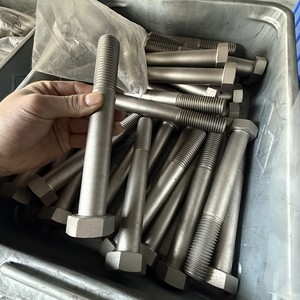
Monel 400 Nickel-Copper External Hex Bolt Rod
UNS N04400 / W.Nr. 2.4360
High resistance to hydrofluoric acid
Extended lengths up to 3000mm

Manufactured under strict ISO 9001:2015 controls, our comprehensive range supports supercritical pressure boundaries, high-temperature heat exchangers, and sour gas manifolds.
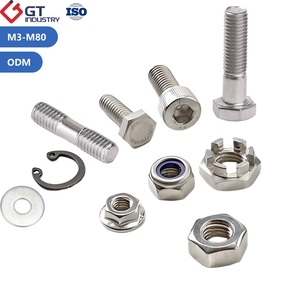
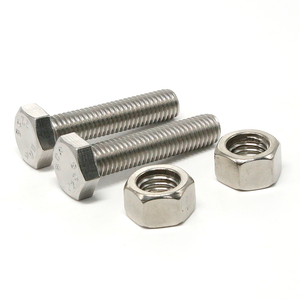
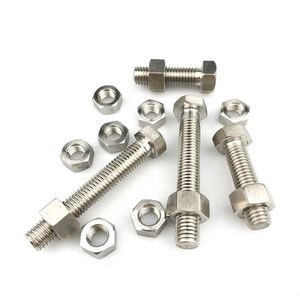
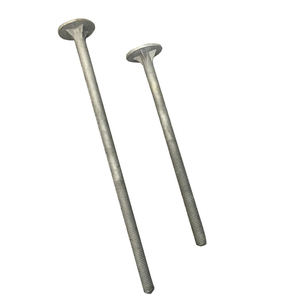
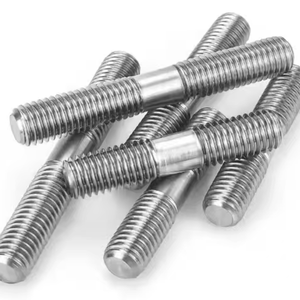
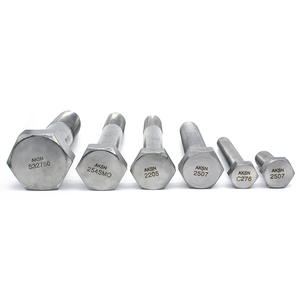
As a leading Chinese manufacturer and global exporter of high-nickel alloy fasteners, we supply global EPC contractors, subsea equipment OEMs, and chemical processing facilities with heavy-duty fasteners fabricated from UNS N06625 (W.Nr. 2.4856). Known commercially as Inconel 625, this solid-solution strengthened nickel-chromium-molybdenum-niobium superalloy provides an unparalleled balance of high-temperature mechanical integrity and extreme aqueous corrosion resistance. Operating within high-risk, zero-tolerance environments demands an intricate understanding of physical metallurgy, heat treatment state, deformation kinetics, and stringent QA protocols under standards such as ASTM B446, ASTM F468, ASME SB-446, and API 20F.
Unlike precipitation-hardened nickel superalloys like Inconel 718 (which relies on γ″ Ni3Nb coherent precipitates for strength), Inconel 625 achieves its remarkable mechanical yield primarily through the stiffening effect of molybdenum (8.0–10.0 wt%) and niobium/columbium (3.15–4.15 wt%) dissolved in an austenitic nickel-chromium solid solution matrix. The chromium content (20.0–23.0 wt%) guarantees instantaneous formation of a tenacious, self-healing passive chromia (Cr2O3) oxide layer that remains stable under high oxidation potentials.
Simultaneously, the elevated molybdenum level acts synergistically with chromium to resist localized breakdown of the passive film in aggressive chloride regimes, providing a Pitting Resistance Equivalent Number (PREN) well in excess of 48. Niobium acts as a solid-solution strengthening agent and readily combines with residual carbon to form primary, insoluble MC-type carbides (predominantly NbC). During service exposure between 550°C and 850°C, intermediate precipitation of metastable γ″ (bct Ni3Nb) can occur, providing supplementary secondary hardening without abrupt loss of room-temperature impact energy, provided strict control over residual silicon and iron is preserved during VIM/ESR melting.
| Material / Condition | UNS / Standard | Yield Strength 0.2% (MPa) | Tensile Strength (MPa) | Elongation A5 (%) | PREN Rating | Primary Operating Regime |
|---|---|---|---|---|---|---|
| Inconel 625 Gr. 1 (Annealed) | UNS N06625 / ASTM B446 | ≥ 415 | ≥ 827 | ≥ 30 | ≥ 48 | Chemical processing, subsea, up to 593°C |
| Inconel 625 Gr. 2 (Solution Treated) | UNS N06625 / ASTM B446 | ≥ 275 | ≥ 690 | ≥ 30 | ≥ 48 | High creep & rupture resistance > 593°C |
| Inconel 718 (Precipitation Hardened) | UNS N07718 / API 20F BSL-3 | ≥ 1034 | ≥ 1240 | ≥ 12 | ≥ 38 | High-stress wellhead, HPHT casing bolts |
| Hastelloy C-276 (Solution Annealed) | UNS N10276 / ASTM B574 | ≥ 355 | ≥ 790 | ≥ 40 | ≥ 68 | Severe reducing acids, wet chlorine gas |
| Super Duplex 2507 | UNS S32750 / EN 1.4410 | ≥ 550 | ≥ 750 | ≥ 15 | ≥ 42 | Seawater handling, temperature limit ≤ 250°C |
The intense work-hardening coefficient of Inconel 625 poses exceptional manufacturing challenges during fast fastener forming. As an experienced exporter, our China facility executes production under rigorous thermomechanical roadmaps:
Because nickel alloys exhibit an elevated positive electrochemical noble potential, direct coupling of Inconel 625 studs with less noble structural carbon steel can accelerate galvanic corrosion of adjacent flange faces in electrolytic seawater. In such applications, our technical team specifies engineered insulating gasket kits or surface-applied sacrificial barrier coats.
Moreover, nickel-to-nickel engagement under heavy torque loads introduces severe galling risks. To prevent cold thread welding during torquing, we supply studs with specialized industrial coatings:
Why Tier-1 engineering contractors choose our manufacturing hub for mission-critical exotic alloy hardware.
Fully compliant with ISO 9001:2015 and TÜV Rheinland approved for Pressure Equipment Directive (PED 2014/68/EU Annex I, Sec. 4.3), qualifying our bolting for critical European pressure containment vessels.
Strict controls over maximum hardness (HRC ≤ 35 for Grade 1 / ≤ 40 per alloy criteria) and heat treatment documentation safeguard all components against sulfide stress cracking (SSC) in sour gas service.
Every fastener is stamped with unique mill heat numbers. Chemical analysis via optical emission spectroscopy, Charpy V-notch testing at -196°C, and full EN 10204 3.1 MTRs are standard; 3.2 third-party inspection (DNV, BV, SGS, Lloyd's) is routinely handled.
Over 40 high-precision CNC turning centres, deep-hole drilling equipment, and multi-ton hydraulic cylindrical thread-rolling stations capable of processing thread sizes from M6 up to M120 with Class 2A / 3A, 6g / 6H thread fit tolerances.
Equipped with handheld Bruker / Olympus XRF and laser-induced breakdown spectroscopy (LIBS) analysers. Every batch undergoes 100% PMI verification before shipment to eliminate material cross-contamination risks.
Proximity to key container terminals (Shanghai, Ningbo, Qingdao) with specialized fumigated wooden crate packing, vapor corrosion inhibitor (VCI) bagging, and tailored rapid-delivery contracts for planned shutdown and emergency turnaround projects.
The global energy transition, deepwater subsea extraction, and next-generation chemical syntheses are shifting how procurement leaders specify and procure Inconel 625 fasteners. Engineering departments must account for the following industry trends over the coming decade:
As carbon capture, utilization, and storage (CCUS) projects expand globally, bolting installed on supercritical CO2 (sCO2) injection pumps and transport pipelines is exposed to heavy wet carbonic acid containing trace chlorides and H2S. Inconel 625 is rapidly outperforming standard duplex grades due to its resistance to carbonic corrosion and hydrogen-induced stress cracking (HISC). Procurement strategies are shifting from spot buying to multi-year framework agreements to hedge against nickel volatility while ensuring continuous supply of certified bar stock.
In subsea offshore production, generic ASTM B446 or ASTM F468 specifications are increasingly being superseded by API Specification 20F (Corrosion Resistant Bolting for Use in the Petroleum and Natural Gas Industries). API 20F institutes rigorous Bolting Specification Levels (BSL-2 and BSL-3), mandating qualified heat-treatment furnaces calibrated per AMS 2750, microstructural examination for harmful intermetallic precipitates (like Laves and delta phases), and 100% non-destructive examination (magnetic permeability, liquid penetrant testing on threads). Chinese manufacturers with integrated metallurgical lab capabilities are uniquely positioned to deliver fully compliant API 20F BSL hardware.
To eliminate grey-market counterfeit fasteners in critical infrastructure, modern EPC tenders require verifiable digital traceability. The integration of QR-coded laser-etched fastener shanks linked to decentralized Mill Test Certificates guarantees immediate verification of alloy chemistry, tensile results, and ultrasonic inspection data directly at the installation jobsite.
Procurement specifications now explicitly demand raw materials processed via Vacuum Induction Melting (VIM) followed by Electroslag Remelting (ESR) or Vacuum Arc Remelting (VAR). Double-melted material drastically reduces gaseous inclusions (oxygen < 20 ppm, nitrogen < 50 ppm) and suppresses center-line macrosegregation of niobium, preventing premature micro-fissuring during heavy thread rolling operations.
Clear, engineering-backed answers addressing the most common technical inquiries from piping engineers and procurement specialists.