
From age-hardened Monel K500 and Inconel superalloys to high-tensile structural bolting, our facility delivers hot-forged and precision CNC-machined components certified to EN 10204 3.1 & 3.2.
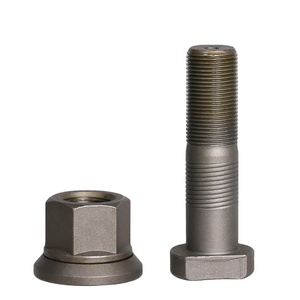
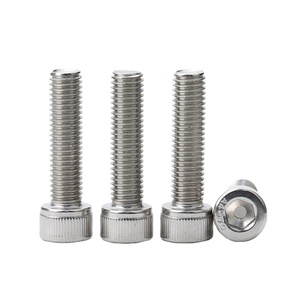
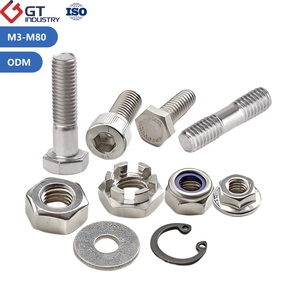
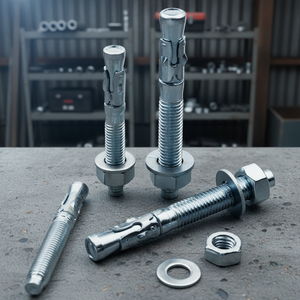
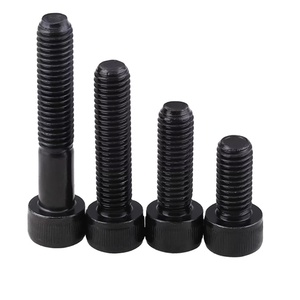
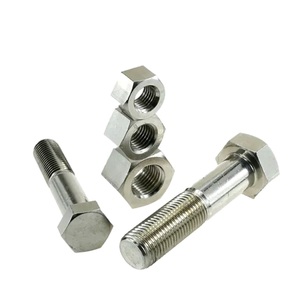
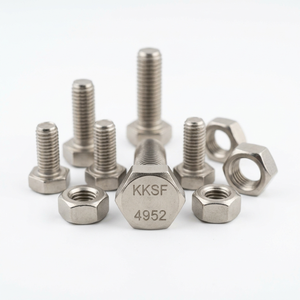
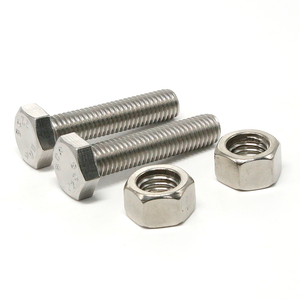
Monel K500 is a precipitation-hardenable nickel-copper alloy that synthesizes the exceptional marine and chemical corrosion resistance of standard Monel 400 with substantially greater yield and tensile strength. Through the metallurgical addition of 2.30% to 3.15% Aluminum (Al) and 0.35% to 0.85% Titanium (Ti) to the balanced nickel-copper matrix (min. 63% Ni), controlled thermal aging triggers the coherent precipitation of submicroscopic γ′ (gamma prime) Ni3(Al, Ti) intermetallic phases throughout the face-centered cubic (FCC) lattice.
This nanoscale precipitation hardening effect elevates room-temperature yield strength beyond 790 MPa (115 ksi) and ultimate tensile strength above 1100 MPa (160 ksi), roughly tripling the yield performance of annealed Monel 400 while preserving low magnetic permeability (μ < 1.002) and non-sparking integrity across cryogenic and elevated temperatures down to -196°C (-320°F).
To resist severe cyclic fatigue in subsea riser bolting, our manufacturing protocols roll threads after solution annealing and age hardening. Thread rolling induces favorable compressive residual stresses at the root radius, increasing fatigue cycle endurance limits by 300% compared to conventional single-point cutting or thread grinding.
| Element | Nickel (Ni) | Copper (Cu) | Aluminum (Al) | Titanium (Ti) | Iron (Fe) | Manganese (Mn) | Carbon (C) | Silicon (Si) | Sulfur (S) |
|---|---|---|---|---|---|---|---|---|---|
| Min % | 63.00 | 27.00 | 2.30 | 0.35 | — | — | — | — | — |
| Max % | Balance | 33.00 | 3.15 | 0.85 | 2.00 | 1.50 | 0.18 | 0.50 | 0.010 |
The mechanical characteristics of Monel K500 fasteners are directly governed by the thermal processing condition: Hot Finished, Solution Annealed, or Solution Annealed followed by Age Hardening. For maximum reliability under offshore cyclic tension and high hydrodynamic shear, aged fasteners deliver extraordinary toughness without the embrittlement typically observed in high-strength duplex grades at low sub-zero temperatures.
| Thermal Condition | Tensile Strength Rm (MPa) | Yield Strength Rp0.2 (MPa) | Elongation A5 (%) | Hardness (Brinell / HRC) | Charpy V-Notch Impact (J at -29°C) |
|---|---|---|---|---|---|
| Hot Finished / Annealed | 620 – 760 | 280 – 415 | ≥ 35 | 140 – 185 HBW (≤ 10 HRC) | ≥ 120 J |
| Direct Age Hardened | 965 – 1140 | 690 – 860 | ≥ 20 | 260 – 330 HBW (27 – 35 HRC) | ≥ 55 J |
| Cold Worked + Aged | 1100 – 1310 | 790 – 1035 | ≥ 15 | 300 – 380 HBW (32 – 40 HRC) | ≥ 40 J |
| NACE MR0175 Compliant | 900 – 1050 | 650 – 790 | ≥ 22 | ≤ 35 HRC (Strict Limit) | ≥ 60 J |
When engineering high-pressure equipment, submarine hull penetrations, and sour gas wellhead valves, selecting the optimal material requires balancing chloride pitting resistance, sulfide stress cracking susceptibility, tensile strength, and galvanic compatibility. The matrix below highlights key trade-offs evaluated by EPC piping designers.
| Alloy Grade | UNS Designation | Pitting Index (PREN) | Yield (0.2% MPa) | Magnetic Permeability (μ) | Seawater Biofouling / Velocity Limit | Sour Service Max Hardness |
|---|---|---|---|---|---|---|
| Monel K500 | UNS N05500 | N/A (Ni-Cu System) | 790 – 900 | < 1.002 (Non-Mag) | Immune up to 45 m/s (Cavitating flow) | ≤ 35 HRC (NACE Compliant) |
| Monel 400 | UNS N04400 | N/A (Ni-Cu System) | 240 – 345 | 1.01 – 1.02 | Immune up to 30 m/s | ≤ 35 HRC |
| Inconel 718 | UNS N07718 | ~48 | 1035 – 1170 | 1.001 | Passive (Susceptible to crevice under silt) | ≤ 40 HRC (API 6A CRA) |
| Super Duplex 2507 | UNS S32750 | ≥ 42 | 550 – 650 | Ferromagnetic (μ > 25) | Flow limit < 25 m/s | ≤ 28 HRC (NACE MR0175) |
| Titanium Gr. 5 | UNS R56400 | N/A (Oxide Film) | 825 – 910 | 1.000 | Immune, but extreme galling risk | Requires NACE approval |
As EPC contractors shift towards total lifecycle cost (TCO) optimization and deepwater offshore wind farms push deeper into hyperbaric zones, procurement patterns for UNS N05500 fasteners are evolving rapidly.
Global Tier-1 energy majors increasingly mandate automated 100% surface and core Rockwell microhardness mappings per batch to ensure compliance with NACE MR0175 / ISO 15156. The risk of sudden hydrogen-induced stress cracking (HISC) under subsea cathodic protection has eliminated tolerance for manual spot checks, favoring mills with documented vacuum-aging furnaces.
With raw nickel-copper alloy input pricing remaining volatile, procurement specifications now emphasize precision closed-die hot forging over machining from solid bar stock. Hot forging not only cuts virgin material wastage by up to 45% on large diameters (≥ M36 / 1-1/2"), but it also yields continuous uninterrupted longitudinal grain flow lines across the bolt head-to-shank transition.
Major international infrastructure developments in the North Sea, Arabian Gulf, and Gulf of Mexico require full supply chain visibility. Procurement contracts increasingly mandate independent third-party inspection (TPI) witnessed by DNV, Lloyd's Register, ABS, or Bureau Veritas, with mechanical testing, Charpy V-notch impact, and ultrasonic crack detection logged at heat treat lot level.
The operational limits of standard bolting alloys are continually tested by deeper offshore subsea completions, high-pressure hydrogen pipelines, and advanced naval nuclear containment vessels. As a leading manufacturer, our engineering team monitors and integrates three primary metallurgical developments into our manufacturing lines:
During the aging treatment of Monel K500 at 580°C – 600°C (1080°F – 1110°F), extended holding times or improper cooling can induce continuous cellular precipitation of chromium carbides and titanium carbonitrides along austenite grain boundaries. These micro-precipitates serve as initiation pathways for intergranular stress corrosion cracking (IGSCC). Advanced computer-controlled vacuum aging furnaces utilize stepped multi-zone heating and forced inert gas quench to guarantee discontinuous, isolated boundary carbides, preserving dynamic fracture toughness.
Because nickel alloys exhibit pronounced natural surface galling under high flank contact pressures, Monel K500 threads traditionally required heavy molybdenum disulfide pastes. Modern marine specifications now integrate engineered fluoropolymer (PTFE/Xylan 1424) coatings, thermoset ceramic barrier films, and electrodeposited Silver Plating (5 to 10 μm). These micro-coatings provide stable nut factors (K-factors of 0.12 ± 0.01) without altering thread tolerances, ensuring accurate bolt tensioning and facilitating rapid subsea diver or ROV breakout after decades of service.
Subsea structures employ sacrificial aluminum or zinc anodes that generate cathodic overpotentials (−1050 mV to −1100 mV vs. Ag/AgCl). Atomic hydrogen evolving on the cathode surface can diffuse into the crystalline lattice of over-hardened nickel alloys. In collaboration with offshore metallurgists, our manufacturing controls enforce strict upper hardness ceilings (≤ 35 HRC) and employ low-sulfur vacuum induction melting (VIM) + electroslag remelting (ESR) billets to minimize residual hydrogen trap sites.
Our dedicated manufacturing facility integrates raw billet procurement from qualified primary melters, comprehensive forming equipment, in-house heat treatment, and an ISO 17025 accredited metallurgical laboratory.
Operates under verified ISO 9001:2015 quality standards and European Pressure Equipment Directive (PED 2014/68/EU) approval issued by TUV Rheinland for high-integrity pressure bolting.
Equipped with high-speed multistation cold headers for M3–M12 socket fasteners alongside 1500-ton horizontal friction screw hot forge presses accommodating large-diameter stud bolts up to M100 / 4 inches.
Equipped with vacuum solution annealing and programmable precipitation aging ovens featuring ±3°C multi-point thermocouple calibration, guaranteeing uniform Rockwell hardness across every single piece.
100% material Positive Material Identification (PMI via handheld Bruker XRF/OES), dye penetrant (PT), ultrasonic testing (UT), and mechanical tensile/Charpy logging mapped directly to heat numbers.
Clear metallurgical and commercial answers to the most common questions raised by piping engineers, project inspectors, and international procurement managers.
Submit your project schedule, bill of materials (BOM), required dimensional standards, and heat treatment specifications. Our technical metallurgy and sales engineering teams respond with binding commercial offers, lead times, and comprehensive inspection test plans (ITP) within 24 hours.