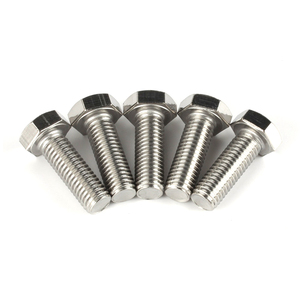

Explore our manufactured inventory spanning Nitronic 50, Super Duplex, Inconel, and severe-duty coated structural bolting engineered to ASTM, DIN, and ISO standards.
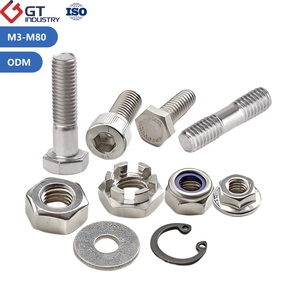
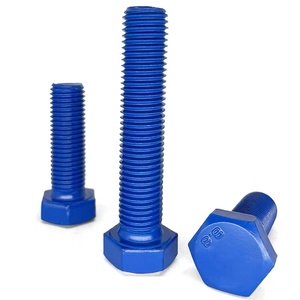
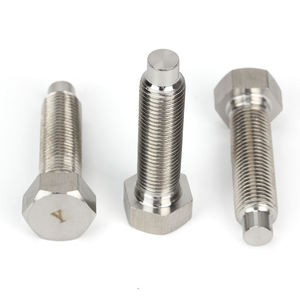
A rigorous metallurgical evaluation of nitrogen-strengthened austenitic stainless steel fasteners in critical marine, chemical, and downhole energy sectors.
As critical infrastructure expands across deepwater offshore drilling, LNG cryogenic storage, petrochemical cracking towers, and marine propulsion systems, conventional austenitic alloys such as AISI 316L and 304 frequently fail to meet simultaneous demands for tensile strength and localized pitting resistance. Nitronic 50 (commonly designated as UNS S20910, XM-19, and AWS 165) represents a pinnacle class of nitrogen-strengthened, high-manganese austenitic stainless steels. Engineered with a proprietary balance of Chromium (20.50% – 23.50%), Nickel (11.50% – 13.50%), Molybdenum (1.50% – 3.00%), and intentional additions of Nitrogen, Vanadium, and Niobium, Nitronic 50 provides nearly double the room-temperature yield strength of Grade 316/316L while exhibiting exceptional corrosion resistance in chloride and sour environments.
Nitrogen interstitial alloying expands the austenite phase field while inhibiting dislocation movement. This metallurgical phenomenon allows Nitronic 50 fasteners to attain minimum yield strengths up to 60,000 psi (annealed) and exceeding 105,000 psi in high-strength cold-worked conditions without precipitating brittle intermetallic phases.
By synergizing molybdenum, chromium, and nitrogen, Nitronic 50 generates an impervious passive oxide film. It consistently outclasses 316L and 317L in ASTM G48 ferric chloride pitting trials, preventing premature stress-corrosion cracking (SCC) under cyclic wave splash zone loads.
Unlike 300-series stainless steels that produce ferromagnetic deformation martensite under severe cold rolling, Nitronic 50 remains exceptionally non-magnetic (μ < 1.004) even after heavy plastic deformation, making it indispensable for medical instrumentation, naval sonar arrays, and directional downhole drilling collars.
| Material Designation | UNS Spec | Yield Strength Min. (MPa) | Tensile Strength Min. (MPa) | PREN Value | Optimal Service Environment |
|---|---|---|---|---|---|
| Nitronic 50 (Annealed) | UNS S20910 | 415 - 450 | 690 - 720 | 34.2 | Marine rigging, high-pressure pump shafts, acid valves |
| Nitronic 50 (High Strength) | UNS S20910 | 725 - 830 | 930 - 1035 | 34.2 | Subsea wellheads, downhole bolting, marine drive studs |
| AISI 316L Stainless | UNS S31603 | 220 | 520 | 25.0 | Light atmospheric, mild industrial, food processing |
| Duplex 2205 | UNS S32205 | 450 | 655 | 35.5 | Offshore process piping, desalination brine, chemical tanks |
| Super Duplex 2507 | UNS S32750 | 550 | 750 | 42.5 | Aggressive subsea production manifolds, umbilical lines |
| Inconel 718 | UNS N07718 | 1030 | 1240 | N/A (Ni-Base) | Gas turbine rotors, severe sour downhole extraction |
*Data calculated in accordance with ASTM A193, ASTM A276, and ASTM A479 under ambient temperature condition.
Navigating global supply disruptions, decarbonization requirements, and advanced machining dynamics across the global fastening ecosystem.
With high-nickel and high-chromium alloys experiencing raw market volatility, leading EPCs are abandoning pure bar-stock CNC turning for near-net-shape hot and cold forging. Forged fastener heads maintain continuous crystallographic grain flow lines, enhancing shear strength at the head-to-shank junction while slashing scrap waste by over 35%.
The global transition to Liquefied Natural Gas (LNG) requires piping fasteners capable of enduring sustained thermal shocks at -162°C (-260°F). Nitronic 50 maintains excellent Charpy V-Notch impact toughness down to -196°C without undergoing the ductile-to-brittle transition observed in duplex or ferritic grades.
Offshore floating wind platforms and green hydrogen electrolysis cells present severe localized electrolytic stress. Nitronic 50 is rapidly overtaking standard austenitic grades in tidal moorings and hydrogen compression manifolds where standard hardware suffers accelerated mechanical embrittlement.
Major international oil operators (including Shell, BP, Saudi Aramco, and ExxonMobil) now mandate end-to-end cloud-verified heat tractability. Procurement teams increasingly blacklist suppliers that cannot provide laser-etched heat codes directly cross-referenced to original ESR/VIM melt mills.
Because Nitronic 50 exhibits high work hardening rates during thread engagement, galling presents a constant operational hazard. The market is shifting heavily toward specialized PTFE, MoS2, and multi-layer ceramic dry lubricants that control torque-tension relationships without degrading alloy passivity.
Engineers are increasingly specifying dual-certified stock covering both standard ASTM A193 Grade B8S/B8SA and ASTM A479/A276 requirements, streamlining inventory across downstream refining, marine shipbuilding, and nuclear coolant applications.
Operating at the intersection of metallurgical mastery and rigorous certified production, our engineering facility delivers mission-critical hardware fully compliant with PED 2014/68/EU and ISO 9001:2015 directives.
100% verified primary melt raw bars sourced strictly with Optical Emission Spectrometry (OES) and Positive Material Identification (PMI) on every incoming master bundle.
Integrated hot-upset forging presses and high-speed cold-heading machines capable of producing diameters from M4 up to M100 (1/4" to 4") with rolled threads.
Certified under the European Pressure Equipment Directive (PED 2014/68/EU) for pressurized vessel flanges, heat exchangers, and boiler systems.
Specialized vacuum solution annealing and cold-work hardness control engineered explicitly for sour oilfield service containing hydrogen sulfide (H2S).
Essential guidance for QA/QC inspectors, mechanical design engineers, and international procurement managers.
Have a specific project drawing or bill of materials ready for quotation?
Inquire Now