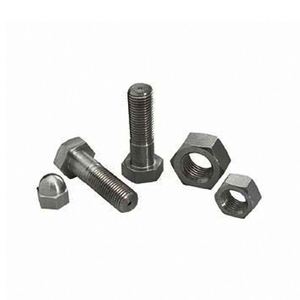
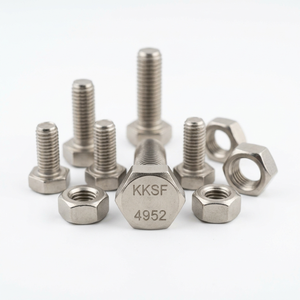
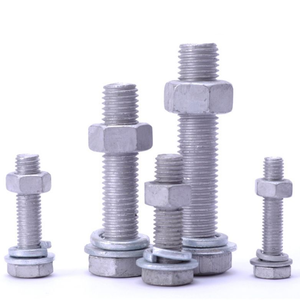
China's modern manufacturing infrastructure combines multi-station cold heading, closed-die hot forging, and 5-axis CNC swiss-machining. Below are high-demand fastening products fabricated for harsh mechanical and extreme chemical environments.
As critical equipment operating thresholds push toward higher corrosive pressures and extreme lightweighting demands, titanium hex bolts (DIN 931 / DIN 933 / ISO 4014 / ASME B18.2.1) have transformed from specialized aerospace hardware into standard infrastructure components across offshore petrochemical processing, subsea exploration, marine desalination, and green hydrogen electrolysis stacks.
Titanium’s extreme corrosion resistance originates from its instantaneous reaction with ambient oxygen to generate an amorphous, chemically inert titanium dioxide (TiO₂) ceramic film. Unlike chrome-oxide layers in austenitic stainless steels (AISI 304/316L) which suffer pitting under stagnant chloride ions, titanium's rutile and anatase surface oxides regenerate spontaneously in milliseconds if mechanically scratched or breached.
Titanium exhibits hexagonal close-packed (HCP) alpha crystalline structures at room temperature, which restrict active slip systems and make cold forming prone to shear failure and work-hardening cracking. Leading Chinese titanium bolt factories employ precision induction heating coils, elevating the slug temperature into the high-ductility alpha-beta envelope (approx. 700°C–850°C) before rapid closed-die heading.
Cutting threads with lathe inserts breaks the longitudinal crystalline orientation of the titanium bar, introducing sharp stress concentrations and notch sensitivity under dynamic cyclic stress. Tier-1 exporters utilize hardened ground carbide thread-rolling dies that compress and deflect the surface crystal structure, imparting deep compressive residual stresses that dramatically elevate high-cycle fatigue thresholds.
Selecting the appropriate grade ensures mechanical integrity while avoiding over-expenditure. Chinese manufacturers produce hex fasteners conforming to ASTM B348 (bar stock), ASTM F468 (nonferrous fasteners), ASME SB-348, and ISO 3506-6.
| Alloy Grade | UNS Identifier | Tensile Strength (MPa) | 0.2% Yield Strength (MPa) | Elongation (%) | Optimal Operating Environments |
|---|---|---|---|---|---|
| Grade 1 (CP4) | UNS R50250 | ≥ 240 | ≥ 170 | ≥ 24 | Maximum ductility, chemical lining plates, non-structural electronics where formability is primary. |
| Grade 2 (CP3) | UNS R50400 | ≥ 345 | ≥ 275 | ≥ 20 | Standard chemical processing, desalination heat exchangers, marine exhaust systems, piping flanges. |
| Grade 5 (Ti-6Al-4V) | UNS R56400 | ≥ 895 (Annealed) ≥ 1000 (STA) |
≥ 828 (Annealed) ≥ 910 (STA) |
≥ 10 | Aerospace structural bolting, offshore marine risers, racing powertrains, high-pressure subsea manifolds. |
| Grade 7 (Ti-0.15Pd) | UNS R52400 | ≥ 345 | ≥ 275 | ≥ 20 | Concentrated hydrochloric, sulfuric, and phosphoric acid exposure; superior crevice corrosion immunity. |
| Grade 9 (Ti-3Al-2.5V) | UNS R56320 | ≥ 620 | ≥ 483 | ≥ 15 | Hydraulic piping systems, deep-sea exploration vessels requiring balance of strength and formability. |
| Grade 12 (Ti-Mo-Ni) | UNS R53400 | ≥ 485 | ≥ 345 | ≥ 18 | High-temperature acidic chlorides, chemical reactors, geothermal brine extraction bolting. |
China produces more than 50% of the world's sponge titanium, creating an integrated vertical ecosystem located around clusters such as Baoji ("China Titanium Valley"), Jiangsu, and Zhejiang.
Unlike Western fastener distributors who procure imported billet stock subject to transatlantic logistics surcharges, Chinese manufacturers maintain direct contracts with state-tier titanium sponge smelters. Vacuum Arc Remelting (VAR) and Electron Beam Cold Hearth Melting (EBCHM) occur within the same industrial cluster, insulating global buyers from intermediate raw material margin stacking.
Leading Chinese exporters are audited and certified to ISO 9001:2015, AS9100D (Aerospace Quality Systems), and PED 2014/68/EU (TUV Rheinland). Every consignment is issued with verified EN 10204 3.1 inspection documentation detailing heat chemical composition via optical emission spectrometry (OES) and mechanical room-temperature tensile elongation.
A classic challenge of titanium fasteners is cold welding and thread galling during torquing. Chinese technical exporters provide tailored surface treatments including Micro-Arc Oxidation (MAO), Thermal Oxidation (PVD), Molybdenum Disulfide (MoS₂) dry film lubrication, and electro-less nickel flash plating, lowering dynamic friction coefficients down to μ = 0.10–0.14 for clean joint pre-loading.
Industrial supply chain directors are modernizing specifications. Stay ahead of macroeconomic, environmental, and technological transitions impacting nonferrous hex bolting acquisitions.
Proton Exchange Membrane (PEM) and Alkaline water electrolysis stacks require thousands of Grade 7 (Ti-Pd) and Grade 2 hex bolts to resist nascent hydrogen attack and acidic deionized water corrosion without contaminating catalytic membranes.
To curb the high buy-to-fly scrap ratio of machining hex bolts from round bars, Chinese factories are investing in automated multi-station isothermal warm-headers, slashing energy consumption by 35% and improving raw material yield.
Aerospace and autonomous automotive platforms demand Zero-Defect (0 PPM) quality assurance. Chinese export plants utilize 360-degree glass plate laser sorting machines capable of inspecting 600 bolts per minute for pitch diameter, runout, and head concentricity.
International carbon border adjustment mechanisms (such as EU CBAM) are compelling Chinese titanium mills to adopt green solar and hydroelectric energy arrays across smelting plants, providing verifiable environmental product declarations (EPD) with each shipment.
Direct answers to the most frequent metallurgical, mechanical, and logistical questions encountered by engineering procurement managers.
Whether you require standard DIN 933 pure titanium Grade 2 bolts for heat exchangers or bespoke drawings in AMS 4928 Grade 5 for offshore subsea skids, our engineering department provides rapid feasibility audits, material test certifications, and container-load FOB/CIF quotes.