
Combining sacrificial zinc-nickel (Zn-Ni) multi-layer barrier coatings with elite superalloy substrates for ultimate cathodic safety, zero-embrittlement longevity, and dimensional class precision.
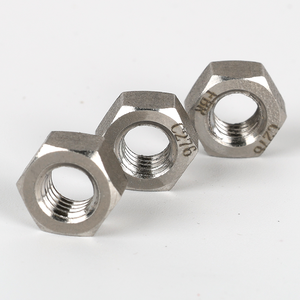
Ultra-corrosion-resistant Ni-Mo-Cr matrix designed for aggressive sour wells, pickling lines, and wet chlorine gas manifolds.
View Specifications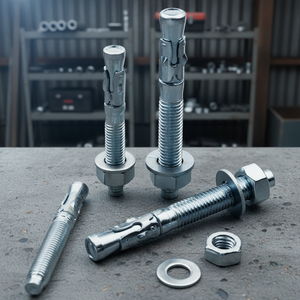
Heavy structural mechanical expansion anchors for dynamic civil loads, offshore baseplate installations, and tunnel concrete fastening.
View Specifications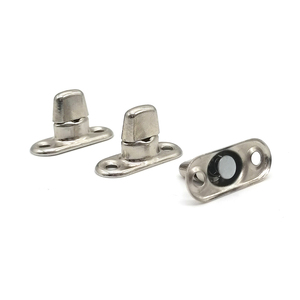
Precision turning eyelets coated with protective plating, delivering superior aesthetic mirror finishing and saltwater durability.
View Specifications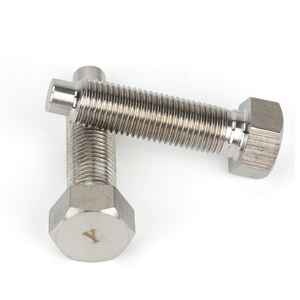
Engineered guide tips eliminate galling and cross-threading in subsea flange makeups and high-vibration autoclave flanges.
View Specifications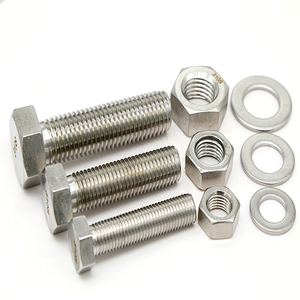
PREN > 42 bolting, offering immense pitting and crevice corrosion resistance in high-pressure desalination and brine piping.
View Specifications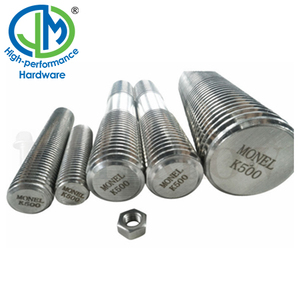
Non-magnetic nickel-copper composition with exceptional zero-biofouling performance and immunity to rapidly flowing marine currents.
View Specifications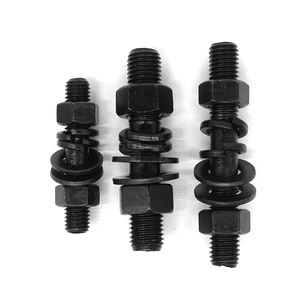
Refinery workhorses coated with engineered zinc-nickel deposits to deliver consistent friction factors (μ = 0.12–0.15) and anti-galling properties.
View Specifications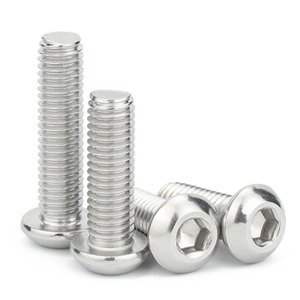
Micron-scale precision socket fasteners for critical marine sub-assemblies, fluid instrumentation manifolds, and offshore sensors.
View SpecificationsDecades of metallurgy research and precision production ensure compliance with stringent international pressure vessel directives and sour gas bolting standards.
Our Rajkot manufacturing lines and Shanghai export centers are certified by TÜV Rheinland for Pressure Equipment Directive manufacturing, ensuring flawless high-pressure vessel integrity.
Every single pallet of bolts, studs, and nuts carries strict heat-number stamping paired with authentic MTRs covering Positive Material Identification (PMI), Charpy V-notch impacts, and microhardness testing.
Applying an alkaline electroplating process yielding a uniform 12% to 15% nickel composition. Outperforms conventional hot-dip galvanizing while preserving thread clearances across metric and imperial pitches.
In aggressive marine and chemical refining environments, traditional sacrificial coatings such as standard electro-galvanizing or cadmium replacements fail prematurely due to high consumption rates and galvanic embrittlement. Zinc-Nickel (12–16% Ni) electroplating functions via a single-phase gamma (γ) intermetallic structure (Ni3Zn22), which provides an open-circuit potential strategically closer to low-alloy and stainless substrates. This precise electrochemical balance prevents "over-protection" pits while supplying active cathodic defense if the surface becomes mechanically scuffed during high-torque wrench tightening.
Additionally, processing high-tensile structural bolts (ASTM A193 Grade B7, ISO 898-1 Class 10.9/12.9) requires strict mitigation against Internal Hydrogen Embrittlement (IHE) and Stress Corrosion Cracking (SCC). Our certified production process enforces immediate de-embrittlement thermal baking at 200°C–220°C within two hours of electrodeposition, ensuring hydrogen gas diffuses outward from the crystalline boundary before trivalent chromium (Cr3+) passivates and clear/black nanofinish topcoats are locked into the thread root.
| Coating / Substrate System | Typical Thickness | Salt Spray to Red Rust (ASTM B117) | Torque/Tension Stability (μ) | Hydrogen Embrittlement Risk |
|---|---|---|---|---|
| Alkaline Zinc-Nickel (12–16% Ni) + Sealant | 8 – 15 µm | 2,000 to 3,500+ Hours | 0.12 ± 0.02 (Extremely Consistent) | None (Baking Cycle Verified) |
| Hot-Dip Galvanizing (HDG - ASTM A153) | 45 – 85 µm | 800 to 1,500 Hours | 0.18 – 0.25 (Prone to Galling) | Low to Medium (Acid Pickling Pick-up) |
| Cadmium Plating + Chromate (Legacy) | 5 – 12 µm | 500 to 1,000 Hours | 0.12 – 0.14 (Low Friction) | Moderate (Severe Environmental Ban) |
| Standard Electro-Galvanized Zinc | 5 – 8 µm | 72 to 240 Hours | 0.15 – 0.22 (Erratic Scatter) | Moderate (Requires Post-Bake) |
| Hastelloy C276 / Super Duplex Bare Substrate | N/A (Bulk Alloy) | Immune to General Seawater Rust | Requires Anti-Seize or MoS2 | Zero (Alloy Specific Austenitic/Duplex) |
How supply chain executives, EPC procurement leads, and design engineers are managing severe-service fastener demand through 2026 and beyond.
Global regulatory oversight has eliminated hexavalent chromium (Cr6+) and cadmium fasteners. Sourcing has pivoted to alkaline Zinc-Nickel passivated with high-performance trivalent passivates, delivering lower environmental impact alongside twice the protection duration.
Offshore wind farms require continuous subsea bolting lifespans exceeding 25 to 30 years without maintenance. Multi-layer Zn-Ni plus fluoropolymer topcoats prevent premature maintenance roundtrips in the C5-M marine splash zones.
Tier-1 oil, gas, and nuclear engineering mandates digital heat-to-melt traceability. Specifiers require end-to-end cloud validation of optical emission spectroscopy, ultrasonic defect scans, and hydrostatic flange tests prior to shipping.
Costly fabrication delays often stem from ambiguous purchase requisitions. When issuing Requests for Quotations (RFQs) for severe-service zinc-nickel or super duplex fasteners, ensure your bill of materials includes these five foundational criteria:
1. Substrate Grade vs. Plating Standard: Explicitly delineate base steel mechanical standards (e.g., ASTM A193 B7, ASTM A320 L7 for low-temp, or DIN 933 Class 10.9) from the electroplating specification (e.g., ASTM B841 Class 1, Type Fe/Zn-Ni 8 to 13 µm with transparent/black trivalent conversion).
2. Thread Pitch Tolerance Adjustments: Micron buildup from coatings changes thread engagement fit. Ensure your manufacturer operates thread rolling machines under 6g/6h pitch configurations before plating, avoiding thread binding on class 2A/2B or standard ISO metric connections.
3. Coefficient of Friction (CoF) Windows: For critical joint assemblies using hydraulic torque wrenches or tensioning rigs, define the target nut factor or coefficient of friction (typically µ = 0.10 to 0.16). We incorporate specialized integrated fluoropolymer or torque-control sealers to eliminate dynamic stick-slip.
4. Sour Environment Validation (NACE MR0175/ISO 15156): If exposure to wet H2S is anticipated, specify maximum Rockwell hardness limits (e.g., max 22 HRC for carbon/low-alloy steel B7M/2HM grades) alongside the mill’s heat-treatment verification certificates.
Detailed technical answers addressing quality assurance, coating dynamics, production lead times, and global shipping policies.