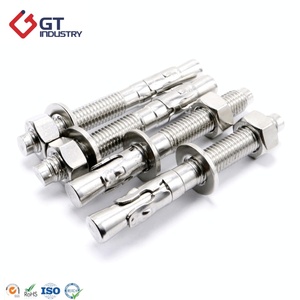
Manufactured under strict metallurgical control per ASME, ASTM, DIN, and ISO standards for subsea wellheads, offshore platforms, high-pressure flanged joints, and chemical processing.
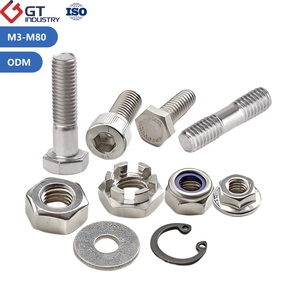
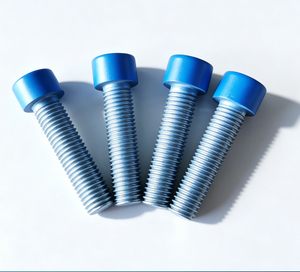
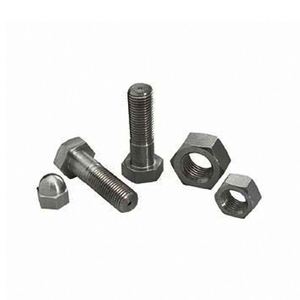
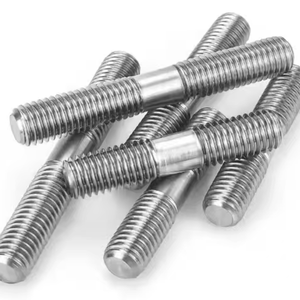
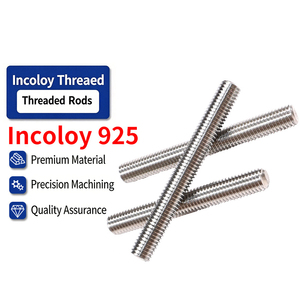
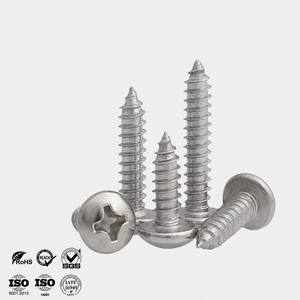
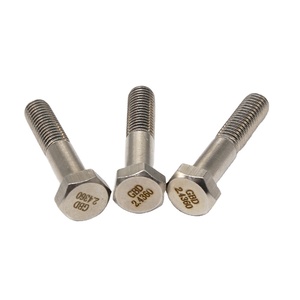
The primary foundation of industrial alloy stud manufacturing revolves around quenched and tempered (Q&T) chromium-molybdenum (Cr-Mo) and chromium-molybdenum-vanadium (Cr-Mo-V) metallurgical systems. Grades such as ASTM A193 B7 (AISI 4140/4142 base) represent the worldwide industrial workhorse for high-temperature, high-pressure process flanges. By introducing precise microalloying elements—such as Chromium for hardenability and oxidation resistance, Molybdenum to retard temper embrittlement and preserve creep rupture strength at temperatures up to 425°C, and Vanadium (as featured in ASTM A193 Grade B16) to extend operating creep strength up to 538°C—alloy studs maintain bolt-clamping preload under dynamic thermal cycling.
Conversely, cryogenic and sub-zero structural service environments necessitate specialized alloy chemistries such as ASTM A320 Grade L7 and L7M (tested down to -101°C) or Grade L43 (nickel-chromium-molybdenum AISI 4340 alloy), where impact absorption energy must meet or exceed stringent Charpy requirements (minimum 20 ft-lbs / 27 Joules at design temperatures). In sour crude refining and oilfield production containing moist hydrogen sulfide (H2S), stress corrosion cracking (SCC) and hydrogen-induced cracking (HIC) represent lethal failure modes. Here, our strictly audited vacuum-degassed alloy steel studs comply rigorously with NACE MR0175 / ISO 15156 parameters, enforcing a maximum Rockwell hardness threshold of 22 HRC through precise post-quench high-temperature tempering protocols.
| Material Grade | UNS / Base Alloy | Tensile Strength min (MPa / ksi) | Yield Strength 0.2% min (MPa / ksi) | Hardness Ceiling | Primary Industrial Application |
|---|---|---|---|---|---|
| ASTM A193 B7 | AISI 4140 / 4142 | 860 MPa / 125 ksi | 720 MPa / 105 ksi | 321 HBW / 35 HRC | Petroleum piping, pressure vessels, ASME B16.5 flanges |
| ASTM A193 B7M | AISI 4140 / 4142 (Modified) | 690 MPa / 100 ksi | 550 MPa / 80 ksi | 235 HBW / 22 HRC (NACE) | Sour service H₂S environments, offshore subsea manifolds |
| ASTM A193 B16 | Cr-Mo-V Alloy | 860 MPa / 125 ksi | 720 MPa / 105 ksi | 321 HBW / 35 HRC | Steam turbines, power generation boiler casings up to 538°C |
| ASTM A320 L7 | AISI 4140 / 4142 | 860 MPa / 125 ksi | 720 MPa / 105 ksi | 321 HBW / 35 HRC | Cryogenic terminals, LNG storage, cold-climate valves |
| ASTM A320 L7M | AISI 4140 / 4142 | 690 MPa / 100 ksi | 550 MPa / 80 ksi | 235 HBW / 22 HRC (NACE) | Low-temperature sour oil & gas production |
| Inconel 718 | UNS N07718 / 2.4668 | 1240 MPa / 180 ksi | 1030 MPa / 150 ksi | 40 - 45 HRC | API 6A wellhead components, high-strength aerospace turbine hubs |
The traditional paper-based Mill Test Certificate is giving way to automated digital MTR verification. Buyers now demand individual heat-code serialization micro-stamped onto stud ends and laser-etched with 2D Data Matrix codes. This links the field engineer directly to cloud-hosted chemical heat spectrometry, ultrasonic examination logs, and mechanical test certificates instantly via mobile interface.
With the enforcement of the European Union’s Carbon Border Adjustment Mechanism (CBAM) and corporate Scope 3 emissions quotas across North America, leading Chinese manufacturers are adopting Electric Arc Furnace (EAF) steel with verified low embodied carbon, supported by ISO 14064 greenhouse gas reporting and third-party verified Environmental Product Declarations (EPD).
Global supply chain volatility has prompted major energy hubs in the Gulf Coast (USA), Rotterdam, and the Middle East to form strategic VMI (Vendor Managed Inventory) alliances with Chinese exporters. Maintaining pre-quenched and tempered bar stock enables rapid CNC thread rolling, specialized coating application, and air-freight dispatch in critical shut-down emergencies.
The upfront acquisition price is no longer evaluated in isolation. Project engineers calculate total installed lifespan. A PTFE or Xylan 1424-coated stud bolt that prevents galling, eliminates torch-cutting maintenance during turnarounds, and survives 4,000 salt-spray hours without rust delivers a multi-fold reduction in total operational expenditure over a 25-year plant life.
Procurement teams are reducing vendor rosters to certified tier-1 manufacturers possessing dual qualifications: European Pressure Equipment Directive (PED 2014/68/EU) certification for pressure equipment and API 20E (Alloy and Carbon Steel Bolting for Use in the Petroleum and Natural Gas Industries) Bolting Specification Levels (BSL-1, BSL-2, and BSL-3).
1. Continuous Grain-Flow Thread Rolling Post-Heat Treatment: Conventional machine-cut threading tears across the longitudinal grain lines of the alloy steel, creating sharp microscopic root notches that serve as initiation stress-concentrators for fatigue cracks. Our production facility employs precision cold and warm thread-rolling processes applied after the quenching and tempering cycle. Heavy hydraulic cylindrical thread-rolling dies plastically deform the outer fibers of the alloy bar stock into thread profiles (such as ASME B1.1 Class 2A / 3A UN, 8UN series, or ISO metric threads). This creates compressive residual stresses across the thread root, enhancing fatigue resistance by over 250% compared to cut threads, an indispensable factor for pulsating pressure vessel flanges and vibrating compressor manifolds.
2. Atmospheric Control Quenching & Tempering (Q&T): Surface decarburization is a silent killer of high-tensile threaded studs. In our computerized continuous mesh belt and roller hearth furnaces, heating occurs within an endothermic protective atmosphere with monitored carbon potential. This ensures zero decarburization at the pitch line and thread crests, preventing microscopic softening that would otherwise lead to thread shear under torque. Rapid, agitated polymer or oil quenching ensures 100% martensitic transformation down to the center core of heavy-diameter studs (up to M120 / 4 inches), followed by long-soak high-temperature tempering to achieve homogeneous grain refinement and high impact ductility.
3. Next-Generation Multi-Layer Barrier Surface Coatings: In hostile marine offshore and chemical atmospheres, bare alloy steel studs degrade rapidly through galvanic and atmospheric oxidation. We lead the industry in multi-stage surface engineering:
Audited and approved by TÜV Rheinland for compliance with the European Pressure Equipment Directive. Fully certified to deliver bolting products engineered for hazardous and high-pressure European industrial applications without secondary technical barriers.
Every shipment is accompanied by complete EN 10204 Type 3.1 Mill Test Certificates. Third-party witnessed inspections (EN 10204 3.2) conducted by DNV, Bureau Veritas, Lloyd’s Register, or SGS are available upon project requisition.
Our CNAS-accredited on-site laboratory performs Positive Material Identification (PMI via Optical Emission Spectrometry), low-temperature Charpy V-notch impact testing (-196°C), tensile proof loading, Rockwell/Brinell hardness testing, and magnetic particle flaw detection.
Equipped with heavy-duty multi-station hot forging headers and CNC machining centers capable of manufacturing stud bolts from M6 up to M140 (1/4" to 5-1/2") in lengths exceeding 3,000 mm, custom tap-end studs, and unequal double-end studs per engineering drawings.
Studs are degreased, end-protected with custom thread caps, packed in heavy-duty moisture-barrier timber crates, palletized, and labeled with project-specific heat-lot barcodes for seamless handling at remote site destinations and EPC logistics yards.
While both grades share the same base chemistry (AISI 4140/4142 chromium-molybdenum alloy steel), ASTM A193 Grade B7 undergoes standard quenching and tempering to achieve a minimum tensile strength of 125 ksi (860 MPa) and a maximum hardness of 35 HRC. Grade B7M, specifically developed for sour gas and oil service handling wet H₂S under NACE MR0175 / ISO 15156, is tempered at a significantly higher temperature. This reduces the minimum tensile strength to 100 ksi (690 MPa) and strictly caps the maximum hardness at 235 HBW (22 HRC) to prevent catastrophic sulfide stress corrosion cracking (SSCC). Every individual B7M stud requires hardness testing verification.
PTFE fluoropolymer coatings (such as Xylan 1070/1424) typically have a film thickness of 20 to 35 microns (0.0008" to 0.0014"), while Hot Dip Galvanizing (ASTM A153) deposits 45 to 65 microns of zinc. To maintain thread pitch engagement without binding, studs are manufactured to standard Class 2A thread tolerances, and mating heavy hex nuts (ASTM A194 2H / 7M) are tapped oversize after heat treatment (typically 0.4 mm to 0.5 mm oversize per ASTM A563 / ASME B1.1 standards). Alternatively, for PTFE applications, precision CNC thread profiling compensates for dry-film lubricant buildup while preserving full shear engagement.
Thread rolling is a cold-working deformation process that forces the natural grain flow of the alloy steel to contour continuously along the thread crest and root profiles. In contrast, lathe turning or die cutting physically severs the metallic grain fibers, leaving microscopic tears and notch stress raisers. Rolled threads produce work-hardened, burnished thread root surfaces endowed with compressive residual stresses, resulting in up to a 30% increase in tensile fatigue limit and far superior resistance to cyclic dynamic fatigue loads.
Under API Specification 20E (governing alloy steel bolting for the oil and natural gas sector), higher Bolting Specification Levels (BSL-2 and BSL-3) require comprehensive non-destructive examination. BSL-2 mandates 100% Visual Examination and 100% Magnetic Particle Examination (MPI per ASTM E709 / ASTM E1444) for surface discontinuities after final heat treatment and thread rolling. BSL-3 further demands volumetric Ultrasonic Examination (UT per ASTM A388) on all bar stock or completed studs to detect internal micro-voids, pipe remnants, or inclusions, along with strict macro-etching and microstructural grain-size analysis per ASTM E112.
Yes. Our factory operates over 40 multi-axis CNC turn-mill machining centers, automated high-speed thread rollers, and specialized induction upset forging headers. We regularly produce DIN 938, DIN 939, and DIN 835 tap-end studs (1d, 1.25d, and 2d thread ends), unequal length double-ended studs, collar studs, and spherical washer mating studs manufactured in alloy steels, Incoloy, Monel, Duplex 2205, Super Duplex 2507, and Inconel 718.
Our EN 10204 Type 3.1 Mill Test Certificates are issued under the direct authority of our independent Quality Assurance Inspection Division. Every certificate contains the unique chemical heat number, melting mill source, precise chemical ladle analysis, post-heat-treatment tensile strength, yield strength, elongation, reduction of area, Charpy V-notch energy values (with test temperature), hardness records, and dimensional verification data. Traceability is confirmed by matching the heat stamp on the stud end to the digital document.
Connect directly with our international technical sales team and senior bolting metallurgists. Share your project specifications, required alloy grades, dimensional standards, and documentation parameters for an expedited technical evaluation and quotation within 24 hours.
Send an Inquiry