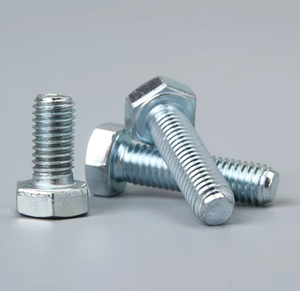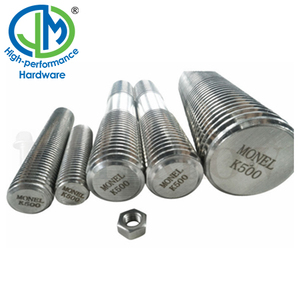
Source high-integrity mechanical hardware engineered to withstand severe torque, thermal expansion, and harsh corrosive operations worldwide.
Decades of collective metallurgy, strict forging process controls, and rigorous inspection testing protocols.
Operating automated multi-station cold heading alongside continuous induction hot-forging cells, enabling dimensional stability from high-speed M3 nuts to massive M120 structural components without grain breakage.
Production conforms strictly to ISO 9001:2015 and European Pressure Equipment Directive PED 2014/68/EU guidelines, ensuring complete compliance for safety-critical pressure vessels and marine piping systems.
Every production batch is tied to raw-material melt numbers. Complete chemical spectroscopy, mechanical tension, hardness, and Charpy impact tests are archived, providing seamless third-party verification (DNV, Lloyd's, TUV).
Integrated automated finishing systems for hot-dip galvanizing, electro-zinc chromating, multi-layer fluoropolymer (PTFE/Xylan) baking, and cadmium-alternative passivation ensuring 1,500+ hour neutral salt spray endurance.
Beyond carbon grades, our facilities specialize in difficult-to-form nickel-chromium, duplex, and marine non-ferrous alloys, managing specialized vacuum-atmosphere solution annealing to eliminate micro-cracking and intergranular decay.
Combining heavy-tonnage heading lines with high-speed multi-axis CNC turn-mill stations to deliver customized pitch variations (UNC, UNF, metric fine, 8UN) and non-standard flange nut profiles on short-cycle schedules.
Direct logistical channels to major deep-water seaports guarantee expedited palletized and containerized export packing, moisture-barrier wrapping, and smooth customs clearing across European, Middle Eastern, and American transport lanes.
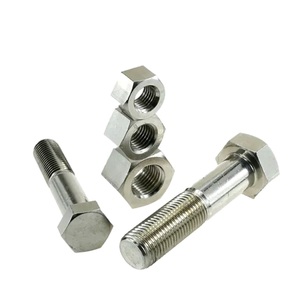
In mechanical bolted flange joints, structural integrity does not rely exclusively on the ultimate tensile capacity of the bolt. The nut represents the critical stress-transmission node. Standard hex nuts often fail in high-pressure or elevated-temperature operations due to thread dilation and hoop stress shearing. Heavy hex nuts, engineered according to ASME B18.2.2 and international standards, possess an increased across-flats width and substantial thickness. This extra bulk expands the effective shear-area envelope of the internal mating threads, distributing contact stress across a larger bearing area.
When high bolt pre-loads are applied via hydraulic tensioners or high-torque calibrated wrenches, the wider contact face reduces local crushing of the flange mating surface. Furthermore, the enhanced material thickness resists circumferential expansion (hoop dilation), which is the primary cause of thread stripping under sudden pressure spikes. From offshore drilling manifolds governed by API 6A to refinery heat exchangers under ASTM A193/A194 specifications, deploying precision-forged heavy hex nuts ensures the bolt stretches predictably within its elastic zone, establishing a leak-tight seal throughout intense operational cycles.
| Material Standard | UNS / Grade | Yield Strength (Min, MPa) | Service Temp. Envelope | Primary Industrial Applications |
|---|---|---|---|---|
| ASTM A194 Grade 2H | Carbon Steel (Quenched & Tempered) | ≥ 550 | -29°C to 425°C | High-pressure steam, power plants, refinery flanges |
| ASTM A194 Grade 7 | AISI 4140 (Cr-Mo Alloy Steel) | ≥ 725 | -100°C to 540°C | Low-temperature sour oil & gas, Arctic process piping |
| ASTM A194 Grade 8M | AISI 316 / 316L Stainless Steel | ≥ 205 (Class 1) | -196°C to 800°C | Marine splash environments, chemical process lines |
| ASTM B637 / API 6A | Inconel 718 (UNS N07718) | ≥ 1,034 | -253°C to 650°C | Deep subsea trees, sour downhole tools (NACE MR0175) |
| ASTM A479 / F53 | Super Duplex 2507 (UNS S32750) | ≥ 550 | -50°C to 300°C | Seawater desalination, marine scrubbers, brine coolers |
The manufacturing of heavy hex nuts involves demanding metallurgical challenges. Unlike basic standard fasteners, material intended for critical duties must undergo rigorous thermal regulation. For alloy grades such as ASTM A194 Grade 7 or 2H, precision controlled-atmosphere induction or mesh-belt furnace quenching and subsequent tempering are essential. This process prevents decarburization of thread crests while ensuring the inner core achieves homogeneous martensitic transformation, attaining the precise Rockwell C hardness targets that prevent both brittleness and thread galling under cyclic stress.
In exotic superalloys such as Inconel 718 or Monel K500, hot-forging temperatures must be regulated within strict boundaries to prevent secondary phase boundary precipitation and preserve grain refinement. Internal threading also demands advanced high-precision single-point CNC threading or automated synchronized lead-screw tapping with specialized carbide geometries. This avoids microscopic tear fractures in the thread roots—a notorious trigger for fatigue failure under vibrational pulsation. Every lot undergoes thorough wet magnetic particle inspection or liquid penetrant testing to confirm the complete absence of forging laps or micro-fissures.
Nut and bolt pairings in severe industrial sectors face harsh atmospheric exposure, chemical washes, and salt spray. In response, modern surface engineering has advanced far beyond traditional electro-zinc plating. While zinc chromates remain an economical standard for interior or mild industrial environments, high-profile projects require multi-tier barrier technology.
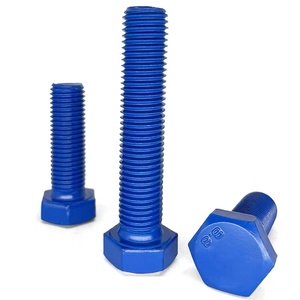
Hot-dip galvanizing per ASTM A153 provides a sacrificial metallurgical iron-zinc alloy layer suitable for structural utility. However, this process necessitates overtapped internal nut threads to compensate for the zinc thickness. In subsea, marine, and chemical plant flange assemblies, thermoset fluoropolymer (PTFE / Xylan) coatings are the gold standard. When applied over phosphate or ceramic undercoats, fluoropolymers provide excellent corrosion resistance (often exceeding 2,000 to 3,000 hours in ASTM B117 salt spray tests) while maintaining a low friction coefficient (0.08 to 0.12). This consistent friction profile eliminates thread galling—especially in stainless and nickel fasteners—and ensures precise clamp load calculation during makeup.
Analyze the emerging structural shifts shaping industrial fastener procurement and manufacturing supply chains over the next decade.
Engineering sectors increasingly demand higher strength-to-weight ratios. Designers are transitioning from large Grade 4.8 or 8.8 bolts toward compact Grade 10.9, 12.9, or Inconel 718 heavy-load hardware. This change reduces the overall envelope and weight of offshore modules and aerospace equipment while maintaining critical joint preload.
Global operators have shifted away from unverified spot-market fastener purchasing. Demands for digital EN 10204 3.1 certification, positive material identification (PMI) documentation, and end-to-end heat-melt batch records now govern vendor qualification, eliminating substandard materials from critical processing assets.
Global sustainability policies and chemical mandates (such as REACH and RoHS) continue to phase out toxic hexavalent chromium and cadmium platings. Supply chains are rapidly converting to advanced zinc-nickel electroplating, zinc flake dip-spin coatings, and non-volatile solvent-free PTFE fluoropolymer coatings.
Major engineering, procurement, and construction (EPC) conglomerates are increasingly bypassing multiple tiers of local sub-distributors. They favor direct collaboration with certified manufacturing plants to shorten lead times, secure dedicated production capacity, and obtain custom OEM drawing revisions without inflated markups.
Driven by deeper sour-gas wells and higher-efficiency hydrogen/CCUS infrastructure, procurement guidelines increasingly require materials meeting dual certifications (e.g., Duplex 2205 / Super Duplex 2507 and ASTM B637 / API 6A 718) to ensure long operational lifespans with minimal maintenance downtime.
Western energy and construction sectors are beginning to audit the embodied carbon footprint of their supply chains. Modern cold-heading and flash-free forging processes that reduce raw material waste and utilize renewable electric-arc steel mills are winning preferred vendor status.
Direct technical answers addressing the most common issues encountered by QA teams, piping engineers, and procurement managers.
Heavy hex nuts are distinctly larger in both width across the flats (dimension 'W') and thickness (dimension 'H') compared to standard finished hex nuts. This larger geometry expands the shear bearing area of the threads, distributing high mechanical stresses and preventing thread dilation or nut cracking under high bolt tensions.
Fastener standards such as ASTM A193 (studs) and ASTM A194 (nuts) require paired hardness and yield matching (e.g., Grade B7 studs with Grade 2H nuts). Mismatched pairings can trigger premature joint failure, severe thread stripping during makeup, or aggressive galvanic corrosion between dissimilar metallurgical matrices.
Hot-dip galvanizing adds a substantial protective zinc layer (typically 45–65 microns thick). To allow smooth assembly onto standard bolts without seizing, heavy hex nuts must be tapped oversize after galvanizing in accordance with ASTM A563/ASME B1.1 specifications, while maintaining adequate proof-load engagement capacity.
Stainless steel and nickel alloys readily form a passive chromium-oxide boundary that can friction-weld under pressure, causing threads to gall and seize. Applying high-performance boundary lubricants or utilizing engineered surface solutions—such as PTFE coatings, molybdenum disulfide, or silver platings—effectively isolates contact points and ensures uniform torque makeup.
Procurement teams should insist on comprehensive EN 10204 Type 3.1 Inspection Certificates containing the original cast/heat batch number, precise chemical spectrometry, proof-load test results, Brinell/Rockwell hardness, Charpy impact toughness data, and coating thickness verification.
Yes. By utilizing dedicated CNC multi-spindle turning facilities alongside modern hot-forging heading equipment, our factories produce customized geometries, special tapers, non-standard pitch threads, and bespoke components using specialty nickel, duplex, and aerospace-grade alloys.
Whether you require standard ASTM A194 2H/7/8M nuts or custom hot-forged superalloy components to precise engineering prints, our metallurgists and export managers are ready to support your technical specifications.
Contact Us