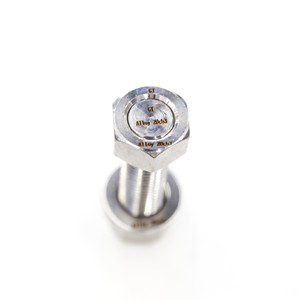
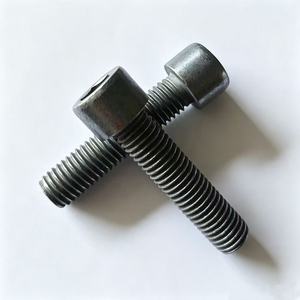
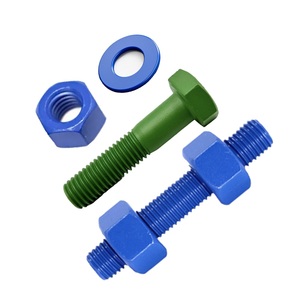
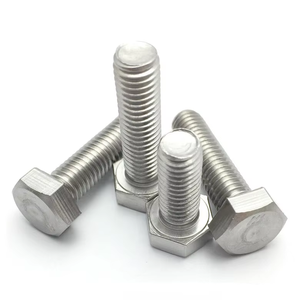
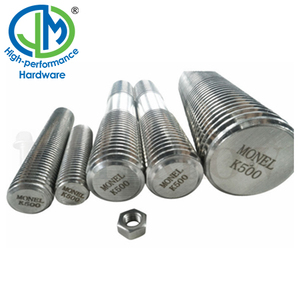
China Wholesale Nimonic 80A Fasteners Factories & Exporters

Precision Engineering, Creep-Rupture Integrity & High-Temperature Superalloy Solutions Certified Under ISO 9001:2015 & PED 2014/68/EU

815°C
Service Temperature Resistance
≥1000 MPa
Tensile Strength (γ′ Age Hardened)
100%
Traceability to EN 10204 3.1 / 3.2
±0.01mm
CNC Machining & Rolling Tolerance
Product Portfolio

High-Integrity Specialty Fasteners & Superalloys

Manufactured using advanced hot-forging, induction heating, thread-rolling, and full vacuum age-hardening technologies across our global precision manufacturing plants.

Metallurgical Whitepaper

Engineering Fundamentals of Nimonic 80A Fasteners

A technical guide on why Nimonic 80A (UNS N07080 / W.Nr. 2.4952) serves as the primary high-integrity fastener solution across ultra-critical thermal envelopes.

Chemical / Physical Parameter Standard Range (%) Metallurgical Function Engineering Significance in Bolted Joints
Nickel (Ni) Balance (≥65.0%) Face-Centered Cubic (FCC) Matrix Provides base microstructural stability, cryogenic-to-high heat tough resistance.
Chromium (Cr) 18.00% – 21.00% Passivating Oxide Scale Builder Forms self-regenerating Cr2O3 scale, shielding bolting against oxidizing gases up to 815°C.
Titanium (Ti) 1.80% – 2.70% γ′ [Ni3(Ti,Al)] Phase Former Essential precipitant that pins dislocations, minimizing thermal relaxation and creep.
Aluminium (Al) 1.00% – 1.80% Intermetallic Co-Strengthener Synergizes with Ti to maintain yield stress above 620 MPa even at sustained 650°C.
Carbon (C) & Boron (B) C: 0.04-0.10% | B: ≤0.008% Grain Boundary Carbides Stabilization Prevents intergranular sliding; eliminates premature creep-rupture under cyclical stress.

Precipitation Age-Hardening

Unlike conventional stainless steels that soften above 500°C, Nimonic 80A utilizes a two-stage heat treatment (solution anneal at 1080°C followed by 16h aging at 700°C) to lock high clamping preload through coherent gamma-prime precipitate precipitation.

Stress Relaxation Resistance

Thermal cycling causes ordinary bolts to lose clamping force due to plastic deformation. Nimonic 80A studs maintain critical elastic preload under cyclic thermal transients, preventing hazardous flange leaks in supercritical steam lines and gas turbine combustion chambers.

Hot Forged & Rolled Threads

Our manufacturing protocols employ hot heading below the grain coarsening threshold and CNC thread rolling after age hardening. This preserves unbroken grain boundary lines across the root radiuses, elevating fatigue resistance by over 45% compared to cut threads.

Industry Insight

Future Procurement Trends in Superalloy Fasteners

Global aerospace, nuclear energy, and hydrogen conversion projects are redefining superalloy fastener standards. Here is how advanced supply chains are adapting.

Additive-Forging Hybrid Routes

Modern EPC procurement favors hybrid production: near-net 3D-printed preforms combined with final precision hot die-heading for non-standard head dimensions. This reduces raw billet wastage of expensive nickel superalloys by up to 60% while accelerating critical project schedules.

Direct Digital Traceability (EN 10204 3.2)

Paper mill certs are being superseded by decentralized digital tagging and witnessed testing. Fastener lots now ship with permanent laser-etched 2D DataMatrix codes, allowing instantaneous onsite validation of heat chemistry, Charpy V-notch impact, and spectral PMI results.

Extreme Temperature Anti-Galling Coatings

Traditional cadmium and silver platings are transitioning to advanced multi-layer ceramic fluoropolymers, high-purity thermal spray aluminizing, and MoS2 coatings that resist galling at temperatures above 750°C without inducing liquid metal embrittlement.

Engineered For Zero Tolerance

Integrated manufacturing capabilities across forging, rolling, and automated heat treatment. Supported by accredited testing laboratories to meet the rigid specifications of global energy and aerospace leaders.

ISO 9001:2015 Certified QMS Manufacturing
PED 2014/68/EU TÜV Rheinland Pressure Certification
Full Heat Traceability EN 10204 3.1 & 3.2 Inspection
NACE MR0175 / ISO 15156 Sour Gas Environment Proof
Procurement Intelligence

Frequently Asked Questions: Nimonic 80A Fasteners

Comprehensive answers to common technical, metallurgical, and logistics questions from EPC engineers, QA specialists, and global supply chain managers.
What differentiates Nimonic 80A from Inconel 718 and Inconel X-750?
While Inconel 718 (UNS N07718) provides higher absolute yield strength up to 650°C via γ″ (Ni3Nb) precipitation, its strength degrades rapidly beyond 650°C due to precipitate coarsening. Nimonic 80A (UNS N07080) relies on γ′ [Ni3(Ti,Al)] strengthening, making it significantly more resistant to creep rupture and stress relaxation at prolonged temperatures reaching 750°C to 815°C. Compared to Inconel X-750, Nimonic 80A features higher levels of titanium and aluminum balance, providing superior long-term creep rupture ductility in gas turbine casing and boiler exhaust bolting.
Which testing protocols are executed to certify Nimonic 80A bolting?
Every production batch undergoes a rigid inspection matrix according to ASTM B637, BS 3076, or DIN 17752:
  • Chemical Verification: Optical Emission Spectrometry (OES) and Positive Material Identification (PMI).
  • Tensile & Yield Testing: Room-temperature and elevated-temperature (650°C/750°C) pull tests.
  • Creep Rupture Testing: Sustained stress testing at elevated temperatures (typically 100 hours at 750°C under specified stress).
  • Microstructural Evaluation: Grain size assessment (ASTM E112) to verify homogeneous carbide and γ′ precipitation.
  • Non-Destructive Testing (NDT): 100% Wet Magnetic Particle or Dye Penetrant testing on thread root radiuses and under-head transitions.
Why must Nimonic 80A fasteners feature rolled rather than machined threads?
Cutting threads interrupts the grain structure of high-nickel superalloys, producing notch-sensitivity points and micro-burrs that act as stress concentration zones during thermal expansion. Cold or warm thread rolling after age hardening reshapes the metal plastically, maintaining continuous, unbroken grain flow along the root curvature and imparting beneficial compressive residual stresses. This reduces fatigue cracking and thread galling under cyclic vibration by more than 40%.
What surface finishes are best suited for high-temperature superalloy bolts?
Because Nimonic 80A naturally generates a protective, adherent chromium oxide layer, it is frequently supplied pickled and passivated. For applications prone to high-temperature thread seizing and friction-induced galling (such as gas turbine flanges), we supply fasteners with:
  • High-temperature electroplated silver plating per AMS 2410 / AMS 2411.
  • Thermoset dry-film lubricant coatings (MoS2-based) engineered to 450°C.
  • Ceramic micro-coatings formulated for zero galling during plant turnarounds up to 800°C.
What specific details should be included in an RFQ for Nimonic 80A?
To receive a precise, technically qualified offer without iterative delays, specify:
  1. Material Grade & Condition: UNS N07080 / Nimonic 80A (specify if solution treated or fully aged).
  2. Dimensional Standard: ASME B18.2.1, DIN 931, DIN 933, ISO 4014, or detailed fabrication drawing.
  3. Thread Standard & Fit: UNC, UNF, Metric coarse/fine, Class 2A/2B or 6g/6H with rolled root radiuses.
  4. Certification Tier: EN 10204 3.1 standard mill certificate or 3.2 third-party witnessed inspection (e.g., DNV, Lloyd's, BV, TÜV).
  5. Quantity and Logistics: Piece counts per diameter/length, project tagging requirements, and target port or site destination.
Contact Us