
Engineered precisely to endure severe marine atmospheric conditions, hypersaline subsea submersion, and aggressive chemical processing. Our inventory spans nickel-chromium superalloys, specialized duplex matrices, and high-integrity protective coatings.
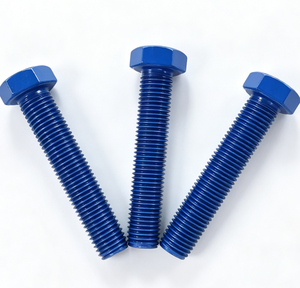
ASTM A193 Grade B8M Class 1/2 molybdenum-stabilized stainless bolts, tailored for petrochemical manifolds, pressure vessels, and coastal chemical plants needing chloride SCC immunity.
View Details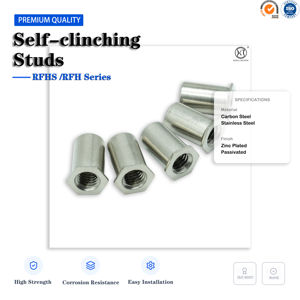
High-tensile corrosion-proof SOS threaded hardware crafted for marine avionics, offshore automation enclosures, instrumentation control panels, and vibration-resistant chassis.
View Details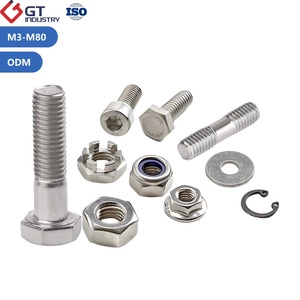
Severe acid-resistant nickel-molybdenum-chromium alloys (UNS N10276 / N06022) offering exceptional pitting resistance (PREN > 65) for wet chlorine, sour gas, and marine scrubbers.
View Details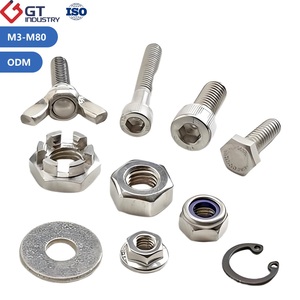
High-performance superalloy fasteners designed for deep-sea risers, offshore platform blowout preventers (BOP), and gas turbine exhausts from cryogenic to 980°C.
View Details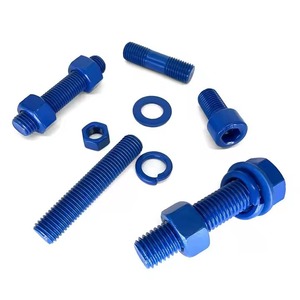
Fluoropolymer/ceramic coated heat-treated AISI 4140 stud bolts offering low frictional coefficient (0.06–0.08) and salt spray barrier exceeding 3,000+ hours ASTM B117 testing.
View Details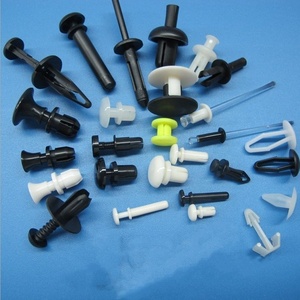
High-grade Polyamide 66 thermoplastic retaining hardware engineered for marine wiring harnesses, thermal insulation blankets, subsea electrical junction boxes, and lightweight brackets.
View Details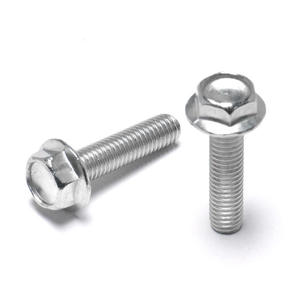
Precision CNC cold/hot-headed integral serrated flange bolts reducing contact stress on mating flanges while eliminating washer slip in cyclic offshore wave-loading environments.
View Details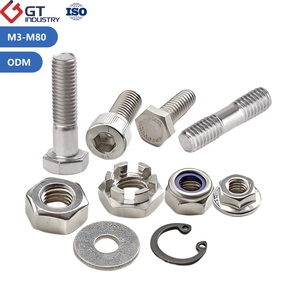
Precipitation-hardened UNS N07718 fastener assemblies compliant with NACE MR0175/ISO 15156 sour service, reaching minimum yield strength ≥ 120 ksi (827 MPa) with documented Charpy V-notch.
View DetailsOffshore marine environments subject structural and pressure-containing fasteners to a devastating convergence of mechanical fatigue, galvanic corrosion, chloride stress corrosion cracking (CSCC), and cathodic hydrogen embrittlement. Sourcing from a verified China wholesale offshore fasteners factory demands acute metallurgical scrutiny beyond superficial dimensional conformance.
Hot forging within strictly mapped thermodynamic windows ensures dynamic recrystallization, eliminating dendritic micro-segregation. Thread rolling performed strictly after solution annealing preserves uninterrupted grain boundary continuity, tripling fatigue thresholds under fluctuating wave loads.
For high H2S and CO2 reservoir extractions, fasteners undergo double-aging heat treatments. Controlled bulk hardness (HRC ≤ 35 for Inconel 718; HRC ≤ 28 for Duplex 2205) mitigates Sulfide Stress Cracking (SSC) in accordance with ISO 15156-3 design limitations.
From multi-tier PTFE/Fluoropolymer (Xylan 1070/1424) over zinc-nickel or ceramic undercoats to Hot Dip Galvanizing (ASTM A153), coatings undergo robotic thermal curing to eliminate porosity, deliver salt spray endurance > 3,500 hours, and normalize torque coefficients (±5%).
Compare mechanical thresholds, Pitting Resistance Equivalent Numbers (PREN), and certified industry standards across our primary offshore fastening alloys.
| Material Designation | UNS / Standard | Yield Strength Min. (MPa) | Tensile Strength (MPa) | PREN Value | Primary Offshore Application Domain |
|---|---|---|---|---|---|
| Inconel 718 | UNS N07718 / API 6A CRA | 1,034 (150 ksi) | 1,240 (180 ksi) | ≥ 45.0 | Subsea Christmas Trees, Downhole Drill Collars, Wellhead Risers |
| Inconel 625 | UNS N06625 / ASTM B446 | 415 (60 ksi) | 827 (120 ksi) | ≥ 50.0 | Marine Wet Exhaust, Splash-Zone Flanges, Deepsea Cladding Joints |
| Hastelloy C276 | UNS N10276 / ASTM B574 | 355 (51 ksi) | 790 (115 ksi) | ≥ 68.0 | Sour Gas Scrubbers, Desulfurization Columns, Marine Chemical Tanks |
| Super Duplex 2507 | UNS S32750 / EN 1.4410 | 550 (80 ksi) | 750–1000 | ≥ 42.0 | Offshore Firewater Rings, Seawater Injection Manifolds, Desalination |
| Duplex 2205 | UNS S31803 / S32205 | 450 (65 ksi) | 655–880 | ≥ 34.0 | Structural Marine Decks, Topsides Process Piping, Cable Trays |
| Titanium Grade 5 | UNS R56400 / Ti-6Al-4V | 828 (120 ksi) | 895 (130 ksi) | N/A (Immune) | Ultra-Deepwater Buoyancy Systems, Oceanographic Sensors, ROVs |
| ASTM A193 B7 / Xylan | AISI 4140 Quenched & Temp. | 725 (105 ksi) | 860 (125 ksi) | Coated Surface | Topside ASME B16.5 Piping, Pressure Vessel Gasket Flanges |
* Note: PREN (Pitting Resistance Equivalent Number) = %Cr + 3.3(%Mo + 0.5%W) + 16%N. Certified Charpy impact testing at -46°C or -101°C provided under EN 10204 3.1 / 3.2 witnessing.
Global offshore capital expenditure is pivoting towards harsher deepwater frontiers, high-capacity floating offshore wind installations, and decarbonized marine infrastructures. Procurement leaders must align supplier capabilities with these seismic shifts.
Unlike bottom-fixed turbines, floating foundations endure continuous multi-axial cycloidal wave excitation and constant splash-zone aeration. Procurement vectors are moving toward specialized M36–M72 Super Duplex 2507 and High-Strength 10.9-grade HDG bolts equipped with thermochemically bonded fluoropolymer topsheets. Standard ISO 898-1 fasteners are proving inadequate, elevating demand for bolts specifically characterized for high-cycle corrosion-fatigue limits exceeding 10^7 cycles.
Supply chain vulnerability has forced international energy majors (Shell, BP, TotalEnergies, ExxonMobil) to enforce Bolting Specification Levels (BSL-1, BSL-2, BSL-3) per API 20E (alloy steel) and API 20F (corrosion-resistant alloys). Procurement contracts now routinely demand immutable heat-treatment charts, automated eddy-current non-destructive testing (NDT), 100% Optical Emission Spectrometry (OES), and complete EN 10204 3.2 inspection dossiers validated by independent surveyors such as DNV, Lloyd’s Register, or ABS.
Driven by EU REACH regulations, OSHA standards, and environmental social governance (ESG) frameworks, maritime operators are banning yellow zinc-chromate and electrolytic cadmium bolting. Global procurement is standardizing on zinc-nickel electro-deposition (ASTM B841) capped with waterborne nanocomposite barrier films and multilayer Ceramic PTFE finishes that offer equal sacrificial lubricity without releasing carcinogenic heavy metals into marine ecosystems.
Intermediate stockists with generic distribution models are being phased out in favor of direct long-term agreements (LTAs) with certified Chinese manufacturing facilities. Direct integration allows engineering teams to pre-qualify melt shops, lock in raw alloy heats (Ni, Mo, Cr), commission custom forge toolings, and accelerate turnarounds on non-standard diameters (up to M120) with significant cost efficiencies.
Fastener production has evolved into a high-precision, data-driven domain. Our production lines integrate cutting-edge industrial innovations designed to conquer deepsea extremes.
By controlling workpiece temperature during high-speed cold and warm heading of precipitation-hardened grades (such as A286 and 17-4 PH), grain shear transformation is tightly steered, generating pristine fastener heads without micro-cracking or residual internal shear stresses.
Next-generation offshore wind and subsea flange bolts integrate embedded ultrasonic micro-transducers and piezoelectric thin-films. Technicians can interrogate residual bolt preload via non-contact handheld readers during offshore maintenance shutdowns, eliminating inaccurate torque-wrench assumptions.
Plasma-assisted chemical vapor deposition (PACVD) and thermal diffusion coatings apply amorphous Si-DLC (Diamond-Like Carbon) and aluminum-slurry matrices onto nickel-alloy bolting, completely isolating the steel substrate from galvanic coupling when mated with titanium or carbon-composite subsea piping.
Backed by decades of dedicated metallurgy and manufacturing precision, our operations seamlessly connect raw material ingots to final engineered bolting delivered onto global offshore sites.
Our manufacturing floor integrates continuous electric induction billet heating, 2,500-ton horizontal forging presses, 6-station high-speed cold formers, precision CNC horizontal and live-tooling lathes, along with dedicated thread-rolling machines capable of processing high-hardness alloys up to M120 diameter with 8UN, UNC, UNF, and metric thread profiles.
Certified strictly under ISO 9001:2015 and pressure equipment directive PED 2014/68/EU by TÜV Rheinland. Our factory is fully audited to manufacture pressure-retaining components adhering to European, American (ASME VIII / B16.5), and Norwegian NORSOK M-650 / M-001 requirements.
Equipped with Thermo Fisher Niton XRF analyzers for 100% Positive Material Identification (PMI), hydraulic tensile testers up to 1,000 kN, sub-zero Charpy V-notch impact rigs down to -196°C, Vickers/Rockwell hardness testers, digital optical micro-profile projectors, and salt spray fog chambers per ASTM B117.
Specialized in seaworthy and tropicalized export packaging: individual thread sleeving, heavy-duty VCI (Vapor Corrosion Inhibitor) heat-sealed barrier wrapping, moisture desiccant bags, steel-banded fumigated plywood crates (ISPM 15), and express project logistics serving hubs across the North Sea, Middle East, Houston, Singapore, and Australia.
Clear, highly authoritative engineering answers addressing common technical queries, international standards, testing regimens, and material selections.
API 20E governs alloy and carbon steel bolting (such as ASTM A193 B7, B7M, L7, L7M) utilized in petroleum and natural gas equipment. In contrast, API 20F establishes rigorous quality control and manufacturing requirements for corrosion-resistant bolting, including austenitic stainless steels, precipitation-hardened nickel alloys (Inconel 718, UNS N07718), and duplex/super duplex grades. Both specifications define three Bolting Specification Levels (BSL-1, BSL-2, and BSL-3), with BSL-3 mandating 100% volumetric NDT, stringent heat-treatment verification, and strict grain size control.
Thread rolling is a cold-forming process that plastically displaces metal along hardened dies rather than cutting into the grain flow. This induces advantageous compressive residual stresses in the thread roots and preserves continuous metallurgical grain boundaries. As a consequence, rolled threads demonstrate 20% to 30% higher fatigue resistance, superior resistance to cyclic dynamic marine shear, and a remarkably burnished root radius that inhibits micro-crack nucleation compared to machined or lathe-cut threads.
Galling (cold welding) is common in austenitic stainless steels and nickel alloys due to their passive oxide films breaking down under thread engagement friction. We mitigate this through three proven engineering approaches: 1) Hardness differentials: pairing stud bolts with heavy hex nuts that have a verified hardness differential of 30–50 HBW; 2) Advanced coatings: utilizing bonded dry-film lubricants, PTFE (Xylan 1070), or molybdenum disulfide (MoS2) coatings; 3) Micro-silver or copper plating applied to the internal nut threads to act as an anti-friction sacrificial shear barrier.
An EN 10204 3.1 inspection certificate is issued directly by our factory's independent Quality Assurance department, validating that the delivered parts conform to contract requirements, accompanied by actual mechanical, chemical, and heat-treatment test results traceable to the original melt heat number. An EN 10204 3.2 certificate requires an authorized third-party inspection agency (e.g., DNV, TÜV, Bureau Veritas, Lloyd's Register) or the buyer's designated inspector to witness the sampling, mechanical tensile/impact testing, PMI, and lot verification, countersigning the final certificate.
Super Duplex 2507 (PREN ≥ 42) offers exceptional localized pitting and crevice corrosion resistance in ambient to moderate temperature seawater (up to ~60°C) and is widely used for topside manifolds and piping. However, Duplex 2507 is prone to 475°C embrittlement at temperatures above 250°C and risks subsea cathodic hydrogen embrittlement if over-polarized under active cathodic protection (CP). Inconel 718 is selected when high tensile yield strength (≥ 1,034 MPa) is required in downhole conditions, in extreme sour H2S service, or across operating temperatures exceeding 250°C up to 650°C.
To deliver an immediate, legally binding commercial and technical proposal, please provide: 1) Specific Material Grade / UNS Number (e.g., Inconel 625 UNS N06625); 2) Dimensional standard (e.g., ASME B18.2.1, DIN 931, or 2D technical drawing); 3) Thread designation and pitch (e.g., 1-1/8"-8UN Class 2A); 4) Total quantity per line item including commissioning spares; 5) Surface coating and layer thickness specification; 6) Certification level (EN 10204 3.1 or 3.2, NDT requirements, NACE MR0175 compliance); and 7) Final point of delivery and delivery schedule.
Consult with our lead metallurgical engineers for technical specification reviews, drawing clarifications, API/PED documentation compliance, and wholesale factory-direct pricing tailored for EPC contractors and marine distributors.