Rigorous QA system from raw melt ingot to finished micro-threads.
Certified bolting materials compliant for European pressure vessels.
Complete 100% heat batch, chemical PMI & mechanical validation.
Reliable OEM manufacturer since 2010 with plants in Mumbai & Rajkot.
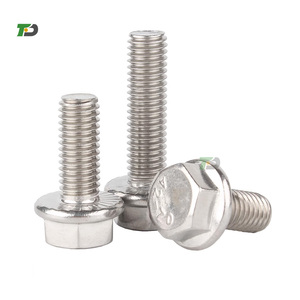
Engineered for extreme shear load, cryogenic resistance, high-temperature creep exposure, and severe chloride attack. Review our primary production lines machined to rigorous ASME, DIN, and ISO geometry standards.
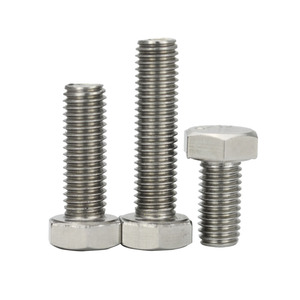
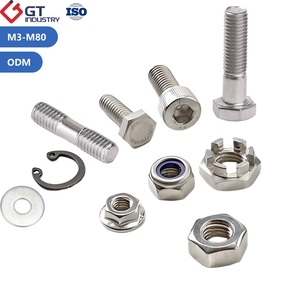
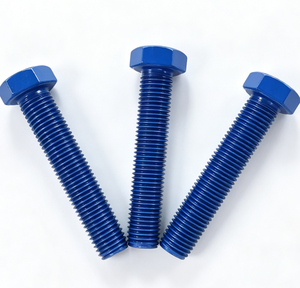
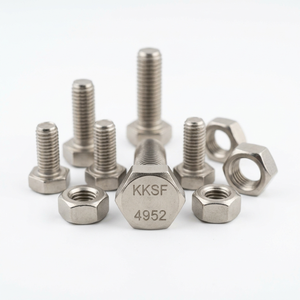
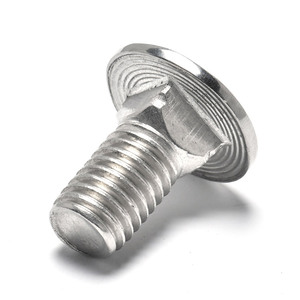
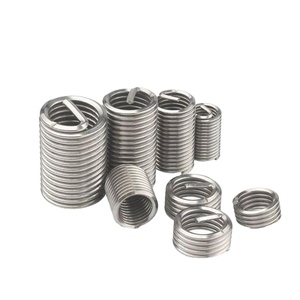
Mechanical fastening in aggressive chemical, offshore, and thermal environments demands precise metallurgy. Premature fastener shearing, stress corrosion cracking (SCC), and pitting corrosion can lead to catastrophic joint decompression. Compare critical alloy classes engineered in our Rajkot forging and CNC production centers.
| Alloy Family | UNS / DIN Grade | PREN Value | Tensile Strength (MPa) | Critical Corrosion Resistance Mechanisms | Optimal Operating Environments |
|---|---|---|---|---|---|
| Austenitic Stainless | UNS S31603 (316L) | 23 – 25 | 500 – 700 | Molybdenum additions (2.0-3.0%) suppress localized pitting; low carbon eliminates carbide precipitation during welding. | Marine atmospheres, food and pharmaceutical synthesis, washdown piping, coastal deck frames. |
| Precipitation Hardening | UNS S17400 (17-4 PH) | ∼ 28 | 930 – 1310 | Martensitic matrix age-hardened via copper precipitants; exceptional yield strength under high cyclic shear. | High-pressure pump shafts, offshore valve stems, subsea hydraulic actuators, aerospace couplings. |
| Duplex Stainless Steel | UNS S32205 (2205) | 35 – 36 | 655 – 880 | 50/50 dual-phase austenite/ferrite micro-structure provides twice the yield strength of 316L with supreme chloride SCC immunity. | Desalination plants, brackish water intake risers, chemical storage tanks, sour gas flowlines. |
| Super Duplex Steel | UNS S32750 / Zeron 100 | ≥ 42 | 750 – 1000 | Elevated chromium (25%), molybdenum (4%), and nitrogen (0.28%) yielding resistance to critical crevice temperatures (CCT > 50°C). | Deepwater subsea trees, firewater ring mains, sour crude scrubbing columns, marine defense hulls. |
| Nickel Superalloy | Inconel 718 (N07718) | — | 1200 – 1450 | Niobium-gamma double prime (γ″) precipitation strengthening provides creep-rupture stability up to 700°C. | Gas turbine combustion casings, nuclear steam generators, sour high-temperature deep gas wells. |
| Nickel Superalloy | Inconel 625 (N06625) | ≥ 50 | 830 – 1000 | Solid-solution matrix strengthened by molybdenum and niobium; virtually immune to chloride-induced stress corrosion. | Flare stack tips, submarine exhaust ducting, wet scrubbers, sour gas pipelines compliant with NACE MR0175. |
| Super Nickel-Moly | Hastelloy C-276 (N10276) | ≥ 68 | 790 – 950 | Tungsten-doped low-carbon nickel matrix delivering resistance to ferric and cupric chlorides, wet chlorine gas, and formic acid. | Flue gas desulfurization (FGD), titanium dioxide reactors, acetic acid synthesis, pulp & paper bleach plants. |
| Titanium Grade 5 | Ti-6Al-4V (R56400) | — | 895 – 1000 | Instantaneous formation of continuous TiO2 rutile passive films; high strength-to-density ratio (4.43 g/cm³). | Lightweight aerospace frames, titanium heat exchangers, deep-sea exploration vessels, chlor-alkali cells. |
Procurement directors and supply chain managers in offshore oil, green hydrogen, and defense face changing tariff frameworks, volatile nickel index pricing, and heightened audit scrutiny. Here are the key market forces reshaping industrial bolting procurement through 2030.
Modern EPC contractors are transitioning from buying the cheapest 304 or zinc-plated bolt toward calculating Total Cost of Ownership (TCO). A bolt failure in a subsea manifold or sulfuric acid reactor incur tens of thousands of dollars per hour in plant downtime. Upgrading to Super Duplex 2507, Hastelloy C-276, or fluoropolymer-encapsulated studs prevents galling, hydrogen embrittlement, and unscheduled shutdowns, reducing 20-year structural bolting budgets by up to 42%.
Supply chain governance now rejects generic certificates of conformance. Major energy operators (Saudi Aramco, Shell, Equinor, Chevron) demand mill source heat-number stamping directly on bolt heads and nut flats. Fully digitized documentation covering positive material identification (PMI), ultrasonic inspection for internal inclusions, Charpy impact toughness at cryogenic temperatures (-46°C to -196°C), and microstructural phase balance audits have shifted from optional add-ons to contractual prerequisites.
Distributors often rely on multiple middlemen, adding margin layers and 16-to-24-week lead times for exotic alloys. Modern supply chains favor vertically integrated manufacturers equipped with on-site induction hot forging, precision Swiss and CNC multi-axis turning, thread rolling machines, and computerized solution annealing ovens. TorqBolt's direct OEM plant structure cuts lead cycles down to 2-4 weeks for critical outage emergencies and scheduled project deliveries.
Corrosion prevention is advancing beyond simple passivated stainless steel. Discover the latest metallurgical and chemical treatments engineered to withstand supercritical CO2, hydrogen embrittlement, and multi-electrolyte galvanic couples.
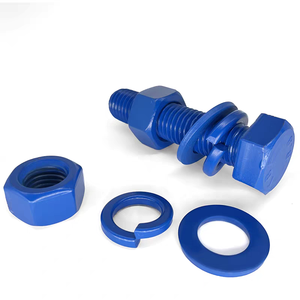
Advanced PTFE coatings (Xylan 1070, 1014, 1424) applied over zinc-nickel or phosphate base layers provide over 3,000 to 5,000 hours of ASTM B117 salt spray exposure without base metal red rust. In addition to chemical barrier defense, these resin-bonded fluoropolymer films deliver a consistent, ultra-low coefficient of friction (μ = 0.08 – 0.12). This eliminates thread galling during torquing, prevents cold welding in stainless pairs, and ensures predictable clamping preload force across large-diameter flange make-ups.
Thread rolling burnishes root radii through progressive displacement dies instead of interrupting continuous metal grain flow lines as thread single-point cutting does. For high-stress applications in Inconel 718, Super Duplex, and Grade B8M stainless steels, rolled threads exhibit continuous unbroken metallurgical grain lines, enhanced surface microhardness from localized work hardening, and up to a 300% increase in high-cycle fatigue life under pulsating tension and bending loads.
High-strength bolts (tensile > 1000 MPa, hardness > 32 HRC) operating in cathodic protection regimes or sour gas (H2S) environments are prone to catastrophic brittle shear. Through precise vacuum solution treatment, secondary vacuum-induction degassing (VIM/VAR melts), and strict adherence to NACE MR0175 / ISO 15156 hardness limits (e.g. max 35 HRC for Inconel 718; max 28 HRC for 2205 Duplex), our manufacturing guarantees grain boundary purification and low residual stress profiles.
Headquartered in Mumbai with advanced production facilities in Rajkot, Gujarat, TorqBolt Inc. has been a specialized manufacturer and worldwide exporter of exotic alloy fasteners since 2010. We deliver custom fasteners where generic supply houses cannot.
Independently audited and certified by TÜV Rheinland for compliance with the European Pressure Equipment Directive (PED). Approved for pressurized bolting systems in energy plants, heat exchangers, and cryogenic pipelines.
Equipped with induction hot heading presses for large diameters (up to M100 / 4" diameter) and precision CNC machining centers in Rajkot, Gujarat, capable of handling complex non-standard geometries and tight-tolerance custom prints.
In-house computerized heat treatment and hardness inspection guarantee tight compliance with H2S sour gas criteria, protecting offshore platforms and refinery distillation columns against sulfide stress corrosion cracking.
Every melt batch undergoes in-house Positive Material Identification (XRF & OES spectroscopy), microstructural phase balance inspection (ferrite scope for duplex), and cryogenic Charpy V-notch impact testing to -196°C.
We maintain comprehensive stocks of certified bar inventory in Inconel 625/718, Hastelloy C-276, Monel 400, Duplex 2205, Super Duplex 2507, and Titanium Grade 5, enabling short-notice production runs in days, not months.
Exporting across the United States, Germany, the United Kingdom, Norway, the UAE, Saudi Arabia, and Australia with custom ISPM-15 treated wooden export crating, thread preservation sleeve protection, and clear barcode tracking.
Detailed engineering answers for purchasing managers, QA/QC inspectors, and structural piping designers regarding material compliance, galling, certifications, and manufacturing feasibility.
PREN is a calculated metric derived from metallurgical chemistry: PREN = %Cr + 3.3(%Mo + 0.5%W) + 16(%N). It quantifies an alloy's resistance to localized pitting and crevice corrosion in chloride-dense environments such as seawater splash zones. Standard 316L stainless steel has a PREN of 23-25, making it vulnerable to pitting in stagnant seawater. Duplex 2205 reaches a PREN of 35-36, while Super Duplex (UNS S32750 / 2507) and Zeron 100 achieve PREN ≥ 42, ensuring resistance to critical pitting temperatures well beyond 50°C. Specifying PREN ≥ 40 is standard practice for subsea manifold bolting.
Thread galling (cold welding) is caused by friction-induced heat breaking down the protective oxide films of mating fastener threads under torque load. TorqBolt mitigates galling through three methods: (1) pairing mating components with differential hardness (e.g. through-hardening nuts or using Nitronic 60 galling-resistant alloy nuts); (2) utilizing precision CNC thread rolling rather than cutting to achieve smooth micro-inch root finishes (Ra < 0.8 μm); and (3) applying engineered solid dry-film lubricants such as Xylan fluoropolymer (PTFE), molybdenum disulfide (MoS2), or silver plating for extreme temperature environments.
An EN 10204 3.1 inspection certificate is issued by the manufacturer's authorized quality inspection department, independent of the production shop floor. It certifies that the delivered fasteners comply with project specifications, based on specific chemical melt analyses, tensile tests, impact tests, and dimensional audits. An EN 10204 3.2 certificate requires independent validation: tests must be witnessed by either the purchaser's authorized QA inspector or a designated third-party inspection agency (such as Lloyd's Register, DNV, Bureau Veritas, or TÜV). TorqBolt routinely facilitates EN 10204 3.2 witnessing at our Rajkot testing facility.
While both are high-performance nickel-chromium-molybdenum alloys, Hastelloy C-276 contains approximately 16% molybdenum and 4% tungsten, with minimal iron content. This provides exceptional resistance to strong reducing acids (such as boiling hydrochloric and sulfuric acids) and wet chlorine gas environments. In contrast, Inconel 625 (21.5% Cr, 9% Mo, 3.6% Nb) offers superior high-temperature mechanical tensile properties and oxidation resistance up to 980°C. For pure acid digestion and chemical scrubbers, C-276 is preferred; for marine exhaust gas piping and high-temperature structural flanged bolting, Inconel 625 is the optimal choice.
Yes. Custom OEM fastener manufacturing is a core capability. Utilizing high-speed multi-axis CNC lathes, induction-heated hot-forging presses, and wire-EDM cutting, we produce specialized geometries including extended-length tap-end stud bolts, 12-point ferry-head aerospace bolts, wafer-thin socket cap screws, custom flange washers, and anti-vibration locking nuts. Custom orders can be manufactured in quantities ranging from prototype testing lots of 10-50 pieces up to full container shipments, all covered by our ISO 9001:2015 quality assurance system.
To receive a detailed quotation within 4 hours, your Request for Quotation (RFQ) should specify: (1) Material grade or UNS number (e.g. Inconel 718 UNS N07718); (2) Dimensional standard (e.g. ASME B18.2.1, DIN 933, ASTM A193 B8M) or detailed engineering print; (3) Nominal diameter, thread pitch (UNC, UNF, metric, 8-UN), and total length; (4) Required heat treatment or tensile class (e.g. Class 1 vs Class 2); (5) Coating specification (e.g. PTFE Xylan 1070 blue, hot-dip galvanized ASTM A153, cadmium, or plain passivated); (6) Certification requirements (EN 10204 3.1 or 3.2, NACE MR0175, PED approval); and (7) Quantity per line item and delivery destination.