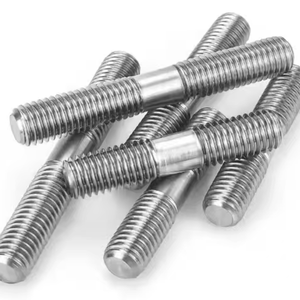

Manufactured from precision stainless steels, nickel alloys, and specialty fluoropolymer coatings (PTFE, Xylan) engineered for extreme corrosive environments.
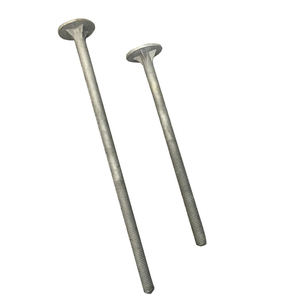
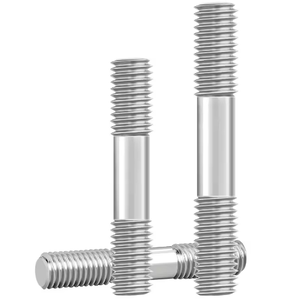
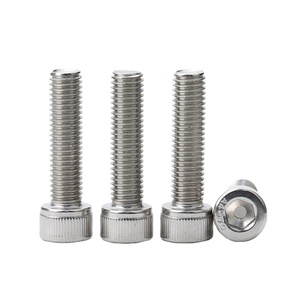
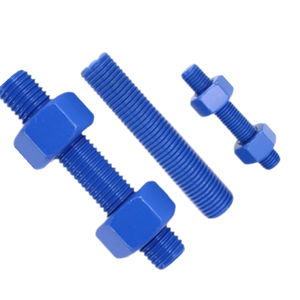
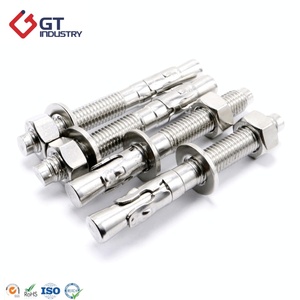
A comprehensive examination of how multi-layer resin-bonded fluorocarbon matrices prevent galvanic degradation, galling, and stress cracking in subsea and petrochemical bolting systems.
Standard zinc electroplating provides sacrificial protection, but fails rapidly in sour and saline ambient conditions. Fluoropolymer coatings (incorporating PTFE, PFA, and FEP polymers) create a cross-linked organic composite barrier that separates the steel substrate from corrosive electrolytes (such as NaCl, H2S, and marine atmospheres).
By establishing high electrical resistance, our fluoropolymer-coated studs inhibit the formation of micro-galvanic cells when joined to dissimilar metallic flanges like duplex stainless steels or copper-nickel alloys.
Thread galling and seizing represent severe operational threats during make-up of stainless steel (304, 316, 2205) and high-nickel fasteners (Inconel 625, 718, Incoloy 825). Liquid thread lubricants wash out, emulsify, and generate erratic friction coefficients (μ = 0.12 - 0.20).
Industrial fluoropolymer coating imparts a permanent dry-film lubricant that stabilizes torque tensioning (μ = 0.05 - 0.08). This ensures exact clamp preload with zero cold-welding or thread pick-up, simplifying breakout operations during field maintenance.
Adhesion integrity defines coating performance under shear. At our Rajkot production facility, substrate pre-treatments are paired with application requirements: micro-crystalline zinc or manganese phosphate, zinc-nickel electroplating (ASTM B841), or thermal diffusion ceramic undercoats.
This multi-stage system (Base Prep + Sintered Undercoat + Primer + Fluorocarbon Topcoat) prevents under-film corrosion creep and blister detachment even if the top resin sustains mechanical scratching during impact assembly.
Key technical and environmental shifts influencing global supply chains across offshore energy, LNG terminals, and hydrogen infrastructure projects.
Driven by EU REACH annex revisions and US EPA reporting frameworks, future-ready procurement teams are pivoting toward PFAS-free high-durability fluoropolymer hybrids. Engineering focus is accelerating around silicon-fluorine resin systems and nano-matrix waterborne coatings that deliver 3,000+ hours ASTM B117 rating while eliminating PFOA/PFOS compounds.
Traditional fluoropolymers exhibit susceptibility to thread peeling when torqued past proof load against uneven flange faces. The industry is transitioning to hybrid systems that blend sub-micron ceramic particles (silicon nitride, alumina oxide) into the primer film, elevating pencil hardness from 2H-3H to 5H-6H while preserving low torque friction values.
For high-strength bolting (Grade B7, L7, 2H, and 17-4 PH precipitation hardened), acid pickling and improper electroplating generate atomic hydrogen ingress, sparking delayed brittle fracture under tension. Advanced procurement mandates embrittlement relief baking (minimum 4 hours at 190°C - 220°C) alongside thermal mechanical zinc basecoats.
| Coating System | Typical Film Thickness | Salt Spray (ASTM B117) | Friction Coeff (μ) | Working Temp Range | Ideal Application Environment |
|---|---|---|---|---|---|
| PTFE Blue (Xylan® 1070 / 1424) | 20 – 35 μm | 3,000 – 4,500 Hrs | 0.06 – 0.08 | -195°C to +260°C | Offshore platforms, subsea manifolds, splash zones |
| Hot-Dip Galvanizing (ASTM A153) | 45 – 85 μm | 1,000 – 1,500 Hrs | 0.14 – 0.20 | Up to +200°C | Structural framing, timber matting, utility lines |
| Electro-Zinc Plating (ASTM B633) | 5 – 15 μm | 72 – 240 Hrs | 0.12 – 0.16 | Up to +120°C | Indoor equipment, electrical cabinets, mild HVAC |
| Zinc-Nickel + Fluoropolymer Top | 25 – 40 μm | 5,000+ Hrs | 0.07 – 0.09 | -60°C to +250°C | Severe chemical scrubbers, sour gas (NACE MR0175) |
From metallurgical procurement through forging, heat treatment, threading, and automated fluoropolymer coating, our Rajkot plant delivers turnkey traceable precision.
We maintain dedicated inventories of European and certified domestic round bars: AISI 304, 316L, 17-4 PH, Inconel 625/718, Incoloy 800/825, Hastelloy C276, and Duplex 2205/2507, allowing accelerated deliveries on complex BOM schedules.
Operating under ISO 9001:2015 and PED 2014/68/EU certification, our engineering protocols align with Annex I pressure vessel design codes. We provide complete EN 10204 Type 3.1 chemical, tensile, Charpy V-notch, and hardness testing with every shipment.
Corrosive sour gas environments require controlled microstructure and verified hardness ceilings (e.g., max 22 HRC / 250 HV). Every batch undergoes hardness mapping and microscopic ferrite inspection to prevent sulfide stress cracking (SSC).
Continuous internal grain structure preserved through controlled closed-die heading or precision CNC bar machining for custom dimensions.
Solution annealing, quench & tempering, or precipitation age-hardening carried out in calibrated furnaces to ensure required mechanical strength.
Precision-rolled threads before coating with pitch diameter tolerance adjustments to accept 25-35μm dry film build without nut galling.
Pre-treatment blasting, primer bonding, electrostatic fluoropolymer application, and high-temp curing verified by adhesion cross-hatch tests.
Clear guidance for piping engineers, material specifiers, and procurement teams sourcing fluorocarbon-coated bolting.
Need custom drawing evaluations, non-standard alloy verification, or expedited deliveries for marine and offshore infrastructure projects? Contact our sales engineering desk directly.
Contact Us