Explore our specialized OEM bolting configurations tailored for severe stress, aggressive corrosive environments, and hyper-thermal operating thresholds across chemical, semiconductor, aerospace, and sintering sectors.
Operating beyond 400°C exposes standard fasteners to microstructural degradation, grain coarsening, thermal creep, stress-relaxation, and accelerated oxidation. Our production protocols address these physical transitions through selective metallurgy.
| Material Classification | Common Alloy / Grade | Continuous Temp. Limit | Tensile Strength (Yield) | Critical Engineering Advantages | Primary Industrial Vector |
|---|---|---|---|---|---|
| Austenitic Stainless | AISI 316L / ASTM A193 B8M | 550°C (1,022°F) | 515 MPa (205 MPa) | Molybdenum-stabilized pitting resistance, ductile forming | Petrochemical & Exhaust Piping |
| Precipitation Hardened | 17-4 PH (AISI 630 / UNS S17400) | 425°C (800°F) | 1,070 MPa (1,000 MPa) | Superior shear capacity, uniform volumetric aging | Pump Impellers & Aerospace Actuators |
| Nickel Superalloy | Inconel 718 (UNS N07718) | 650°C - 700°C | 1,240 MPa (1,030 MPa) | Exceptional creep-rupture life, gamma-prime hardening | Gas Turbines & Cryo-to-High Temp Pressure Vats |
| Solid-Solution Nickel | Inconel 625 / Hastelloy C276 | 980°C (1,796°F) | 827 MPa (414 MPa) | Severe acid/wet chlorine resistance, oxidation impervious | FGD Scrubbers & Waste Incineration |
| Duplex / Super Duplex | 2205 / 32750 / Zeron 100 | 300°C (572°F) | 750 - 800 MPa (550 MPa) | PREN ≥ 42, superior resistance to chloride SCC | Subsea Manifolds & Desalination Autoclaves |
| Refractory Metals | Pure Molybdenum / TZM Alloy | 1,800°C (Inert/Vac) | 690 MPa (560 MPa) | High thermal conductivity, low expansion, zero creep in vacuum | HIP Furnaces & Sintering Fixtures |
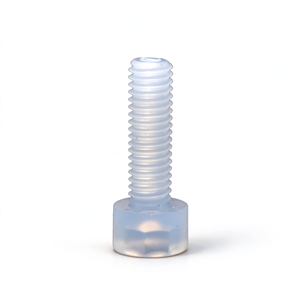
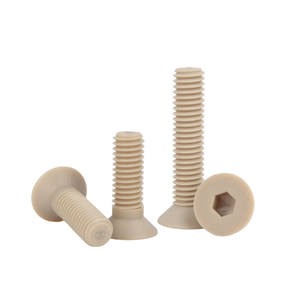
| High-Tech Thermoplastics | Virgin & Carbon-Filled PEEK | 260°C (500°F) | 100 MPa (80 MPa) | Non-magnetic, zero ion outgassing, gamma radiation stable | Semiconductor Wet Benches & MRI Scanners |
| Structural Ceramics | Alumina (95% - 99.7% Al2O3) | 1,500°C - 1,650°C | 300 MPa (Flexural) | Absolute electrical insulation, extreme hardness & wear | Industrial Heating Kilns & Igniter Terminals |
Strategic purchasing in thermal hardware is shifting from reactive maintenance procurement to risk-mitigated lifecycle cost evaluation. Here is how modern global supply chains are adapting.
Procurement teams are prioritizing manufacturers capable of leveraging 3D-printed superalloy blanks combined with five-axis CNC final finishing. This hybrid method drastically reduces lead times for complex, low-volume custom geometries from months to weeks.
Unplanned plant shutdowns linked to counterfeit alloys have accelerated mandates for EN 10204 3.1 and independently validated 3.2 documentation. Complete heat-number pedigree from vacuum melting to final packing is now standard operating criteria.
Tier-1 EPCs are avoiding recurring maintenance downtime by replacing coated 304/316 fasteners with long-life Inconel 718 or ceramic assemblies, balancing initial capital expenditure against high turnaround outage savings.
The convergence of semiconductor scaling and aerospace optics requires fasteners devoid of micro-particulates, grease, and hydrocarbons. Fasteners must now be ultrasonic-degreased, passivated, and cleanroom vacuum-sealed.
High-temperature galling at thread interfaces remains an operational issue. Future sourcing focuses on dry-film ceramic-fluoropolymer hybrid coatings, silver-plating, and anti-seize diffusion technologies rated beyond 800°C.
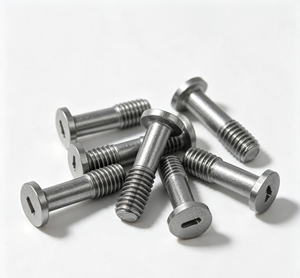
Engineers favor single-point manufacturing partners capable of delivering non-standard geometries—including extended shoulder bolts, custom thread-relief undercut studs, and non-magnetic insulating fixtures—without intermediaries.
Thermal stability requires targeted microstructural control. Key technological advancements are reshaping how our engineers approach high-temperature fastening problems.
By executing localized induction warm-heading and hot-forging within narrow metallurgical temperature bands, uninterrupted internal grain-flow profiles are preserved throughout the bolt head-to-shank juncture, eliminating sudden shear failures during thermal stress-cycling.
All manufactured nickel superalloys and refractory grades undergo precise vacuum or inert-atmosphere heat treatments. This prevents surface oxidation and intergranular carbide precipitation, optimizing the material for both ductile cold impacts and prolonged creep exposure.
Unlike conventional cut threads, rolling threads on pre-heat-treated exotic alloys induces beneficial residual compressive stress on root radiuses. This design strategy boosts dynamic fatigue life in high-vibration power generation assemblies.
Combining metallurgical expertise with comprehensive production capacity, our facilities deliver precision-engineered fastening solutions backed by verified quality systems.
Our centralized administrative offices in Mumbai paired with a specialized heavy-manufacturing plant in Rajkot, India, integrate hot forging, cold heading, and precision five-axis CNC machining under one ISO 9001:2015 registered management infrastructure.
Certified by TUV Rheinland under the European Pressure Equipment Directive (PED), our bolting materials adhere to strict European and North American pressure vessel design codes, meeting compliance mandates for boiler and offshore builds.
Our specialized chemistry verification and microhardness controls produce bolting tailored for sour hydrocarbon environments, verified in strict compliance with NACE MR0175 / ISO 15156 to eliminate sulfide stress cracking risks.
We maintain an inventory of certified raw bars, billets, and plate stocks in Inconel (625, 718), Hastelloy (C276, B2), Monel 400, Duplex 2205, Super Duplex (32750, Zeron 100), Titanium Grade 5, and Molybdenum, minimizing production runup delays.
Every heat batch is validated through Positive Material Identification (PMI), Charpy V-notch impact testing, ambient and elevated-temperature tensile testing, optical microscopy, IGC testing, and automated thread profile projection.
Operating continuously since 2010, TorqBolt ships precision hardware globally to heavy industrial clients across the United States, Germany, United Kingdom, France, UAE, Saudi Arabia, Norway, and Australia with protective export packaging.
Essential guidance to simplify purchasing, quality assurance, and compliance checks for high-temperature and exotic alloy fasteners.
Thermal expansion alters the clamping force applied during ambient torque-up. As materials heat, differential expansion between mating flanges and bolts can cause over-stressing or load relaxation. We provide exact torque-tension coefficients (k-factors) adapted for dynamic temperatures, lubricated conditions, and high-temp PTFE coatings.
Every shipment is furnished with full EN 10204 3.1 Mill Test Certificates verifying complete melt heat analysis, mechanical tensile and yield metrics, elongation, hardness tests, and dimensional conformance. Third-party inspection witnessing under EN 10204 3.2 (via TUV, DNV, Lloyd's, or Bureau Veritas) is readily arranged.
Yes. Beyond standard ASME B18.2.1, DIN 931, ISO 4014, and ASTM A193 specifications, custom OEM manufacturing accounts for a large portion of our output. Utilizing precision multi-axis CNC Swiss turning centers, we routinely hold tolerances within ±0.005mm on custom drawings.
For temperatures reaching 400°C, specialized PTFE fluorocarbon, Xylan, and molybdenum disulfide (MoS2) coatings deliver stable friction performance. For higher-temperature assemblies extending past 600°C, we provide electrolytic silver plating, copper barrier plating, and passivated oxide treatments designed to avoid thread fusion.
Nickel-based superalloys experience rapid mechanical degradation beyond 700°C to 980°C. Molybdenum operates reliably up to 1,800°C in inert or vacuum sintering furnaces without creep, while 95% Al2O3 Alumina ceramics offer reliable electrical insulation and zero deformation up to 1,500°C under high atmospheric oxidation.
To avoid estimation discrepancies, supply the exact alloy designation/UNS number, dimensional standard or drawing layout, precise diameter, thread pitch, nominal length, required certification grade (3.1 vs 3.2), surface coating preference, and required unit quantities.
Whether you require ASTM A193 B8M studs, custom-machined Inconel 718 components, cleanroom PEEK screws, or vacuum-sintering molybdenum hardware, our metallurgical team is ready to review your project specifications.
Contact Us