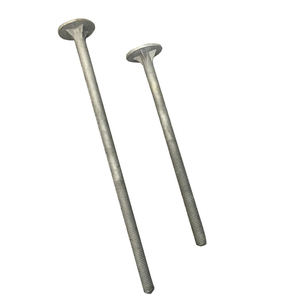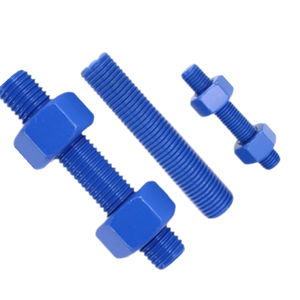
Engineered for extreme tensile demands, deep-sea exploration, and caustic chemical systems. Review standard inventory specs and direct-to-order OEM components.
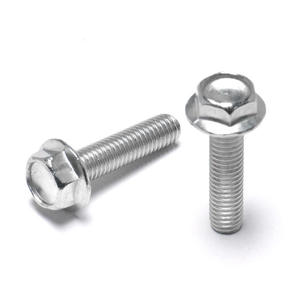
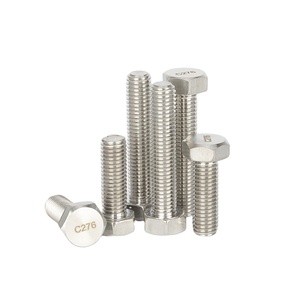
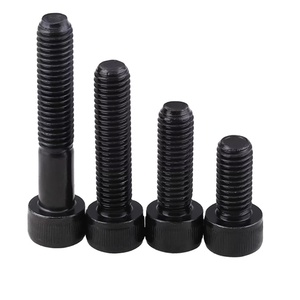
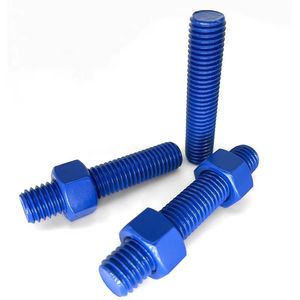
Evaluating yield limits, chloride-stress susceptibility, and temperature degradation across custom forged fasteners.
Procurement engineering within high-consequence operational domains—ranging from high-pressure high-temperature (HPHT) subsea oil and gas extraction manifolds to aero-propulsion turbines and aggressive chemical reactors—leaves no tolerance for mechanical compliance failure. Standard commercial fast-threading cannot withstand combined aggressive environments where hydrogen-induced stress crack propagation, cyclic thermal fatigue, and intergranular chloride pitting attack operate concurrently. Custom OEM Nickel Alloy Fasteners represent an irreplaceable metallurgical barrier against catastrophic containment loss. Nickel-chromium and nickel-molybdenum superalloys retain substantial lattice matrix stability under operational regimes that cause common austenitics (such as AISI 304 or 316) to fail within hours via catastrophic chloride-induced stress corrosion cracking (SCC).
| Material Designation | UNS Matrix | Ultimate Tensile (MPa) | 0.2% Yield Strength (MPa) | Thermal Threshold | Primary Application Profile |
|---|---|---|---|---|---|
| Inconel 718 | UNS N07718 | ≥ 1240 | ≥ 1030 | 650°C (1200°F) | Subsea wellheads, gas turbine rotor bolting, cryogenic storage rings |
| Inconel 625 | UNS N06625 | ≥ 827 | ≥ 414 | 980°C (1800°F) | Exhaust desulfurization, marine riser flange sets, splash-zone hardware |
| Hastelloy C-276 | UNS N10276 | ≥ 690 | ≥ 283 | 1040°C (1900°F) | Sour-gas scrubbing towers, wet chlorine service, HF alkylation units |
| Monel 400 | UNS N04400 | ≥ 550 | ≥ 240 | 480°C (900°F) | Hydrofluoric acid handling, subsea splash seals, marine propeller joints |
| Super Duplex 2507 | UNS S32750 | ≥ 750 | ≥ 550 | 300°C (572°F) | Offshore firewater loops, reverse osmosis desalination manifolds |
Forward intelligence for enterprise procurement officers, supply-chain architects, and pipeline engineers.
As green hydrogen production facilities scale and sour natural gas blending becomes prevalent, the procurement of specialty fasteners requires elevated microstructural purity. Future fastener sourcing focuses on tight hardness restrictions (≤ 35 HRC for UNS N07718 per NACE MR0175/ISO 15156), precise electro-chemical polishing, and advanced secondary barrier coatings like multi-layer fluoropolymer-infused ceramics to stop atomic hydrogen diffusion entirely.
Precision fatigue life demands are reshaping engineering specifications away from standard single-point lathe CNC threading. High-temperature environments subject fasteners to massive dynamic stress cycles. High-speed induction-assisted hot thread rolling maintains unbroken continuous grain flow through thread roots and crests, increasing fatigue cycle resistance by over 300% compared to traditional subtractive machining methods.
EPC megaprojects reject static physical paperwork prone to human error. Modern global supply-chain strategies now dictate encrypted digital provenance directly linked to origin melt shops. Every OEM fastener carries localized laser markings identifying heat numbers, grade identifiers, and testing IDs directly paired to raw mill test data and 3.2 witnessed metallurgical micro-examinations.
Combining hot forging, cold heading, and precision five-axis CNC machining under a unified, audited Quality Assurance framework.
Our centralized manufacturing ecosystem integrates raw ingots, closed-die hot forging, specialized heat treatment furnaces (solution annealing, precipitation age-hardening), thread rolling, and precision machining under strict ISO 9001:2015 controls. This eliminates third-party outsourcing delays, reduces processing defects, and guarantees metallurgical consistency from bar stock to packaged bolt assemblies.
Operating under certified pressure equipment standards, all structural and pressure-retaining fasteners comply fully with European and global safety requirements. Every batch includes complete chemical analysis, ambient and elevated-temperature tensile evaluations, Charpy V-notch impact testing down to -196°C, and comprehensive intergranular corrosion validations.
Beyond standard ASME B18.2.1, DIN 931, DIN 933, and ASTM A193 parameters, our engineers produce bespoke, drawing-based fasteners tailored to proprietary client specifications. We handle large diameters up to M100 (4 inches), extreme length-to-diameter ratios, custom tap-end profiles, safety wire drilling, and precision hex sockets within micrometric tolerances.
Direct answers to mission-critical questions raised by project engineers, metallurgical consultants, and global sourcing specialists.
Consult directly with our metallurgical engineers to verify design loads, material selection, and international compliance documentation. Fast global delivery with complete melt-heat traceability.