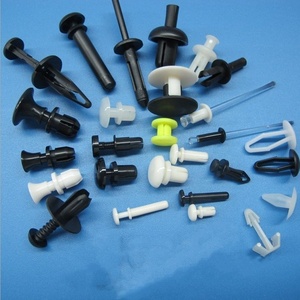

Explore our certified range of custom OEM bolts, studs, and heavy-duty structural fixings passivated and finished to withstand the most demanding offshore, marine, and chemical plant environments.
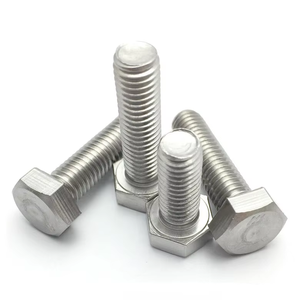
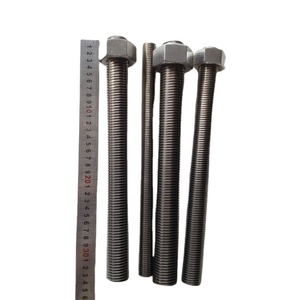
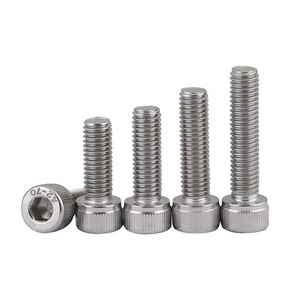

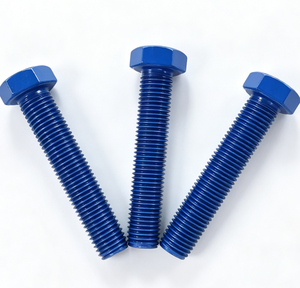
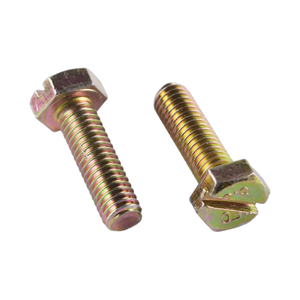
Passivation is a critical post-machining chemical conversion process strictly engineered to maximize the natural corrosion resistance of stainless steels, nickel-chromium superalloys, and exotic metals. During precision cold forging, hot heading, or high-speed CNC threading operations, microscopic deposits of free iron from tooling dies and machine tables become embedded into the fastener’s outer boundary layer. If untreated, these exogenous iron particles oxidize rapidly when introduced to atmospheric moisture or electrolyte solutions, creating localized galvanic cells that catalyze micro-pitting, crevice corrosion, and catastrophic stress corrosion cracking (SCC).
As premier custom OEM passivated bolts manufacturers, we execute advanced chemical passivation processes in accordance with rigorous global standards, including ASTM A967/A967M, ASTM A380, and AMS 2700. Through the selective dissolution of exogenous free iron using controlled nitric acid or citric acid formulations, our passivation lines elevate the chromium-to-iron (Cr/Fe) ratio across the material's passive surface film to greater than 1.5. This engineered chromium oxide barrier layer—typically measuring between 1.5 to 3.0 nanometers in thickness—acts as an impenetrable shield against halogens, sulfides, and aggressive industrial chemicals, ensuring extended fatigue life and maintenance-free longevity in critical process infrastructure.
Engineering Whitepaper Insight: Passivation does not alter the dimensional footprint or thread pitch tolerances of precision machine fasteners. Unlike thick electroplating or hot-dip galvanizing, chemical passivation operates strictly on the atomic boundary layer, preserving pitch diameters within micro-inch specifications (ASME Class 2A/3A and ISO Class 6g tolerances) while boosting localized pitting resistance equivalent (PREN) metrics.
Selecting the appropriate chemical passivation parameter demands an intimate understanding of the metallurgical behavior of diverse alloy systems. The reaction kinetics of austenitic stainless steels differ drastically from martensitic high-hardness grades, precipitation-hardening metals, and high-nickel superalloys. Our facilities implement dedicated chemical baths and process regimes calibrated to specific alloy chemistries:
| Material Family | Common Alloy Grades | Passivation Standard & Chemistry | Primary Industrial Application |
|---|---|---|---|
| Austenitic Stainless | AISI 304, 304L, 316, 316L, B8, B8M | ASTM A967 Citric IV or Nitric II / III | Chemical Processing, Food & Beverage, Marine Deckware |
| Precipitation Hardening | 17-4 PH (AISI 630), 15-5 PH | AMS 2700 Method 1 Type 8 / Method 2 | High-Pressure Pump Shafts, Aerospace Actuators, Valves |
| Duplex & Super Duplex | UNS S32205 (2205), UNS S32750 (2507) | ASTM A380 Pickling followed by ASTM A967 | Offshore Riser Flanges, Seawater Desalination, Scrubbers |
| Nickel Superalloys | Inconel 625/718, Incoloy 825, Hastelloy C276 | Tailored Acid Neutralization & Descaling | Sour Gas Wellheads (NACE MR0175), Gas Turbine Casings |
| High-Strength Carbons | ASTM A193 B7, DIN 933 Carbon Steel | Phosphate conversion / PTFE Fluoropolymer | Subsea Manifolds, Downhole Tools, Heavy Structural Plants |
Headquartered in Mumbai with advanced production and forging operations in Rajkot, India, TorqBolt Inc. leads the international market as a dedicated manufacturer and supply chain partner for mission-critical bolting solutions. Our manufacturing ecosystem integrates hot forging, cold heading, and precision 5-axis CNC machining under a singular, uncompromising ISO 9001:2015 quality management framework.
We process standard austenitic alloys alongside extreme-environment metals including Inconel, Monel, Hastelloy, Titanium, and Cu-Ni alloys rarely stocked by catalog distributors.
Fully certified by TÜV Rheinland under the European Pressure Equipment Directive, qualifying our passivated bolting for critical European pressure vessels and boilers.
Every shipment is delivered with comprehensive mill test certificates, complete raw material heat traceability, and optional third-party witnessed inspection (Lloyd's, DNV, Bureau Veritas).
Full hardness verification, solution annealing, and microstructural analysis to guarantee sour service compliance in aggressive hydrogen sulfide (H2S) environments.
Rapid fabrication of proprietary non-standard fasteners, specialized shoulder bolts, and complex flange bolts engineered precisely to CAD drawings and 3D step files.
Heavy-duty, ocean-proof export packaging, barcode serialization, and expedited air/sea dispatch directly to offshore platforms, shipyards, and major engineering sites worldwide.
The industrial fastener landscape is navigating a technological evolution shaped by decarbonization, high-severity operations, and digital quality verification. Global procurement directors are adopting three transformative procurement priorities:
A. Citric Acid Passivation Replacing Nitric Chemistry: Environmental stewardship and stringent workplace safety frameworks (such as EU REACH and OSHA regulations) are accelerating the transition from hazardous nitric acid baths to bio-based citric acid passivation formulations (ASTM A967 Citric Regimes). Citric acid selectively targets free iron atoms without solubilizing heavy alloying elements like chromium, nickel, or molybdenum, resulting in superior passive layer depth, zero toxic NOx atmospheric emissions, and lower carbon footprints.
B. Hybrid Duplex Surface Engineering: For offshore deepwater installations and hypersaline chemical lines, chemical passivation is increasingly coupled with secondary anti-galling coatings. High-tensile stainless steel fasteners are notoriously susceptible to galling and thread seizing during torque tensioning. The integration of precision chemical passivation followed by dry-film lubricant layers (such as microscopic PTFE, Xylan, or molybdenum disulfide) delivers exceptional corrosion barrier ratings while maintaining a stable, predictable friction coefficient (μ = 0.08–0.12).
C. Automated PMI & Non-Destructive Inspection (NDI): The risk of counterfeit materials entering the global supply chain has mandated non-destructive alloy verification across 100% of safety-critical bolting orders. Handheld X-ray Fluorescence (XRF) and Optical Emission Spectrometry (OES) verify material composition down to fractional elemental percentages prior to dispatch, preventing catastrophic galvanic mismatch in the field.
Connect directly with our metallurgical engineers and international sales specialists for rapid technical review, custom OEM quotation, and complete compliance documentation.
Send an Inquiry