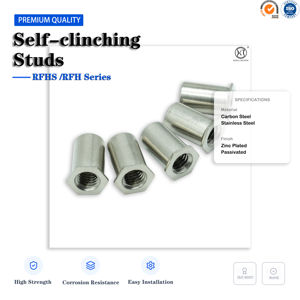
SOS Stainless Steel Self-Clinching Hex Standoffs
High-strength anti-corrosion threaded standoff fasteners engineered for precision electronic enclosures.

Complementing our core ASTM A194 Grade 2H heavy hex bolting series, our manufacturing infrastructure delivers precision fasteners in standard, high-tensile, stainless, and severe-service exotic alloys.
High-strength anti-corrosion threaded standoff fasteners engineered for precision electronic enclosures.
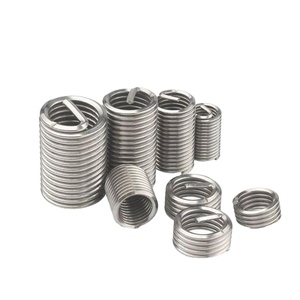
Wear-resistant helical coil inserts providing high-tensile, anti-stripping internal threads in ductile base metals.
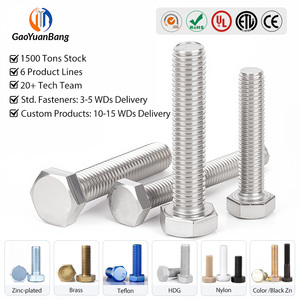
Exceptional resistance to pitting and chloride stress corrosion cracking for offshore marine assemblies.
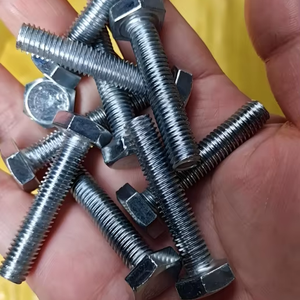
Electro-galvanized and zinc-plated Grade 4.8 / 8.8 standard metric hex bolts for industrial fabrication.
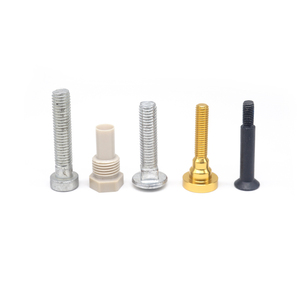
Drawings-based OEM CNC-machined and cold-formed precision bolts, nuts, and specialized rivets.
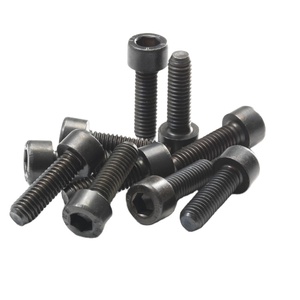
High-torque black-oxide and passivated stainless steel socket head screws for compact structural assemblies.
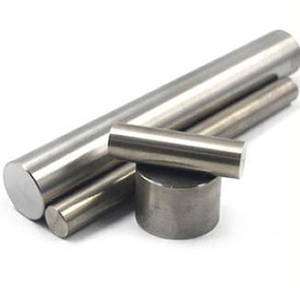
Age-hardenable nickel alloy fasteners built to ASTM B805 for downhole tools and high-sulfide wellheads.
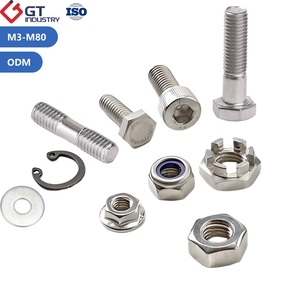
Ultra-corrosion-resistant bolts, studs, and nuts for aggressive oxidizing and reducing acid operations.
ASTM A194 Grade 2H represents the global industrial benchmark for carbon steel heavy hex nuts intended for high-pressure, elevated-temperature pressure vessels, valves, flanges, and fittings.
Governed by the American Society for Testing and Materials (ASTM), the ASTM A194 / A194M specification dictates stringent chemical, mechanical, and heat treatment protocols for internal threaded fasteners. Unlike commercial-grade standard nuts (such as ASTM A563 Grade A), Grade 2H nuts undergo a mandatory liquid quench and tempering regimen that produces a homogeneous tempered martensitic microstructure. This molecular matrix guarantees exceptional yield retention under cyclic thermal stresses up to 425°C (800°F) without thread distortion or plastic deformation.
When paired with high-tensile alloy stud bolts—specifically ASTM A193 Grade B7 for elevated temperatures or ASTM A320 Grade L7 for low-temperature operations—the heavy hex geometry of Grade 2H ensures that thread stripping stresses are uniformly distributed. The increased cross-sectional width across flats (WAF) and enlarged thickness prevent flange face indentations and ensure controlled pre-load retention under extreme hydrostatic and hydrodynamic test loads.
| Property / Standard | ASTM A194 Grade 2H Standard | Grade 2HM (NACE MR0175 / Sour) | Manufacturing Test Protocol |
|---|---|---|---|
| Carbon Content (C) | 0.40% min | 0.40% min | Optical Emission Spectrometry (OES) |
| Manganese (Mn) | 1.00% max | 1.00% max | Spectrochemical Heat Lot Verification |
| Phosphorus / Sulfur | 0.040% max / 0.050% max | 0.040% max / 0.050% max | In-house wet lab titration & spark PMI |
| Quench & Temper Heat Treat | Quenched in liquid ≥ 1200°F (650°C) | Quenched & tempered ≥ 1150°F (620°C) | Continuous SCADA recorded furnaces |
| Hardness Range | 24 to 35 HRC (or 248 to 327 HBW) | 22 HRC Max (159 to 237 HBW) | ASTM E18 Rockwell testing across core |
| Proof Load (UNC / 8UN) | 175,000 psi (1,205 MPa) min | 150,000 psi (1,035 MPa) min | Full-size axial cone proof load testing |
For sour gas environments encountered in upstream drilling and refining, the specification provides for ASTM A194 Grade 2HM. This variant requires 100% core hardness verification to guarantee a maximum hardness of 22 HRC (237 HBW), eliminating susceptibility to Sulfide Stress Cracking (SSC) in full compliance with NACE MR0175 / ISO 15156.
Global supply chain transformations, environmental compliance mandates, and advanced digital validation systems are reshaping how EPC contractors and MRO buyers procure critical fasteners.
Traditional paper Mill Test Certificates are being replaced by QR-encoded fasteners linking directly to immutable digital heat records. Procurement teams now mandate 100% digital provenance from ingot to installed nut to satisfy insurance and regulatory compliance audits.
Cadmium plating is being phased out globally under RoHS and REACH frameworks. Modern procurement mandates non-electrolytic fluoropolymer (PTFE/Xylan), zinc-nickel alloys, and ceramic-matrix dip-spin coatings that achieve 3,000+ salt-spray hours without risk of Hydrogen Embrittlement (HE).
Global operators are hedging logistics vulnerabilities by partnering with certified OEM/ODM manufacturers capable of maintaining strategic buffer stocks, dual-certified bar materials, and fast-track CNC machining lines for expedited turnarounds during planned plant shutdowns.
As operating parameters across the energy and chemical sectors intensify, mechanical fasteners are evolving into precision-monitored, smart mechanical systems.
Embedding acoustic transponders and micro-strain sensors directly into high-pressure flange nuts enables ultrasonic clamp-load readings in real time, preventing fugitive emissions during thermal cycling.
By controlling trace elements such as Vanadium, Boron, and Niobium, manufacturers can achieve tighter grain-refinement boundaries, raising impact resilience at sub-zero temperatures without sacrificing ambient yield thresholds.
With corporate ESG commitments expanding, Tier-1 purchasers increasingly favor OEM producers who utilize Electric Arc Furnace (EAF) recycled billet feedstock, significantly cutting the embodied carbon footprint of every fastener supplied.
Combining rigorous metallurgic engineering with extensive manufacturing capacity across our corporate office in Mumbai and dedicated production foundries in Rajkot, India.
Our quality management is audited to ISO 9001:2015, with official PED 2014/68/EU certification approved by TUV Rheinland, ensuring complete qualification for European and global pressure equipment applications.
Every shipment is accompanied by complete chemical and mechanical test documentation to EN 10204 3.1 as standard. Independent third-party inspection agencies (Lloyd's, DNV, BV, SGS) are routinely hosted for 3.2 certification witnessing.
Featuring multi-station cold heading formers for high-speed nut tapping, heavy-tonnage hydraulic hot forging presses for large diameters (up to 4" / M100), and automated CNC threading cells for custom drawings-based tolerances.
Equipped with specialized tempering ovens capable of tight heat control (+/- 5°C) to consistently produce Grade 2HM nuts strictly below 22 HRC, backed by mandatory individual hardness lot verification.
In-house surface treatment lines provide automated PTFE / Fluorocarbon (Xylan) spray coating, hot-dip galvanizing to ASTM A153, mechanical zinc, zinc-nickel plating, and passivated finishes tailored to salt-spray demands.
Exporting to over 35 nations with robust heavy-duty maritime crating, heat-treated wooden pallets (ISPM-15), color-coded thread caps, and streamlined customs clearances for fast dispatch to offshore rigs and refineries.
Key metallurgical and commercial answers addressing common engineering inquiries during flange joint design and vendor evaluation.