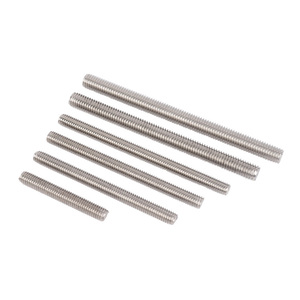

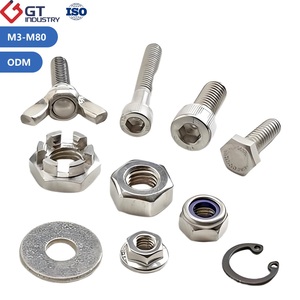
ASTM A453 Grade 660 (UNS S66286 / Incoloy® A-286) is an iron-base, austenitic, precipitation-hardening superalloy formulated for high mechanical strength and thermal stability under severe thermal cycles. As an industry-leading OEM/ODM manufacturer and turnkey exporter, our manufacturing plants deliver rigorously engineered studs, heavy hex nuts, socket head cap screws, and tailor-made flange bolting solutions that sustain structural integrity where common austenitic grades experience creep deformation and yield drop.
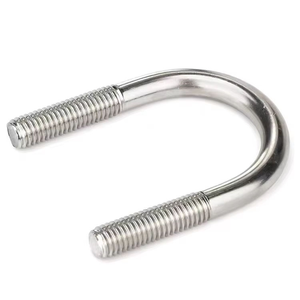
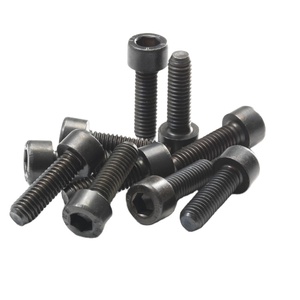
The standard specification ASTM A453 / A453M covers five grades of bolting materials with twelve classes of yield strength limits for high-temperature service, notably pressure vessels, steam turbines, gas manifolds, and casing joints. Among these, Grade 660 is the undisputed benchmark. Achieving its target mechanical integrity requires precise control over solution treatment and precipitation (aging) cycles.
Through the addition of titanium (1.90% to 2.35%), aluminum, and vanadium, the alloy generates a coherent gamma prime (γ') [Ni3(Ti,Al)] intermetallic phase within the austenitic fcc matrix during aging. This phase restricts dislocation motion even at continuous exposure to 650°C (1200°F), providing the bolting with phenomenal resistance against stress relaxation and creep rupture over prolonged continuous duty cycles.
| Property / Class | Class A (UNS S66286) | Class B (UNS S66286) | Class C (UNS S66286) | Class D (UNS S66286) |
|---|---|---|---|---|
| Tensile Strength, min. | 130 ksi [895 MPa] | 130 ksi [895 MPa] | 130 ksi [895 MPa] | 130 ksi [895 MPa] |
| Yield Strength (0.2% Offset) | 85 ksi [585 MPa] | 85 ksi [585 MPa] | 85 ksi [585 MPa] | 105 ksi [725 MPa] |
| Elongation in 4D, min. | 15% | 15% | 15% | 15% |
| Reduction of Area, min. | 18% | 18% | 18% | 18% |
| Hardness Range | 24 to 35 HRC [248-341 HBW] | 24 to 35 HRC [248-341 HBW] | 24 to 35 HRC [248-341 HBW] | 27 to 37 HRC [263-363 HBW] |
| Heat Treatment Solution Cycle | 980°C ± 15°C, hold 1-2h, oil/liquid quench | 980°C ± 15°C, hold 1-2h, air cool | 980°C ± 15°C, hold 1-2h, oil/liquid quench | 900°C ± 15°C, hold 2h, oil/liquid quench |
| Creep Rupture Guarantee | 56 ksi @ 650°C ≥ 100 hrs, 5% elong | 56 ksi @ 650°C ≥ 100 hrs, 5% elong | 56 ksi @ 650°C ≥ 100 hrs, 3% elong | Mandatory Rupture Test Verified |
As an authoritative export mill, we maintain strict controls over trace elements. Boron contents are regulated to 0.001% - 0.010% to prevent grain boundary embrittlement, while sulfur is locked below 0.025% via electroslag remelting (ESR) or vacuum induction melting (VIM) precursor stocks. These tight metallurgical parameters eliminate internal micro-porosity and hot cracking during customer field installation.
Procurement directors and EPC supply chain executives face unprecedented regulatory shifts and harsher service environments. The market for high-temperature superalloy bolting is experiencing five defining transitions:
Global operators are demanding complete EN 10204 3.2 third-party inspection dossiers natively linked via QR or digital passports. Purchasing ASTM A453 660 requires immutable mill origin verification to avoid counterfeit or re-stamped lower-grade austenitic steels in critical energy infrastructure.
Purchasers are shifting from accepting certified material mill test reports to requiring batch-specific creep-rupture test coupons run at 650°C (1200°F) for 100 continuous hours. OEM factories equipped with internal calibrated creep testing rigs achieve preferred tier-1 vendor status.
To eliminate high-temperature galling and galvanic differentials, procurement packages specify full sets of ASTM A453 660 studs accompanied by matched ASTM A453 Grade 660 or ASTM A194 Grade 8T / 8R nuts, treated with anti-seize Xylan/PTFE or ceramic inorganic dry coatings.
The engineering requirements placed on ASTM A453 Grade 660 have expanded beyond traditional steam service into supercritical CO2 plants, hydrogen cracking furnaces, and subsea downhole manifolds. Here is how advanced manufacturing is evolving:
Traditional cutting of fastener threads severs the natural grain flow. Our continuous investment in ultra-heavy-duty cylindrical thread rollers allows thread forming post precipitation-hardening, inducing compressive residual stress in root radii to improve fatigue life four-fold.
To prevent chromium de-alloying and surface decarburization, solution treatment is carried out under computer-controlled vacuum furnaces with high-pressure nitrogen gas quenching. This secures pristine metallographic surfaces without surface intergranular scale.
Standard zinc electroplating is catastrophic on A453 660 at temperatures above 300°C due to liquid metal embrittlement. Development centers on silver-plating (AMS 2410) and multi-layer ceramic sacrificial barriers that prevent bolt galling at up to 750°C.
Engineered control of Class D yield strength paired with hardness limits under 35 HRC enables Grade 660 to resist sulfide stress cracking (SSC) in subsea sour-well architectures, bridging the gap between standard stainless and high-cost nickel 718 alloys.
Established in 2010 with headquarters in Mumbai and an advanced forging facility in Rajkot, Gujarat, TorqBolt Inc. provides an uncompromising metallurgical supply chain for critical fastenings.
Certified by TÜV Rheinland for European Pressure Equipment Directive standards. Fully qualified quality management system ensuring seamless acceptance by inspection authorities like DNV, Lloyd's Register, BV, and ABS.
Combining heavy-tonnage vertical hot-forging presses for upset heads up to M100 [4"] with precision multi-axis CNC turn-mill stations. Fast setup for proprietary drawing-based OEM/ODM non-standard geometry.
Equipped with computerized optical emission spectrometers, Thermo Scientific portable PMI guns, computerized tensile & impact test rigs (-196°C to 800°C), hardness testers, and thread profile projectors for instant lot validation.
Detailed technical clarification on essential engineering, testing, and standard specification guidelines.