
Our manufacturing and export catalog covers high-durability, sub-zero impact-tested fasteners manufactured strictly in accordance with ASTM A320, ASME Section VIII, ISO 3506-1, and DIN 267 requirements.
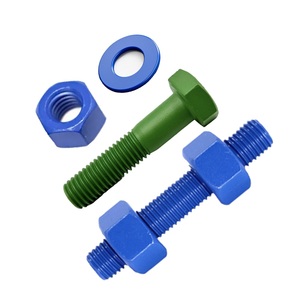
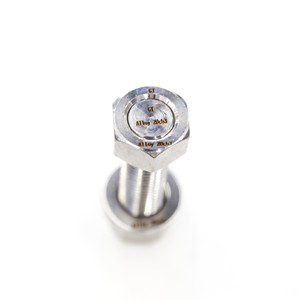
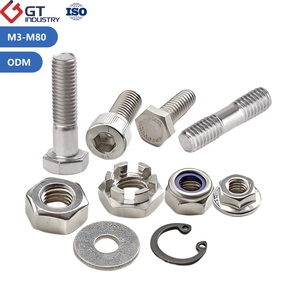
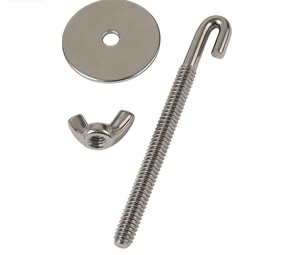
Industrial fasteners deployed within refrigerated natural gas (LNG at -162°C), liquid ethylene (-104°C), liquid oxygen (-183°C), liquid nitrogen (-196°C), and liquid hydrogen (-253°C) infrastructure operate under severe thermodynamic regimes. Standard carbon and ferritic alloy structural steels undergo a pronounced Ductile-to-Brittle Transition Temperature (DBTT) phenomenon. As operational thermal energy drops, the critical resolved shear stress required for dislocation slip increases exponentially relative to cleavage fracture stress. Without specialized metallurgical controls, standard bolting materials suffer catastrophic, unheralded brittle cleavage failure at stress levels far below nominal yield strength.
To avert brittle cleavage, cryogenic bolting relies upon crystalline lattices that remain immune to the Peierls-Nabarro stress rise associated with Body-Centered Cubic (BCC) ferrite. Face-Centered Cubic (FCC) crystalline lattices, such as stable austenitic stainless steels (AISI 304L, 316L, 321, 347, 310) and nickel-base superalloys (Inconel 718, Inconel 625, Hastelloy C276, Monel K-500), possess 12 primary slip systems ({111}⟨110⟩) that maintain dislocation mobility down to absolute zero (-273.15°C).
Chemical composition must be tightly balanced via Schaeffler and DeLong constitution diagrams to maintain a nickel equivalent (Ni_eq) sufficient to prevent stress-induced martensitic transformation (γ → α′) during cryogenic cyclic straining and tightening.
Mandatory impact testing per ASTM A320 and ASME Section VIII Div 1 (UG-84) validates that both the fastener core and thread notch profile sustain a minimum absorbed energy of ≥27 Joules (20 ft-lbs) with ≥0.38 mm (15 mils) lateral expansion directly at -196°C.
Bolting preloads inevitably relax when austenitic studs clamp ferritic 9% Ni steel or aluminium flanges due to coefficient of thermal expansion (α) mismatches. We formulate precision length-to-diameter geometry and disc-spring stack engineering.
The table below provides engineering teams and EPC contractors with standardized metallurgical baselines, governing design codes, minimum design metal temperatures (MDMT), and specific mechanical acceptance criteria for sub-zero bolting:
| Material Grade | UNS / Designation | Governing Specification | MDMT (°C / °F) | Yield Strength (0.2% MPa) | Impact Toughness Requirement |
|---|---|---|---|---|---|
| ASTM A320 Grade L7 | G41400 (Low Alloy Steel) | ASTM A320 / ASME SA320 | -101°C / -150°F | ≥ 725 MPa | ≥ 27 J @ -101°C (Charpy V-Notch) |
| ASTM A320 Grade L7M | G41400 (Quenched & Temp) | ASTM A320 / NACE MR0175 | -73°C / -100°F | ≥ 550 MPa | Hardness ≤ 22 HRC for sour service |
| 304 / 304L (B8 Cl.1/2) | S30400 / S30403 | ASTM A320 / ISO 3506-1 | -196°C / -320°F | 205 – 690 MPa | Exempt from impact tests if carbide solution treated |
| 316 / 316L (B8M Cl.1/2) | S31600 / S31603 | ASTM A320 / ISO 3506-1 | -196°C / -320°F | 205 – 655 MPa | Mo addition elevates marine pitting resistance |
| Grade 321 Stainless | S32100 (Ti-stabilized) | ASTM A320 / ASME B18.2.1 | -196°C / -320°F | ≥ 240 MPa | High resistance to intergranular corrosion |
| Inconel 718 | N07718 (Ni-Cr-Fe-Nb) | ASTM B637 / API 6A 718 | -253°C / -423°F | ≥ 1034 MPa | Exceptional fracture toughness in liquid H2 |
| Inconel 625 | N06625 (Solid Solution) | ASTM B446 / ASME SB446 | -196°C / -320°F | ≥ 415 MPa | High fatigue strength, non-magnetic matrix |
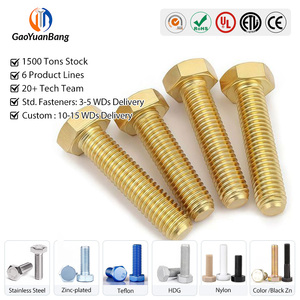
| Silicon Bronze / Brass | C65500 / C65100 | ASTM F468 / F467 | -269°C / -452°F | ≥ 275 MPa | Zero DBTT; ideal for non-magnetic cryostats |
Thread galling (cold welding) is an inherent vulnerability in austenitic stainless steel and nickel alloy bolted connections. When tightening torques are applied, microscopic asperities on mating threads strip away passivated oxide protective layers ($Cr_2O_3$), creating direct atomic contact. Under cryogenic service, conventional hydrocarbon-based lubricants, grease pastes, and anti-seize compounds solidify, crystallize, and lose shear capability, initiating severe adhesive bonding that destroys stud threads and compromises clamping integrity.
To guarantee predictable torque-tension relationships and allow non-destructive bolt breakout during maintenance outages, TorqBolt incorporates advanced solid-film tribological coatings:
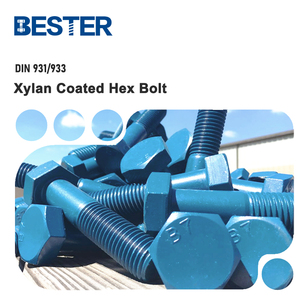
PTFE / Xylan 1424 Fluoropolymer Systems: Thermosetting fluorocarbon coatings engineered with organic binders to endure thermal contractions down to -196°C. These dry-film coatings yield a controlled coefficient of friction of 0.06 to 0.08, completely eliminating the requirement for wet thread paste while preventing galvanic and atmospheric corrosion in coastal marine LNG discharge terminals.
Electroless Nickel & Silver Electroplating: For deep cryogenic vacuum chambers and liquid helium propulsion manifolds operating below -200°C, silver electroplating (AMS 2410 / ASTM B700) is deposited over an electroless nickel sub-layer. Silver acts as a sacrificial, high-purity solid lubricant with remarkably stable shear properties that resist flaking, vacuum outgassing, and cold galling under dynamic preloads.
Headquartered in Mumbai with our advanced metallurgical and hot-forging manufacturing complex located in Rajkot, Gujarat, India, TorqBolt Inc. stands as an established OEM/ODM partner for critical energy and process infrastructure. Our facility operates strictly under a certified ISO 9001:2015 quality architecture, supported by direct approval under the European Union's Pressure Equipment Directive (PED 2014/68/EU) certified by TÜV Rheinland.
Officially certified for pressure-retaining bolting components utilized in pressure vessels, heat exchangers, and cryogenic transport pipelines across European jurisdictions.
Complete traceability from certified vacuum-induction melted (VIM-VAR) billets through to finished studs. Independent third-party inspection (Lloyd's, DNV, Bureau Veritas) witnessed.
Combining heavy-tonnage hot heading presses, high-speed multi-station cold headers, CNC single-point thread machining, and precision thread rolling up to M120 (4.75" dia).
Full metallurgical compliance for cryogenic sour hydrocarbons. Stringent microstructural grain-size validation, intergranular corrosion testing, and controlled hardness cap testing.
The global transition toward alternative fuels, decentralized LNG bunkering, space exploration, and quantum cooling has redefined the commercial and engineering demands placed upon cryogenic fastener exporters. Sourcing directors and project lead engineers are moving beyond basic compliance, prioritizing next-generation operational criteria:
With international investments surging into clean hydrogen infrastructure, bolting must be rated for liquid hydrogen at -253°C (20.28 Kelvin). At these temperatures, conventional 304 and 316 stainless steels may undergo accelerated deformation twinning or martensitic cracking if trace delta ferrite is present. Procurement workflows are actively pivoting to high-nickel superalloys such as Inconel 718 and specialized stabilized austenitic grades that preserve ductility and zero hydrogen embrittlement susceptibility at 20 Kelvin.
Major offshore operators and EPCs now mandate Bolting Specification Levels (BSL-2 and BSL-3) for cryogenic subsea manifolds, FLNG turrets, and high-pressure cryogenic pumps. BSL-3 requirements mandate full volumetric nondestructive examination (NDE), 100% individual thread optical inspection, verified continuous grain flow along the forged head-to-shank junction, and Charpy impact lot tests drawn directly from sacrificial parts.
Procurement transparency has evolved from scanned paper MTRs to immutable digital data systems. Large scale LNG export terminal operators now enforce digital heat verification, linking each stud's laser-etched matrix to its melting source, positive material identification (PMI) chemical spectrum, Charpy impact shear percentage, and dimensional pitch calibration data.
Commercial fusion reactors (Tokamak vacuum vessels) and quantum computational cryostats operate at liquid helium temperatures (-269°C / 4.2 K). Fasteners installed near superconducting magnets mandate absolute zero magnetic permeability (μ_r ≤ 1.005). TorqBolt produces customized silicon bronze, non-magnetic titanium alloys, and high-nitrogen austenitic stainless steels specifically treated to prevent ferromagnetic shift under extreme magnetic field gradients.
1. Cold-Formed Continuous Grain Flow: Modern cryogenic specifications increasingly discourage turning fasteners entirely from bar stock for critical cyclic service. Machining cuts across the steel's longitudinal grain lines, exposing end-grain boundaries that act as micro-notches when subjected to severe thermal contractions. TorqBolt utilizes hot and warm precision heading techniques, forcing the grain lines to flow continuously through the head-shank radius and roll-forming threads under high hydrostatic pressure, increasing fatigue life and notch fracture resistance by up to 35%.
2. Cryogenic Pre-Straining & Strain-Hardened Class 2 Optimization: Under ASTM A320 Grade B8 Class 2 or B8M Class 2, high tensile capabilities are achieved via controlled mechanical strain hardening. However, excess cold-working can destabilize austenite into brittle α′-martensite. Our metallurgical engineers utilize controlled-reduction drawing combined with sub-zero pre-strain stabilization to guarantee enhanced yield strength (>655 MPa) without sacrificing Charpy impact absorption at -196°C.
3. UNR & Metric MJ Controlled Root Radii: Sharp root thread profiles represent prime stress concentrations where brittle cleavage initiates at cryogenic temperatures. TorqBolt manufactures threads with controlled large root radii (UNR and MJ configurations per ASME B1.1 and ISO 5855). By smoothing the root transition radius to 0.150–0.180p, notched stress concentration factors ($K_t$) are reduced by up to 28%, directly mitigating the risk of fatigue cracking under fluid pulsation in cryogenic transfer lines.
Collaborate directly with our technical metallurgy team in Mumbai and Rajkot. Whether your project demands standard ASTM A320 B8M studs or drawing-based custom-machined Inconel 718 fasteners with EN 10204 3.2 third-party inspection, we provide rapid commercial terms, full compliance paperwork, and worldwide project export.