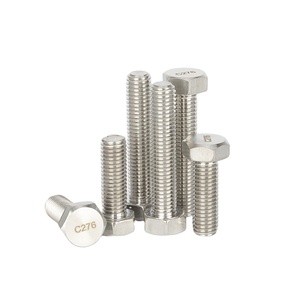
Fully qualified to ASTM B574, ASME SB574, DIN 933, and ISO 4014 specifications. Designed with certified grain boundary integrity and extreme resistance to localized pitting, stress-corrosion cracking, and intergranular attack.
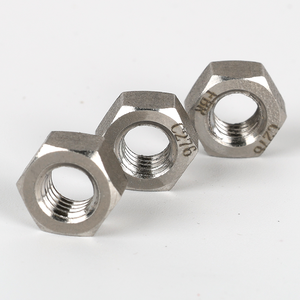
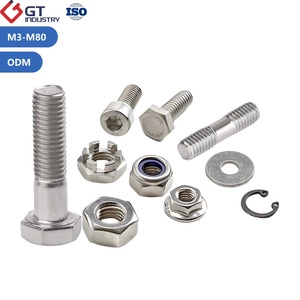
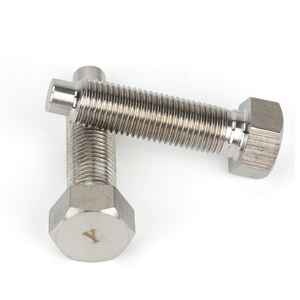
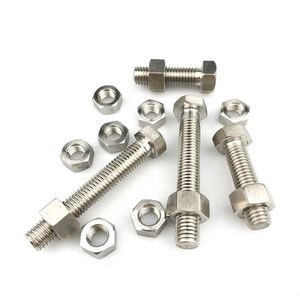
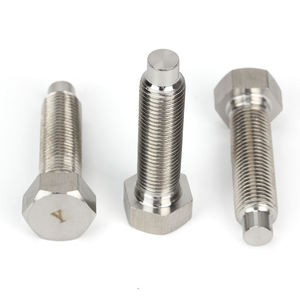
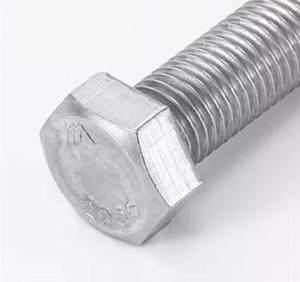
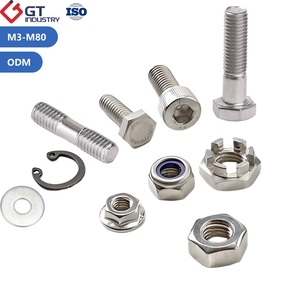
UNS N10276 (W.Nr. 2.4819) represents the premier nickel-molybdenum-chromium superalloy modified with tungsten. Engineered originally to survive aggressive wet chlorine gas, hypochlorite, and chlorine dioxide solutions, Hastelloy C276 bolts maintain metallurgical stability in high-temperature media where conventional austenitic and duplex stainless steels suffer immediate stress-corrosion cracking.
| Chemical Element | Compositional Weight (%) | Metallurgical Function in Bolted Joints |
|---|---|---|
| Nickel (Ni) | Balance (approx. 57.0%) | Provides ductile FCC matrix structure; baseline defense against chloride-induced stress corrosion cracking (CSCC). |
| Molybdenum (Mo) | 15.0 - 17.0% | Massive resistance against non-oxidizing acids (hydrochloric, hydrofluoric, sulfuric) and aggressive crevice attack under gaskets. |
| Chromium (Cr) | 14.5 - 16.5% | Forms protective passive chromia film; resists wet chlorine, ferric/cupric chlorides, nitric acids, and oxidizing streams. |
| Iron (Fe) | 4.0 - 7.0% | Solid-solution stabilization and economic balance without compromising corrosion threshold limits. |
| Tungsten (W) | 3.0 - 4.5% | Synergistic pitting inhibition; enhances creep resistance and elevated-temperature thread shear stability. |
| Cobalt (Co) | 2.5% Max | Solid solution matrix strengthening; prevents micro-fissuring during elevated temperature thermal spikes. |
| Carbon (C) | 0.010% Max | Ultra-low carbon controls intergranular carbide precipitation during solution annealing or welding zones. |
With an exceptional Pitting Resistance Equivalent Number (PREN) exceeding 68, C276 bolts resist crevice corrosion inside gasket serrations, pipe flanges, and dog-point seating shoulders exposed to stagnant brine and wet sulfurous condensates.
Unlike titanium or Inconel 600, Hastelloy C276 survives mixed acid systems containing sulfuric, hydrochloric, and formic acids simultaneously. Ideal for flue-gas desulfurization (FGD) scrubbers and pharmaceutical reactors.
Meets ISO 15156 / NACE MR0175 standards for upstream sour crude extraction. Maximum Rockwell hardness is strictly controlled below 35 HRC to eliminate catastrophic hydrogen embrittlement in hydrogen sulfide (H2S) reservoirs.
As global processing plants run higher continuous pressures and deep-sea exploration pushes past 3,000 meters, OEM and ODM procurement teams face radical changes in regulatory scrutiny, material provenance, and lifecycle metrics.
EPC contractors are moving away from short-term Capex evaluations. Unscheduled shutdowns in a PTA reactor or offshore riser due to crevice corrosion on standard 316L bolts can incur losses of $400,000/day. Specifying Hastelloy C276 upfront delivers decades of zero-maintenance lifecycle value.
Regulatory bodies now mandate full spectroscopic, dimensional, and ultrasonic provenance. Future supply chains demand dynamic QR-coded EN 10204 3.1 & 3.2 documentation tied directly to the original VIM-ESR (Vacuum Induction Melting & Electro-Slag Remelting) ingot batches.
Fatigue failure at thread roots remains the primary mechanical risk in pressurized assemblies. The industry standard is shifting towards roll-threaded Hastelloy bolts after solution annealing, producing uninterrupted grain alignment and substantially improving cyclical fatigue limits over cut threads.
Operating under rigorous ISO 9001:2015 frameworks, our advanced manufacturing centers combine heavy hot-forging stations, high-speed multi-axis CNC turn-mill systems, and dedicated solution-annealing furnaces tailored specifically for refractory and nickel superalloys.
Fully certified under the Pressure Equipment Directive (PED 2014/68/EU) by TÜV Rheinland. We manufacture pressure-retaining components that pass European, American (ASME Section VIII Div 1), and Asian boiler and pressure vessel code inspections.
From dog-point and dog-end alignment bolts to dual-diameter tap-end studs, wafer flange fasteners, and heavy hex nuts matching GB 6170 or DIN 934, our engineering team executes prototypes and mass manufacturing according to client 2D/3D blueprints.
Serving multi-national operators across the US, Germany, Middle East, Norway, and Singapore. Bolts undergo thread cap protection, anti-friction vapor barrier wrapping, and heavy fumigated wooden crate seaworthy packaging to prevent transit damage.
| Quality Test Parameter | Governing Standard | Inspection Criteria / Acceptance Threshold |
|---|---|---|
| Positive Material Identification (PMI) | ASTM E1476 / XRF & OES | 100% spectral verification against UNS N10276 chemistry profile. |
| Tensile & Yield Strength | ASTM A370 / ISO 6892-1 | Tensile ≥ 690-790 MPa, Yield (0.2% Offset) ≥ 283-350 MPa, Elongation ≥ 40%. |
| Intergranular Corrosion (IGC) | ASTM G28 Method A / ISO 3651 | Boiling ferric sulfate-sulfuric acid test; weight loss verifies no intergranular carbide network. |
| Hardness Testing | ASTM E18 / ISO 6508 | Rockwell B/C mapping; restricted to < 35 HRC for NACE MR0175 sour service compliance. |
| Thread Profile & Pitch Gauge | ASME B1.1 / ISO 965-1 | Class 2A/3A or 6g go/no-go ring gauges; 100% root contour optical comparator check. |
Critical technical clarifications regarding the specification, installation, and procurement of Hastelloy C276 fastening hardware.
While Duplex and Super Duplex alloys provide higher initial mechanical yield strength at lower cost, their pitting resistance index (PREN 35-42) degrades rapidly in hot acidic environments, such as boiling hydrochloric acid or wet chlorine gas. Hastelloy C276 (PREN > 68) remains immune to chloride stress cracking and acid pitting where duplex alloys fail within weeks.
Nickel alloys have high work-hardening rates and naturally tend to gall during torque tensioning. We mitigate this through precision cold thread rolling, differential hardness heat treatments between mating studs and nuts, or applying dry fluoropolymer (PTFE / Xylan) coatings, silver plating, or specialized extreme-pressure nickel-based anti-seize lubricants.
Every production batch includes an EN 10204 3.1 inspection certificate confirming chemical analysis from the original mill heat, mechanical tensile/yield/elongation testing, hardness levels, and PMI results. Third-party witnessed EN 10204 3.2 inspection (by DNV, Lloyd’s, BV, or SGS) is routinely supplied upon request.
Yes. In addition to metric (DIN 931, DIN 933, ISO 4014) and imperial standards (ASME B18.2.1), we operate advanced multi-axis CNC lathes and hot-forging presses capable of producing dog-point alignment ends, wafer tie-rods, flange shoulder bolts, and complex geometries per OEM drawings.