
From cryogenic liquified natural gas lines to extreme offshore subsea manifolds, review our precision-forged and CNC-machined bolting assemblies designed to withstand critical shear and cyclical tensile loads.
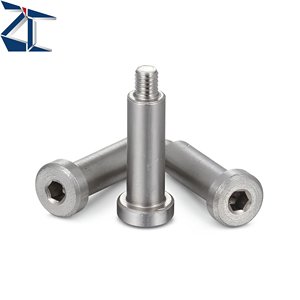
Ultra-tight tolerance shanks engineered as pivot pins and bearing dowels. Delivers outstanding austenitic corrosion resistance and dimensional repeatability under high shear.
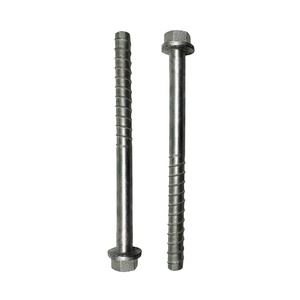
DIN standard high-load anchoring bolts featuring deep induction-hardened relief threads, offering superior pullout resistance in cracked or non-cracked structural concrete.
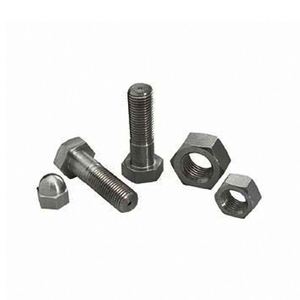
Heat-treated alloy steel structural fasteners with 1220 MPa minimum tensile strength, optimized for heavy mining, tunneling machinery, and structural dynamic vibration points.
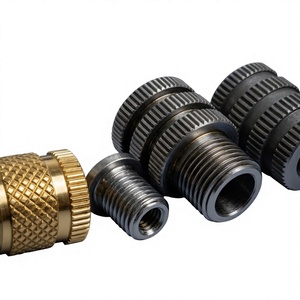
Non-magnetic, anti-sparking, high-conductivity threaded inserts and union bolts turned with Swiss CNC precision for sensitive electronic and marine instrumentation systems.
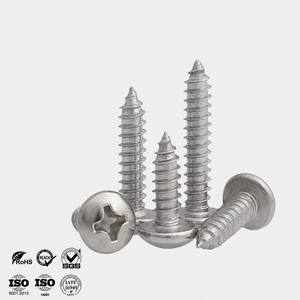
AISI 304/316 self-piercing screws designed with high drive torques and clean thread-forming profiles, resisting galvanic pitting in coastal enclosures and facade frameworks.
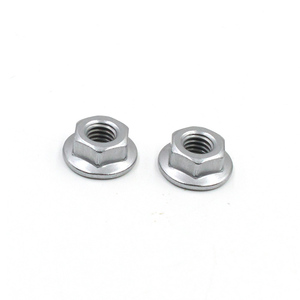
Integrated bearing flange disperses clamping loads across delicate sheet metal while reverse locking serrations prevent back-off under intense mechanical harmonic vibration.
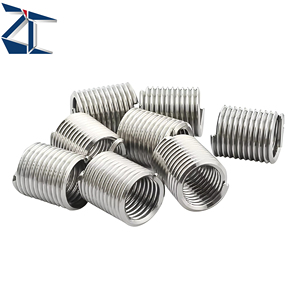
Cold-drawn diamond-profile 18-8 stainless wire inserts engineered to reinforce parent threads in aluminum housings and repair stripped tapings under critical flight loads.
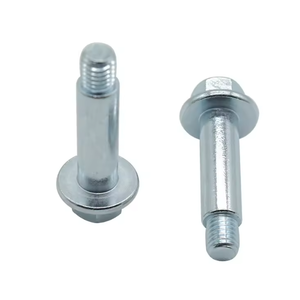
Bespoke alloy steel, titanium, and nickel fastener forgings manufactured to print with complex neck fillets, custom drive recesses, and tailored heat treatment schedules.
A data-backed assessment matrix analyzing global supply chain resiliency, metallographic testing integrity, and advanced forging capabilities across primary international bolting manufacturers.
Industrial engineered fasteners are fundamentally distinct from commercial commodity hardware. In mission-critical environments—such as high-pressure hydrocarbon valves, subsea scrubbers, nuclear steam turbines, and aerospace propulsion pylons—the failure of a single fastener triggers catastrophic downtime, structural breach, and severe environmental liability. Consequently, leading Engineering, Procurement, and Construction (EPC) consortiums and Tier-1 original equipment manufacturers (OEMs) have shifted away from transactional price-per-piece procurement toward strict holistic vetting of engineered fastener manufacturers and exporters.
When assessing the Top 10 Engineered Fasteners Suppliers & Exporters globally, technical evaluators prioritize organizations that maintain fully integrated end-to-end metallurgical custody. The global market features diverse specialized suppliers: Tier-1 conglomerates emphasizing high-volume cold-heading for standardized automotive chassis; European boutique hot-forging houses specializing in large-diameter DIN and ASME structural bolting; and dedicated specialty alloy precision mills—such as TorqBolt Inc.—that excel in the rapid engineering, hot forging, and CNC turning of exotic nickel superalloys (Inconel 718, Hastelloy C276), duplex stainless steels (UNS S32750), and lightweight reactive metals (Titanium Grade 5).
| Supplier Evaluation Dimension | Commodity Fastener Exporters | Tier-1 Engineered Fasteners Specialists | TorqBolt Inc. Engineering Advantage |
|---|---|---|---|
| Metallurgical Traceability | Mixed scrap origins, batch-level MTRs with missing heat details. | Full mill test reports per EN 10204 3.1; periodic PMI validation. | EN 10204 3.1 & 3.2 Witnessed 100% Optical Emission & XRF chemical tracking. |
| Alloy Specialization | Limited to standard carbon steel (Gr 4.8/8.8) and SS 304/316. | Select alloy steels (Gr 10.9/12.9) and standard duplex 2205. | Full Exotic Spectrum Inconel 625/718, Hastelloy, Monel 400, Zeron 100, Titanium. |
| Manufacturing Versatility | Rigid high-volume cold heading only; high minimum run limits. | Automated forging lines for standardized ASME B18.2.1 / DIN 933. | Hybrid Agile Lines Hot forging, cold heading, and 5-axis CNC machining to custom print. |
| Sour Service Compliance | Non-compliant; high susceptibility to sulfide stress cracking (SSC). | Selective compliance upon request; standard hardness check only. | Strict NACE MR0175 / ISO 15156 In-house hardness surveys & microstructural ferrite tests. |
| Pressure Equipment Directives | None; non-certified structural hardware. | Standard factory ISO 9001:2015 accreditation. | PED 2014/68/EU Approved Certified by TÜV Rheinland for European pressure equipment. |
Material selection dictates fastener longevity. Review how varying chemical compositions withstand severe thermal, mechanical, and chemical stress regimes.
Precipitation-hardened Inconel 718 (UNS N07718) utilizes niobium-rich γ'' (gamma double prime) precipitates to sustain extreme yield strengths (>1100 MPa) and creep resistance up to 650°C. Inconel 625 delivers superior resistance to chloride-induced pitting, making both grades standard in gas turbine rotors, flare stacks, and sour-gas deepwater subsea completions.
Combining a balanced 50/50 austenitic-ferritic microstructure, Super Duplex 2507 achieves a Pitting Resistance Equivalent Number (PREN) exceeding 42. It provides exceptional mechanical yield strengths double that of standard austenitic steels (AISI 316L) alongside immense resistance to localized pitting and crevice erosion in aggressive offshore seawater chlorination loops.
Grade 5 Titanium (UNS R56400) offers an unrivaled strength-to-weight ratio with total immunity to ambient seawater bio-fouling and microbiological corrosion. Engineered for aerospace structural bulkheads, subsea risers, and high-performance racing suspensions, these fasteners decrease dynamic mass without sacrificing fatigue cycle integrity.
Transformative geopolitical, environmental, and technological vectors that are redefining global fastener acquisition paradigms for EPC leaders and OEM procurement teams.
Procurement mandates are moving beyond static paper PDFs. Future contracts require cloud-accessible Digital Product Passports (DPPs) where raw melt origins, Charpy V-notch impact values, dimensional laser interferometry datasets, and heat treatment time-temperature charts are cryptographically anchored directly to individual fastener laser-etched matrix codes.
With stringent European CBAM regulations and global Scope 3 emissions reporting, exporters must document the embedded carbon intensity of every metric ton of fabricated bolting. Electric Arc Furnace (EAF) melted raw bars combined with energy-efficient induction forging represent the vanguard of sustainable engineered fastener procurement.
Unpredictable trade tariffs and geopolitical choke points have rendered single-source supply architectures obsolete. Global buyers prioritize suppliers operating dual hubs—such as TorqBolt's corporate engineering division in Mumbai paired with dedicated heavy manufacturing facilities in Rajkot, India—providing reliable production elasticity and direct ocean access.
Large-diameter critical flange connections are adopting smart studs equipped with piezoelectric ultrasonic transducers and micro-RFID tags. This allows maintenance technicians to instantly measure exact bolt preload and residual clamp force in real time without unbolting or halting active refining operations.
Precision fabrication is the bridge between superior metallurgical chemistry and structural joint integrity in service.
The manufacturing route directly governs a fastener's resistance to mechanical fatigue. In conventional mass-market manufacturing, threads are frequently cut via chip removal tooling, which severs the natural axial grain structure of the steel and creates microscopically sharp stress risers at the thread root. Conversely, advanced engineered fastener manufacturing utilizes precision CNC thread rolling under high hydraulic pressures. This process burnishes the thread flank and root, inducing deep compressive residual surface stresses and continuous internal grain flow, thereby increasing cyclical fatigue resistance by up to 300%.
Furthermore, specialized thermal management systems ensure that age-hardenable alloys (such as 17-4 PH and Inconel 718) achieve exact microstructural dispersion without the formation of brittle delta-phase boundary precipitates. Combined with advanced multi-layer barrier coatings—including PTFE fluorocarbon systems, zinc-nickel electroplating, and ceramic diffusion layers—engineered fasteners achieve extreme salt-spray endurance ratings (exceeding 3,000 to 5,000 hours ASTM B117 exposure) while maintaining predictable torque-tension nut friction factors (k-factors between 0.11 and 0.15) to eliminate flange bolt galling.
Certified under Annex I, Paragraph 4.3 of the European Pressure Equipment Directive by TÜV Rheinland. Fully qualified to furnish pressure vessel, heat exchanger, and piping flange bolting destined for high-hazard European operating zones with complete legal and metallurgical compliance.
Every shipment is accompanied by complete chemical, mechanical, and Charpy impact documentation. For critical offshore contracts, we coordinate full third-party witnessed inspection (3.2 certification) through Bureau Veritas, DNV, Lloyd's Register, or TÜV.
We maintain comprehensive stocks of certified European/US melt round bars in Inconel, Duplex, Titanium, Hastelloy, and Monel. This enables rapid-response production runs—from single prototype pieces to major multi-ton turnarounds—with rapid global air and ocean dispatch.
Direct metallurgical and contractual answers addressing galling, hydrogen embrittlement, tightening friction, and critical international certification standards.
Whether you need drawing review for custom non-standard CNC shoulder studs or large-quantity supply of PED-certified Inconel 718 flange bolts, our engineering team is ready to assist.
Send an Inquiry