
Manufactured under stringent ISO 9001:2015 and PED 2014/68/EU processes, our heavy hex fastener configurations withstand cryogenic cold, toxic sour environments, high pressure, and abrasive chemical media.
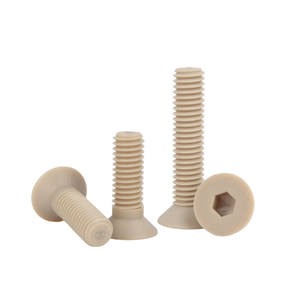
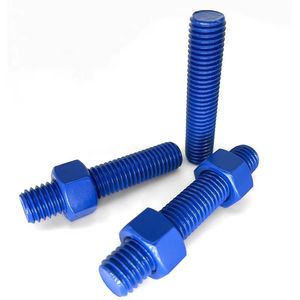
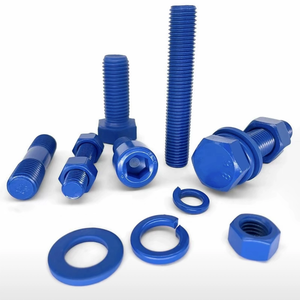
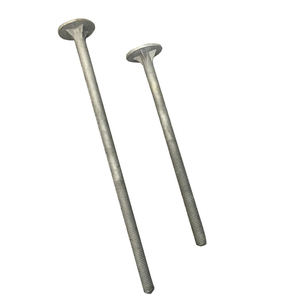
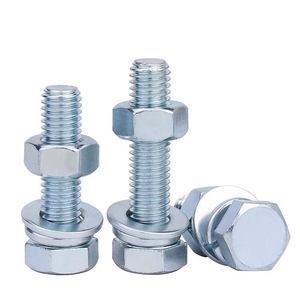
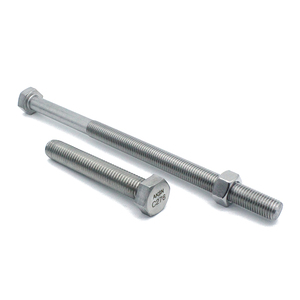
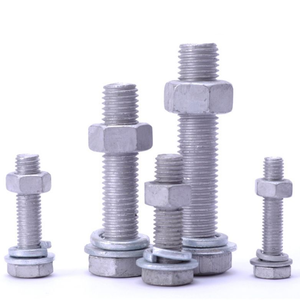
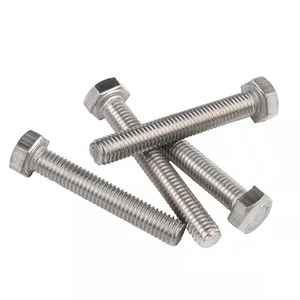
In high-pressure piping assemblies (ASME B31.3), pressure vessels (ASME Boiler & Pressure Vessel Code Section VIII), and critical structural connections (AISC 360), bolting failure is often attributable to localized compressive yield under the fastener head rather than pure shank shear. A Heavy Hex Bolt features a width across flats (WAF) that is 1/8 inch (approximately 3.175 mm) larger than a standard hex cap screw of identical nominal shank diameter.
This dimensional variance substantially augments the contact bearing area under the bolt head, reducing contact stress against flange faces and structural plates. For piping engineers dealing with raised-face (RF) and ring-type joint (RTJ) flanges, heavy hex bolts prevent localized surface indentation, maintaining optimal gasket seating pressure under thermal cyclical transients.
Choosing the correct alloy requires balancing yield strength, fracture toughness, and environmental cracking resistance. When operating in high-temperature or sour environments, standard carbon fasteners suffer from hydrogen-induced stress cracking (HISC) or rapid creep relaxation. Below is our engineering baseline for mission-critical heavy hex fastener selection:
| Material Designation | UNS / Spec | Tensile Strength (Min) | Yield Strength (0.2% Offset) | Operating Temperature Threshold | Optimal Operating Environment |
|---|---|---|---|---|---|
| Inconel 718 | UNS N07718 / API 6A CRA | 185 ksi (1275 MPa) | 150 ksi (1034 MPa) | -250°C to +650°C | High-pressure subsea wellheads, gas turbine exhaust, sour gas H₂S service. |
| Super Duplex 2507 | UNS S32750 / EN 1.4410 | 116 ksi (800 MPa) | 80 ksi (550 MPa) | -50°C to +300°C | Seawater RO desalination, offshore riser clamps, marine scrubbers (PREN > 42). |
| Hastelloy C-276 | UNS N10276 / ASTM B574 | 100 ksi (690 MPa) | 45 ksi (310 MPa) | Cryogenic to +1040°C | Flue gas desulfurization, wet chlorine gas, hydrochloric acid handling. |
| Alloy Steel B7 | AISI 4140 / ASTM A193 | 125 ksi (860 MPa) | 105 ksi (720 MPa) | -29°C to +427°C | Midstream oil & gas transmission, general refinery piping, high-pressure steam. |
| SS 316L | UNS S31603 / ASTM A193 B8M | 75 ksi (515 MPa) | 30 ksi (205 MPa) | Cryogenic to +800°C | Food processing, pharmaceutical synthesis, marine deck hardware. |
As mega-projects in green hydrogen, deepwater extraction, and carbon capture advance, global procurement teams face shifting compliance and traceability requirements.
EPC contractors are rapidly shifting from paper inspection reports to digitally verifiable mill test certificates linked to raw melt heats via immutable blockchain ledgers. Ensuring full pedigree from ingot vacuum induction melting (VIM) through forging eliminates non-conforming counterfeit hardware across high-consequence energy sites.
With clean hydrogen distribution lines ramping globally, standard electroplating methods are being phased out in high-strength fasteners (≥1000 MPa) due to catastrophic delayed hydrogen embrittlement. Sourcing focuses on mechanical zinc plating, diffusion coatings, or transitioning to stable austenitic superalloys like A286 and Incoloy 925.
Machining complex superalloys like Hastelloy and Inconel from solid round bar creates interrupted grain flow lines and substantial material waste. Modern procurement mandates hot upset forged fastener heads followed by precision thread rolling, creating continuous unbroken grain flows that double cyclic fatigue resistance under pulsatile pressure loads.
Modern industrial operations require fasteners to survive beyond sacrificial limits. Here is how modern materials and thread geometry are advancing heavy hex capabilities.
Traditional zinc galvanized coatings suffer rapid breakdown in acidic coastal environments. Modern PTFE thermosetting fluorocarbon coatings over zinc-nickel or ceramic bases withstand over 3,000 to 5,000 hours of ASTM B117 salt spray testing while stabilizing torque coefficients (friction factor 0.12–0.14) to prevent galling during automated torquing.
Under cyclic fatigue, stress concentrates heavily at the thread root notch. The implementation of ASME B1.15 UNJ controlled-radius thread profiles, cold-rolled after final solution annealing, imparts residual compressive surface stresses, increasing fatigue lifespan under severe vibrational harmonic environments by up to 300%.
In subsea hydrocarbon tiebacks and critical wind turbine rotor hubs, bolted joints cannot afford preload loss. New sensor-integrated smart heavy hex bolts allow non-intrusive ultrasonic or RFID clamping-force verification in real-time, preventing bolt loosening, fugitive methane emissions, and catastrophic joint separation.
Operating dual manufacturing facilities across Mumbai and Rajkot, India, TorqBolt Inc. brings over a decade of precision specialty fastener engineering to global markets.
Complete flexibility between high-speed cold heading for production volumes and multi-axis CNC machining + induction hot forging for heavy diameter (up to M100 / 4" diameter) exotic superalloy fasteners.
Fully accredited quality management framework. Pressure Equipment Directive approval by TÜV Rheinland certifying our heavy hex fasteners for critical European boiler and pressure equipment projects.
Every production batch includes full chemical and mechanical mill heat traceability. Third-party witnessed inspection (3.2) available via DNV, Lloyd's Register, Bureau Veritas, and ABS.
In-house controlled heat treatment and micro-hardness testing ensure strict compliance with sour-service sulfide cracking limits, avoiding field failures in upstream hydrocarbon environments.
Clear, definitive answers to help project engineers and purchasing managers streamline fastener orders and avoid costly specification revisions.