Precision Socket Head Cap Screws: Critical Fastening Technology
Socket head cap screws (SHCS), specified globally under standards such as DIN 912, ISO 4762, and ASME B18.3, are the foundational mechanical fasteners designed for compact, safety-critical assemblies where external clearance is strictly constrained.
In modern industrial equipment design, the choice of fastening hardware directly dictates the integrity of high-vibration power assemblies, subsea fluid conduits, petrochemical pressure vessels, and aerospace structures. Characterized by a cylindrical head and an internal recessed hexagonal drive (Allen drive), socket head cap screws deliver superior tensile clamp performance, higher preloads, and significantly reduced shear fatigue compared to standard hex head bolting configurations. Their internal drive allows designers to nest fasteners deep into counterbored machine holes, facilitating space optimization, sleek aerodynamic envelopes, and unyielding structural stability.
Operating in environments that push stress, thermal expansion, and galvanic degradation to operational thresholds requires an exhaustive understanding of metallurgical behavior. Whether utilizing Grade 12.9 alloy steel through-hardened for 1220 MPa minimum tensile strength, austenitic stainless steels (DIN EN ISO 3506 A2/A4), low-density Grade 5 Titanium (Ti-6Al-4V), or fluoropolymer PTFE compositions for acidic medium immersion, this whitepaper and product selection compendium establishes the core benchmarks necessary to evaluate global manufacturers, reduce risk, and maximize supply chain resilience.
Precision-Engineered Socket Head Screws Catalog
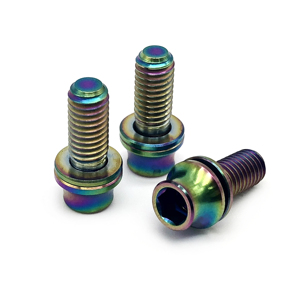
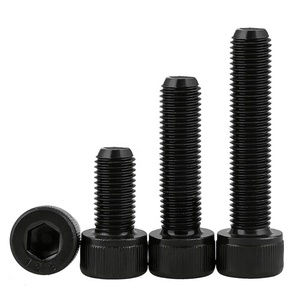
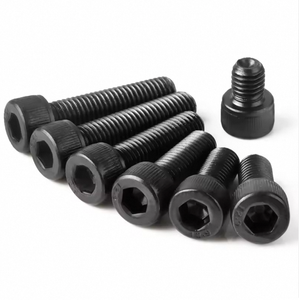
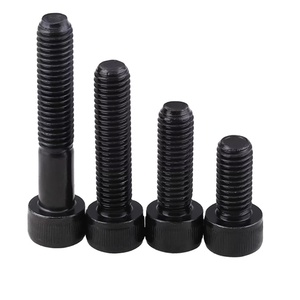
Explore our 8 high-performance socket cap screw configurations, manufactured from certified bar stock and multi-stage cold/hot forgings matching strict DIN, ISO, and ASME criteria.
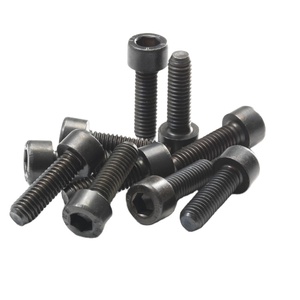
Grade 12.9 High Strength Black Oxide Cap Screws
Grade 12.9 Fine Thread Hex Socket Cup Screws
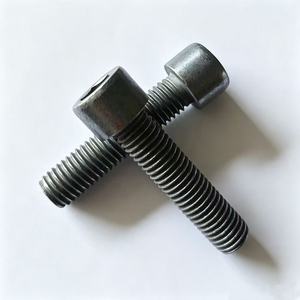
Imperial Grade 12.9 Carbon Steel Socket Screws
Blackened Stainless Steel Hex Socket Cap Screws
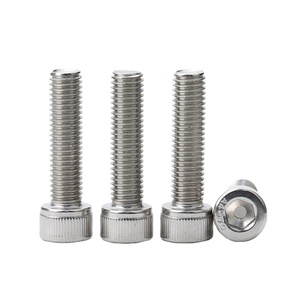
DIN 912 Stainless Steel A2 Micro Socket Bolts
Zinc-Nickel Plated Grade 8.8 Marine Socket Screws
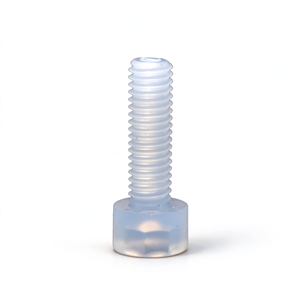
High-Temperature PTFE Chemical Screw Kit
Engineering Matrix: Socket Head Cap Screw Materials & Standards
Selecting the optimal fastener grade prevents costly galvanic reaction, hydrogen embrittlement, and dynamic mechanical fatigue under cyclically loaded conditions.
| Material / Grade | Reference Standards | Tensile Strength (MPa) | Yield Strength (Min MPa) | Primary Operating Advantages | Target Industrial Environments |
|---|---|---|---|---|---|
| Grade 12.9 Alloy Steel | ISO 898-1 / DIN 912 | 1,220 | 1,100 | Extreme clamping force, hardened core structure | Heavy presses, internal combustion engines, tooling fixtures |
| Stainless Steel A2-70 / 304 | ISO 3506-1 / DIN 912 | 700 | 450 | General oxidation & atmospheric corrosion resistance | Food & beverage machinery, medical gear, consumer electronics |
| Stainless Steel A4-80 / 316 | ISO 3506-1 / DIN 912 | 800 | 600 | Molybdenum-stabilized pitting & chloride defense | Marine fittings, coastal construction, chemical tanks |
| Titanium Grade 5 (Ti-6Al-4V) | ASTM F468 / ASTM B348 | 895 - 1,000 | 828 | 45% weight saving over steel, immune to sea brine | Aerospace subassemblies, racing, subsea instruments |
| Inconel 718 (UNS N07718) | ASTM B637 / API 6A | 1,275 - 1,400 | 1,034 | Maintains mechanical stability up to 650°C, zero embrittlement | Gas turbine manifolds, cryogenic pumps, sour gas wellheads |
| Super Duplex 2507 (S32750) | ASTM A479 / EN 10272 | 750 - 1,000 | 550 | PREN > 42, superior crevice/pitting corrosion protection | Desalination high-pressure lines, offshore production risers |
| Virgin PTFE Polymer | ASTM D1710 / ISO 13000 | 20 - 35 | 12 | Dielectric, zero water absorption, complete chemical neutrality | Semiconductor wet benches, pharmaceutical processing lines |
Emerging Procurement Trends in Socket Head Fastener Systems
Market dynamics, regulatory ESG pressures, and advanced automation are shifting how global EPCs and procurement engineers qualify fastener manufacturers.
1. Rise of Exotic Superalloys over Carbon Grades
Due to deeper subsea drilling and severe corrosive operating media, major engineering firms are standardizing on Inconel 718, Hastelloy C276, and Duplex 2205 socket cap screws, replacing traditional coated alloy steel to prevent unplanned turnaround maintenance.
2. Digital Supply Chain & EN 10204 3.1 Traceability
Procurement teams increasingly require direct cloud access to heat-batch chemical composition and mechanical test certificates (MTRs). Unbroken batch pedigree and 100% Positive Material Identification (PMI) are becoming mandatory prerequisites to qualify for OEM vendor lists.
3. Eco-Friendly & Hexavalent Chromium-Free Coatings
Global environmental mandates (RoHS and REACH) have accelerated the phasing out of traditional yellow zinc hexavalent platings. Current procurement mandates favor zinc-nickel electro-alloys and thin-layer PTFE fluorocarbon dispersion layers that achieve up to 3,000 salt-spray hours.
4. Demand for Miniature & Custom Geometric Fasteners
With robotics, micro-fluidics, and medical devices accelerating, high-precision miniature socket screws (down to M1.2 and M1.6) in stainless steel and titanium are experiencing exponential growth, requiring multi-axis micro-CNC lathes and specialized optical sorting technologies.
5. Total Cost of Ownership (TCO) vs. Initial Unit Price
Global procurement metrics have transitioned from low-bid unit sourcing to Total Cost of Ownership models. Premature fastener shear or thread galling incurs catastrophic field labor expenses; premium manufacturers delivering zero-defect lots provide significantly superior long-term ROI.
Evolutionary Trajectory of Socket Head Screws Manufacturing
From metallurgical precision to intelligent fasteners, explore the disruptive advancements reshaping industrial mechanical joints over the next decade.
The engineering requirements placed on socket head cap screws continue to escalate as industries operate machinery under higher cyclic stresses, cryogenic aerospace vacuums, and deeper offshore hydrostatic pressures. Five foundational manufacturing evolutions are setting new benchmarks:
1. Smart Fasteners with Embedded RFID and Strain Sensors
The emergence of the Industrial Internet of Things (IIoT) has fostered the development of "smart" socket head cap screws. By micro-machining cavities within the core body and inserting piezoresistive strain sensors, fasteners can transmit real-time clamp-load data wirelessly. This breakthrough allows predictive maintenance crews to immediately detect joint loosening, bolt fatigue, or excessive vibration before catastrophic mechanical failure occurs.
2. Advanced Cold Forging of Superalloys
Historically, nickel superalloys and reactive metals such as titanium required labor-intensive CNC machining from solid bar stock, resulting in broken continuous metallurgical grain boundaries. Next-generation multi-station warm and cold heading systems utilize inductive heated wire drawing and computer-modeled dies to forge complex socket geometry, enhancing fatigue limits by 25% while conserving raw material usage.
3. Additive Manufacturing Hybrid Sourcing
Laser Powder Bed Fusion (LPBF) 3D printing is merging with secondary CNC thread grinding. For short-run prototypes or highly customized hollow-shank weight-optimized socket heads used in space exploration, additive manufacturing enables geometries and internal fluid channels impossible with conventional forging machines.
4. Anti-Galling Nano-Structured PVD Coatings
Stainless steel and titanium fasteners are notoriously susceptible to thread galling (cold welding) during automated pneumatic installation. The future is moving toward ultra-thin Physical Vapor Deposition (PVD) nano-coatings—such as Tungsten-Carbon (DLC) and Titanium Carbo-Nitride (TiCN)—which yield an extremely low friction coefficient (μ ≤ 0.10) without modifying thread dimensional tolerances.

Why Tier-1 Contractors Rely on TorqBolt Inc.
Established in 2010 with headquarters in Mumbai and specialized production plants in Rajkot, India, TorqBolt Inc. provides an unmatched combination of metallurgical engineering, forging capability, and strict quality documentation.
TÜV Rheinland PED & ISO 9001:2015
Fully compliant with the European Pressure Equipment Directive (PED 2014/68/EU), ensuring full safety certification for high-pressure fluid valves and vessels.
EN 10204 3.1 & 3.2 Full Traceability
Every shipment comes with factory inspection certificates linking heat numbers from qualified European and Indian mills to the finished product.
Global Direct Export Network
Serving major energy, defense, and industrial contractors across the United States, Germany, the UAE, the UK, Saudi Arabia, Norway, and Australia.
NACE MR0175 / Sour Service Certified
Precision-controlled induction annealing and hardness testing prevent stress-corrosion cracking in H2S-rich oil and gas environments.
Frequently Asked Questions on Socket Head Screws
Essential guidance for purchasing agents, procurement managers, and mechanical reliability engineers.
What are the key technical differences between DIN 912 and ISO 4762?
When should Grade 12.9 alloy steel be specified over Grade 8.8 or 10.9?
How does TorqBolt guarantee complete material authenticity and prevent counterfeits?
What are the principal advantages of fine-thread socket head screws?
What surface treatments provide the best corrosion protection for offshore use?
Ready to Source High-Precision Fastening Solutions?
Directly access TorqBolt's metallurgical engineering department for technical cross-referencing, project estimations, custom drawings evaluation, and mill test certificates.