
Approx. 45% lighter than structural alloy steel while providing equal or superior tensile properties.
Grade 5 solution treated & aged condition exhibits exceptional tensile performance under cyclical fatigue.
Total passivity in ambient seawater, marine atmospheres, and wet chlorine processing environments.
Complete heat-number pedigree with third-party inspection (TUV, DNV, Lloyd's) available per shipment.
Explore our heavy-duty bolts, continuous-threaded stud bolts, and custom socket components engineered for severe-service industrial installations across subsea, energy, and process sectors.
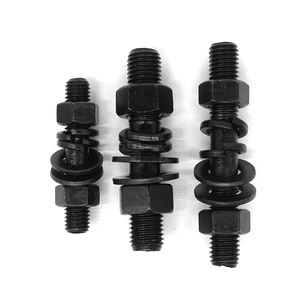
Engineered for high-pressure pipeline flanges, pressure vessels, and critical plant maintenance assemblies.
View Specifications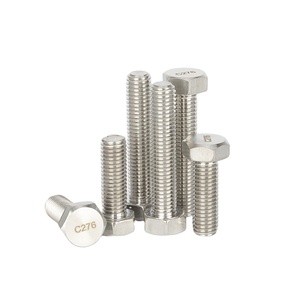
Supreme resistance to wet chlorine, hypochlorite, and severe mineral acids in specialized chemical reactors.
View Specifications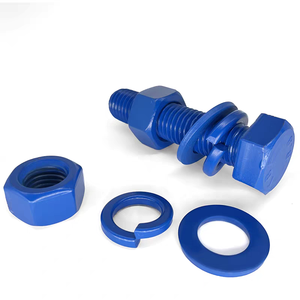
Fluoropolymer protective barrier offering uniform torque make-up and high resistance to marine atmospheric corrosion.
View Specifications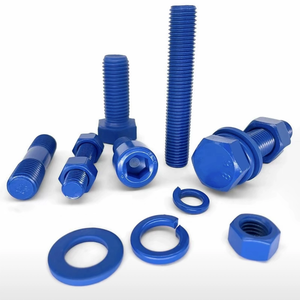
Anti-seize performance for offshore platforms, subsea manifolds, and chemical transfer pipelines.
View Specifications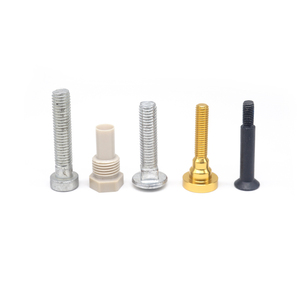
Machined to tight engineering tolerances from drawings in Titanium, Inconel, Monel, and Super Duplex alloys.
View Specifications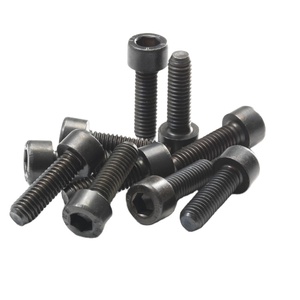
High-tensile internal hex head screws designed for space-restricted machinery, pump casings, and aerospace brackets.
View Specifications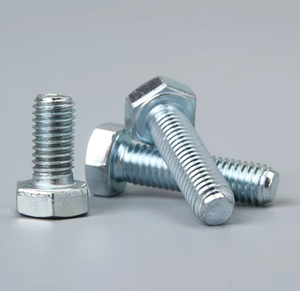
Heavy structural bolts providing dependable mechanical integrity for industrial construction and infrastructure.
View Specifications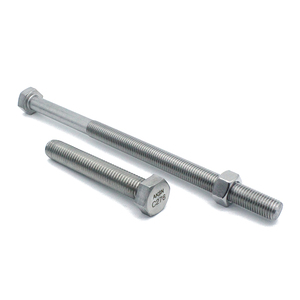
Precipitation-hardenable nickel alloys engineered specifically for valve pipeline joints and sour downhole equipment.
View SpecificationsProcuring titanium fasteners for critical structural, subsea, or aerospace applications demands rigorous supplier verification. Fastener failure in high-stress environments often stems from improper cold working, thermal contamination, or inadequate microstructural control during manufacturing.
A premier titanium exporter must source virgin-melt vacuum arc remelted (VAR) or electron-beam cold hearth melted ingots conforming strictly to ASTM B348, AMS 4928, or ASTM F136 specifications.
Titanium displays rapid work-hardening and narrow forgeability windows. Superior manufacturers utilize induction-heated precision forging below the beta transus temperature (~995°C for Ti-6Al-4V).
In high-vibration aerospace and offshore marine bolting, cut threads induce micro-notches that act as stress concentrators. World-class factories mandate precision thread rolling after heat treatment.
A rigorous assessment of technical strengths, certification standards, alloy specialization, and export capabilities across the world's prominent specialty bolting manufacturers.
| Manufacturer / Exporter | Primary Production Focus | Material Specialization | Quality Approvals & Testing | Lead-Time & Flexibility |
|---|---|---|---|---|
| TorqBolt Inc. (India / Global) | Custom & Standard Hot/Cold Forging, CNC Precision Turning | Gr 2, Gr 5, Gr 7, Gr 23 ELI, Inconel, Duplex, Hastelloy | ISO 9001:2015 PED 2014/68/EU EN 10204 3.1/3.2, NACE | High: Short-run prototypes to high-volume critical deliveries |
| PCC Fasteners (United States) | Aerospace structural bolts, high-shear lockbolts | Ti-6Al-4V, Titanium Beta alloys, Inconel 718 | AS9100D, NADCAP, Boeing/Airbus Qualified | Extended lead-times; structured for large military/aero contracts |
| LISI Aerospace (France) | Airframe & engine fasteners, high-speed automated heading | Grade 5 ELI, Titanium Ti-5553, A-286 stainless | EN 9100, ISO 14001, NADCAP Heat Treating | Focused on multi-year aerospace OEM delivery schedules |
| Baoji Titanium Fasteners Hub (China) | Mill-integrated commercial & industrial fasteners | Grade 1, Grade 2, Grade 5 (TC4), Gr 12 | ISO 9001, commercial factory testing certificates | High volume capacity; variable technical documentation rigor |
| Böllhoff Group (Germany) | Engineered joining systems, thread inserts, specialty rivets | Titanium alloys, engineered composites, Austenitic SS | IATF 16949, ISO 9001, ISO 14001 | Automotive & industrial specialization; standardized catalogue parts |
| Howmet Fastening Systems (United States) | Heavy-duty blind bolts, Huck structural fasteners | Ti-6Al-4V, exotic refractory alloys | AS9100, NADCAP, FAA Conformity | High minimum order quantities; aerospace-dedicated tooling |
| Superbolt / Nord-Lock Group (Sweden) | Multi-jackbolt tensioning systems and lock washers | Titanium Gr 5 upon request, high-nickel alloys | ISO 9001, DNV Type Approval | Specialized engineering tensioners; proprietary geometries |
| TorqTitan Solutions (United Kingdom) | Motorsport & high-performance subsea fasteners | Grade 5 Ti-6Al-4V, Ti-6Al-2Sn-4Zr-2Mo | ISO 9001, UKAS calibration traceability | Rapid motorsport batch delivery; premium niche pricing |
| Kanto Special Steel Bolting (Japan) | Precision turned instrumentation screws, miniature bolting | Grade 2 pure titanium, Beta-C alloys | JIS Q 9100, ISO 9001 | Exceptional dimensional tolerance; limited global stock hubs |
| Extreme Bolt & Fastener (United States) | Distributor and custom converter for harsh environments | Titanium Gr 2/Gr 5/Gr 7, Zirconium, Tantalum | ISO 9001:2015, Material MTR verification | Quick turnaround for MRO requirements from domestic stock |
Specifying the proper ASTM, ASME, or AMS titanium grade requires balancing mechanical yield requirements against specific localized corrosion mechanisms such as crevice attack, pitting, or hydrogen pick-up.
| Titanium Grade | UNS Number | Yield Strength (Min, MPa) | Tensile Strength (Min, MPa) | Max Service Temp | Key Engineering Characteristics & Application |
|---|---|---|---|---|---|
| Grade 2 (CP-3) | UNS R50400 | 275 MPa | 345 MPa | 315 °C | Commercially pure titanium with high ductility. Excellent for marine piping, flue-gas desulfurization (FGD), and chlor-alkali cells. |
| Grade 5 (Ti-6Al-4V) | UNS R56400 | 828 MPa | 895–1,000 MPa | 400 °C | The workhorse alpha-beta alloy. High strength-to-density ratio, superior fatigue resistance for aerospace brackets and subsea risers. |
| Grade 7 (Ti-0.15Pd) | UNS R52400 | 275 MPa | 345 MPa | 350 °C | Palladium-stabilized alloy providing immune protection against crevice corrosion in hot, low-pH reducing chloride environments. |
| Grade 9 (Ti-3Al-2.5V) | UNS R56320 | 483 MPa | 620 MPa | 315 °C | Medium-strength alloy offering greater cold-formability and weldability than Grade 5; ideal for hydraulic tubing and fasteners. |
| Grade 12 (Ti-0.3Mo-0.8Ni) | UNS R53400 | 345 MPa | 483 MPa | 300 °C | Economical alternative to Grade 7 in intermediate hydrochloric/sulfuric acid concentrations; high resistance to crevice attack. |
| Grade 23 (Ti-6Al-4V ELI) | UNS R56407 | 790 MPa | 860 MPa | 400 °C | Extra Low Interstitial variant. Superior fracture toughness and Charpy impact absorption down to cryogenic temperatures (-250°C). |
As operating environments in offshore energy deepen and next-generation commercial aircraft target zero-emission weight savings, the global procurement model for titanium alloy fasteners is undergoing seismic transitions.
Aerospace prime contractors are mandating 100% closed-loop titanium scrap recycling. Fastener manufacturers must implement strict machine-chip segregation to prevent tungsten carbide cutting tool contamination.
To eliminate severe titanium-on-titanium galling during high-torque torquing, plasma electrolytic oxidation (PEO) and diamond-like carbon (DLC) coatings are replacing heavy grease and sacrificial cadmium coatings.
Given historical geopolitical bottlenecks surrounding titanium sponge production, Tier-1 EPC procurement directors are prioritizing Indian and European converters capable of holding multi-origin certified billet stocks.
Selective laser melting (LPBF additive manufacturing) is converging with precision secondary subtractive CNC machining to deliver complex-geometry flange clamp hardware with zero material wastage.
Founded in 2010, TorqBolt Inc. has evolved from a specialized Indian manufacturing workshop into a globally recognized exporter of exotic alloy fasteners. Operating head offices in Mumbai and advanced manufacturing plants in Rajkot, Gujarat, TorqBolt bridges the gap between high-volume standard hardware and custom high-integrity metallurgy.
Operates under audited ISO 9001:2015 quality standards and maintains PED 2014/68/EU certification by TÜV Rheinland for European pressure equipment compliance. Every heat is fully verifiable to EN 10204 3.1 with optional 3.2 third-party witness inspection (Lloyd's, Bureau Veritas, DNV).
Equipped with induction hot-forging presses, multi-die cold headers, and 5-axis CNC machining centers capable of transforming tough titanium, Inconel 718, Hastelloy C276, Monel, and Super Duplex into standard ASME, DIN, ISO, or bespoke project drawing parts.
Every production batch undergoes comprehensive mechanical verification: XRF Positive Material Identification (PMI), Rockwell/Vickers hardness mapping per NACE MR0175 / ISO 15156, Charpy impact toughness testing down to -196°C, and calibrated thread optical comparator audits.
Technical answers to the most common engineering and contractual questions raised by procurement managers, piping specialists, and QA/QC auditors.
Whether you require standard ASTM B348 / F468 Titanium Grade 2 / Grade 5 hex bolts or drawing-specific high-pressure stud bolting in exotic Inconel, Hastelloy, or Super Duplex alloys, our metallurgical engineers are available for immediate technical review.