
Explore our export-certified precision bolts, nuts, studs, and custom inserts engineered to international standards (ASME, DIN, ISO, ASTM).
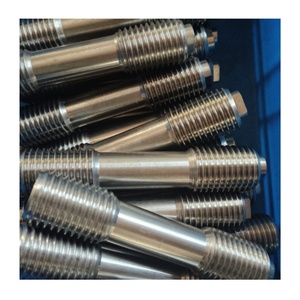
A technical examination of grain boundary preservation, secondary phase resistance, and performance margins in chemical process industry (CPI) fastening applications.
As a leading China Hastelloy C22 fasteners factory and exporter, our specialized production facility focuses on high-integrity critical service bolting. Hastelloy C22 (alloy C22, UNS N06022, W.Nr. 2.4602) is a premier fully austenitic nickel-chromium-molybdenum-tungsten superalloy explicitly developed to surpass traditional alloys like C-276, alloy 625, and standard austenitic stainless steels in complex multi-component chemical process environments.
The distinctive metallurgical advantage of Alloy C22 resides in its precisely optimized stoichiometry: approximately 56% Nickel, 22% Chromium, 13% Molybdenum, and 3% Tungsten, balanced with ultra-low carbon (≤0.010%) and silicon (≤0.08%). In critical bolting applications, the increased chromium content provides exceptional passive film stability against aggressively oxidizing aqueous environments (such as ferric and cupric chlorides, wet chlorine gas, nitric acid, and chromic acid mixtures), while the balanced molybdenum and tungsten content prevents the localized breakdown of passive films against reducing acids such as hydrochloric and hydrofluoric acid.
| Alloy Element | UNS N06022 (Hastelloy C22) | UNS N10276 (Hastelloy C276) | Primary Metallurgical Influence in Fasteners |
|---|---|---|---|
| Nickel (Ni) | Balance (~56.0%) | Balance (~57.0%) | Austenitic matrix stabilization; resistance to chloride-induced stress corrosion cracking (CSCC). |
| Chromium (Cr) | 20.0 - 22.5% | 14.5 - 16.5% | Enhanced formation of dense Cr2O3 passive film; immunity to high-temperature oxidizers and wet chlorine. |
| Molybdenum (Mo) | 12.5 - 14.5% | 15.0 - 17.0% | Potent resistance to pitting and crevice corrosion in stagnant halide-rich environments. |
| Tungsten (W) | 2.5 - 3.5% | 3.0 - 4.5% | Synergistic solid-solution strengthener; mitigates localized breakdown of the passivation boundary. |
| Iron (Fe) | 2.0 - 6.0% | 4.0 - 7.0% | Controlled matrix constituent; strictly bounded to avoid deleterious microstructural destabilization. |
| Carbon (C) | ≤ 0.010% | ≤ 0.010% | Eliminates intergranular carbide precipitation along grain boundaries during hot heading cycles. |
During the manufacturing of heavy-duty hex bolts, studs, and custom flange hardware, thermal exposure can precipitate secondary intermetallic phases such as mu (μ), P, and sigma (σ) phases along the grain boundaries if thermal kinematics are unmanaged. These intermetallic phases not only deplete the local chromium and molybdenum concentration, rendering the fastener vulnerable to intergranular corrosion (IGC), but also cause catastrophic hydrogen-assisted cracking or mechanical embrittlement under mechanical preloads.
Our manufacturing plant enforces strict thermomechanical protocols: hot-forging is strictly held within the plastic deformation window followed immediately by a rapid water-quench solution heat treatment at 1120°C – 1150°C (2050°F – 2100°F). This guarantees a homogeneous single-phase austenitic structure that complies with ASTM A262 Practice C / ASTM G28 Method A corrosion testing, providing maximum resistance to intergranular attack across the heat-affected zones (HAZ).
Tailored mechanical designs matched to operating pressure, thermal cycling, and joint elasticity requirements.
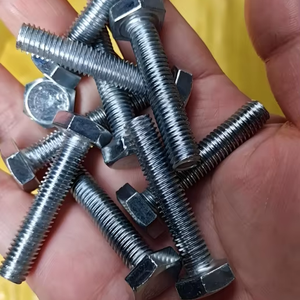
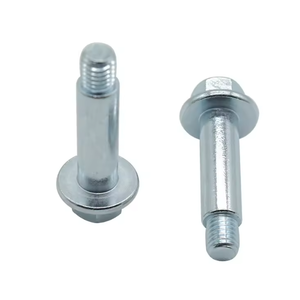
Engineered for high-pressure process flanges (Class 150 to 2500) and pressure vessel body flanges. Features full-body shank design, cold-rolled continuous threads, and solution-annealed structural integrity to eliminate shear concentrations under cyclic mechanical expansion.
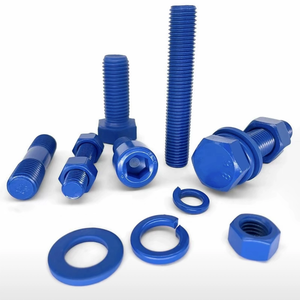
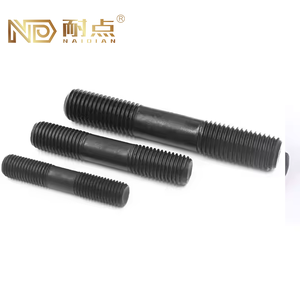
Get a QuoteThe standard choice for heat exchangers, pipeline spools, and subsea manifold enclosures. All-thread and engineered waist studs distribute tensile preload evenly, drastically minimizing localized stress-cracking risks across demanding gasket surfaces.
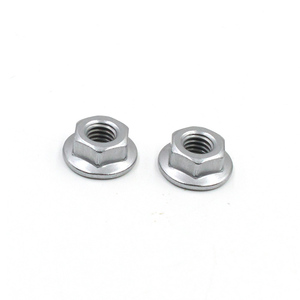
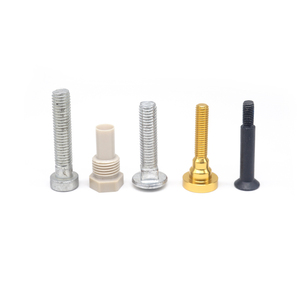
Get a QuoteManufactured to ASTM B574 / ASME B18.2.2 standards. Offered with anti-friction surface conversion, precision-tapped thread tolerances (2B/6H), and optional molybdenum-disulfide or PTFE thin-film fluoropolymer coatings to prevent thread galling under severe torque loads.
Get a QuoteEmerging shifts in global chemical infrastructure, metallurgy requirements, and compliance demands shaping the specialty fastener supply chain.
Modern EPC contractors and chemical facility operators are abandoning generic distribution channels. Procurement demands complete digital traceability linking each bolt head marking directly to the original VIM-ESR (Vacuum Induction Melting followed by Electro-Slag Remelting) ingot heat certificate per EN 10204 3.2. As an experienced exporter, our facility provides verifiable melt heat data and ultrasonic validation on all bar stock.
While Hastelloy C-276 historically served as the baseline nickel alloy for severe service, modern multi-acid systems (containing trace free halogens, chlorides, and dynamic pH swings) experience accelerated crevice degradation with C-276. Plant operators are systematically specifying Alloy C22 for critical bolted joints due to its significantly higher critical pitting temperature (CPT) and critical crevice temperature (CCT).
With the expansion of deep sour gas extraction and offshore CCS (Carbon Capture & Storage) projects, fasteners face severe H2S partial pressures. Global procurement contracts increasingly require strict hardness control (maximum 35 HRC / 340 HV) combined with stringent microstructural phase inspection to prevent sudden catastrophic sulfide stress cracking (SSC) under high preloads.
Combining metallurgical expertise, precision machinery, and an export-grade quality assurance system.
From hot forging large-diameter blanks to advanced multi-axis CNC Swiss machining and thread rolling, we maintain end-to-end oversight under one roof to preserve grain flow integrity.
Operates strictly within ISO 9001:2015 frameworks, fully PED 2014/68/EU certified for European pressure equipment, and compliant with API 20E / NACE MR0175 criteria.
Every batch undergoes handheld XRF Positive Material Identification (PMI), mechanical tensile/yield evaluations, Rockwell hardness testing, and intergranular corrosion auditing.
Heavy-duty export-grade plywood crating with individual thread sleeves, vacuum moisture barriers, and corrosion-inhibiting wrapping for zero-defect sea and air delivery.
Ensure an accurate quotation by detailing key technical parameters in your engineering inquiry.
| Specification Dimension | Standard Parameters | Engineering Relevance |
|---|---|---|
| Material Specification | ASTM B574 UNS N06022 / 2.4602 | Guarantees exact chemical composition and corrosion performance criteria. |
| Dimensional Standard | ASME B18.2.1, DIN 933, DIN 931, ISO 4014, ASME B18.2.2 | Ensures proper head profile, wrench clearance, and thread length compliance. |
| Thread Engagement & Pitch | UNC, UNF, Metric Coarse, 8-UN (ASME B1.1 Class 2A/2B) | Prevents pitch cross-over and balances tension loading across pressure boundaries. |
| Heat Treatment & Hardness | Solution Annealed (Rapid Quench), Max 35 HRC / 340 HV | Prevents microstructural phase transformation and complies with NACE sour requirements. |
| Inspection & Certification | MTR to EN 10204 3.1 or Third-Party Witnessed 3.2 (TUV, DNV, Lloyd's) | Mandatory compliance verification for high-consequence process facilities. |
Clear, engineering-focused answers to the technical inquiries our metallurgical team receives most often.
Contact our application engineering team today for technical consultation, detailed material test reports, or an immediate quotation for standard or custom Hastelloy C22 fasteners.
Get a Quote