
Engineering-Grade Super Duplex 2507 Fasteners Selection
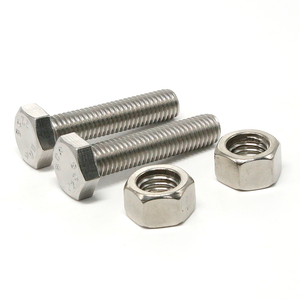
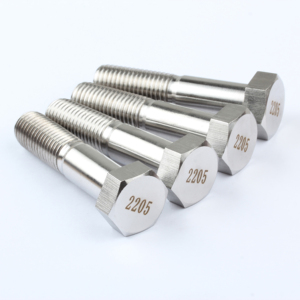
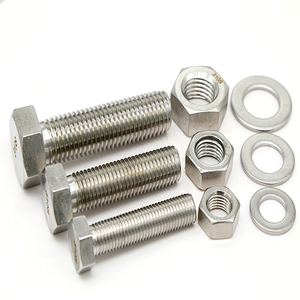
Manufactured under rigorous ISO 9001:2015 and PED 2014/68/EU protocols. Designed for extreme tensile, shear, and fatigue demands across critical pressure boundaries.
Technical Deep-Dive: Metallurgy & Performance Criteria
Super Duplex 2507 (UNS S32750 / EN 1.4410) is a 25% chromium, 4% molybdenum, and 7% nickel super duplex alloy developed for demanding applications requiring exceptional strength and resistance to corrosive media.
| Alloy Grade | UNS / EN | Chemical Profile (%) | Yield Strength (Rp0.2 MPa) | PREN Rating | Primary Failure Mechanisms Addressed |
|---|---|---|---|---|---|
| Super Duplex 2507 | UNS S32750 1.4410 | 25Cr - 7Ni - 4Mo - 0.28N | ≥ 550 | ≥ 42.5 | Chloride SCC, Pitting, Crevice Corrosion, Erosion |
| Standard Duplex 2205 | UNS S32205 1.4462 | 22Cr - 5Ni - 3Mo - 0.17N | ≥ 450 | ~35.0 | Standard Chloride Cracking, General Corrosion |
| Austenitic 316L | UNS S31603 1.4404 | 17Cr - 12Ni - 2.5Mo | ≥ 220 | ~25.0 | Mild atmospheric & non-chloride service |
| Super Austenitic 254SMO | UNS S31254 1.4547 | 20Cr - 18Ni - 6Mo - 0.20N | ≥ 300 | ~43.0 | Severe pitting in low-mechanical-stress regimes |
Manufacturing Excellence & Quality Engineering
By controlling hot-forging temperatures and applying solution-annealing profiles, we ensure an exact 50/50 austenitic-ferritic balance, avoiding brittle sigma phase formation.
Controlled Phase Ratio Verification
Our metallurgy laboratory verifies the phase equilibrium via ASTM E562 automated and manual image analysis. We guarantee a balanced 40% to 60% ferrite matrix in the finished fastener, ensuring maximum ductility, elevated yield thresholds, and elimination of chloride-induced stress micro-fractures.
Solution Annealing & Water Quench
Fasteners undergo solution heat treatment at 1050°C to 1125°C, followed by rapid forced water quenching. This critical step suppresses intermetallic precipitation such as sigma (σ), chi (χ), and chromium nitrides, meeting ASTM A923 Method B impact and Method C ferric chloride pitting metrics.
Cold Thread Rolling Dynamics
Threads are precision cold-rolled rather than single-point cut whenever viable. This burnishing work hardens the root radius and maintains continuous grain flow throughout the pitch boundary, providing enhanced shear resistance, extended fatigue life, and reduced notch sensitivity.
Market Trends: The Future of Super Duplex Fasteners Procurement
Procurement within energy sectors has transitioned from generic stainless specifications to high-performance super duplex alloys. The industry is adapting across three main strategic directions.
1. Deepwater and HPHT Demands
As offshore exploration transitions into High-Pressure, High-Temperature (HPHT) and ultradeep subsea environments (over 2,500 meters), conventional fasteners face hydrogen-induced stress cracking (HISC). Procurement strategies mandate Super Duplex 2507 fasteners engineered under DNV-GL-RP-F112 specifications to counter cathodically protected subsea embrittlement.
2. Green Hydrogen & CCUS Expansion
Carbon Capture, Utilization, and Storage (CCUS) and offshore green hydrogen electrolysis present severe corrosive conditions involving supercritical CO2, dense wet sour gas, and aggressive electrolytes. EPC contractors are adopting 2507 bolting as a standardized defense, replacing shorter-lifespan 316L fasteners to minimize maintenance cycles.
3. Supply Chain Traceability Protocols
Driven by strict safety mandates, major global asset owners enforce complete traceability across the manufacturing cycle. Procurement contracts reject generic certificates, requiring EN 10204 3.1 or 3.2 certification linking every bolt, stud, and nut back to an audited, origin-verified melt heat.
Advanced Technological Innovations: Industry Evolution
Fastener engineering is advancing through material science, processing controls, and specialized surface technologies to resolve historic challenges like thread galling and crevice corrosion.
Fluoropolymer Anti-Galling
Super Duplex alloys are naturally susceptible to galling under high torque. We apply advanced dry-film lubricants including Xylan®, PTFE, and MoS2 coatings, establishing stable nut-factor values (μ = 0.12 - 0.14) and ensuring consistent clamping force during makeup.
Near-Net Hot Forging
We deploy closed-die induction-heated forging presses calibrated for narrow thermal bands (1020°C–1180°C). This approach preserves microstructure symmetry, limits surface decarburization, and minimizes excess machining on heavy hex bolting products.
Digital Melt Verification
Raw bar stock undergoes optical emission spectrometry (OES) alongside Positive Material Identification (PMI). Every heat code is cross-referenced through integrated manufacturing execution software to ensure full compliance with client datasheets.
Cryogenic Impact Testing
To verify resistance to 475°C embrittlement phenomena, our production lots undergo Charpy V-notch testing down to -46°C (-50°F), reliably meeting > 80 Joules in longitudinal orientations and verifying ductile performance under severe conditions.
Corporate Strengths & Global Supply Credentials
TorqBolt Inc. is a dedicated specialty fastener manufacturer providing engineered bolting solutions for critical environments worldwide.
Integrated Manufacturing Facilities
Headquartered in Mumbai with advanced production infrastructure in Rajkot, Gujarat, TorqBolt integrates automated hot forging, high-speed cold heading, and modern multi-axis CNC machining centers under a unified ISO 9001:2015 quality management system.
Certified PED & NACE Compliance
We are approved under European Pressure Equipment Directive (PED 2014/68/EU) by TÜV Rheinland. Our fasteners meet NACE MR0175 / ISO 15156 hardness and material criteria, qualifying them for severe sour oilfield exposure containing wet H2S.
Full Traceability Documentation
Every shipment is delivered with EN 10204 3.1 mill inspection certificates referencing actual chemical analysis, tensile properties, yield data, hardness values, and ASTM A923 test outcomes. Third-party witnessed inspections (EN 10204 3.2) can be arranged with agencies such as DNV, Lloyd's Register, BV, or TÜV.
Need Certified Super Duplex 2507 Bolting for Your Next Project?
Contact our technical engineering team for assistance with material selection, drawing reviews, torque calculations, or full project quotation packages.
Get CatalogProcurement FAQ: Technical Answers for Fastener Buyers
Frequently addressed technical, commercial, and metallurgical considerations regarding Super Duplex 2507 fasteners.