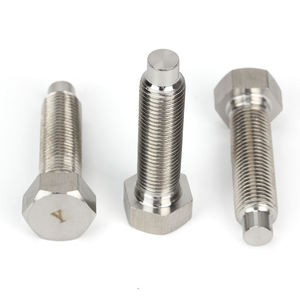
Hastelloy C276 Hex Head Dog Point Bolts
Precision-machined UNS N10276 nickel alloy hex head bolts with dog point alignment design. Built for extreme flue-gas desulfurization scrubbers, sour gas, and aggressive pitting environments.

Engineered in compliance with ASME B18.2.2, ASTM A194, ISO 4032, and DIN 934 dimensional parameters. Our high-integrity stainless and exotic alloy fasteners undergo strict lot metallurgical control, specialized passivations, and mechanical proof loading for severe pressure, subsea, and acidic environments.
Precision-machined UNS N10276 nickel alloy hex head bolts with dog point alignment design. Built for extreme flue-gas desulfurization scrubbers, sour gas, and aggressive pitting environments.
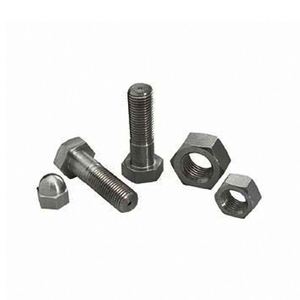
Ultra-high tensile Grade 12.9 M32/M36 bolting and mating heavy hex nuts. Quenched and tempered alloy steel optimized for structural machinery, heavy foundations, and crushing plants.
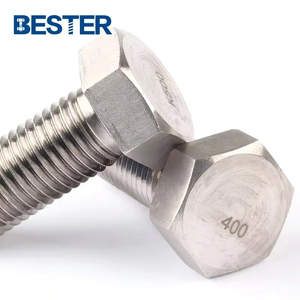
UNS N04400 / UNS N05500 high-tensile hot-forged heavy hex head bolts. Impervious to rapidly moving seawater, non-oxidizing chlorides, and hydrofluoric acid industrial service.
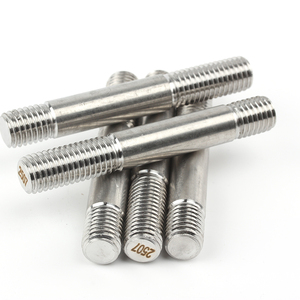
ASTM A479 / A182 F53 UNS S32750 double-ended studs delivering PREN ≥ 42. Yield strength exceeding 550 MPa, optimized for subsea manifolds and offshore petrochemical platforms.
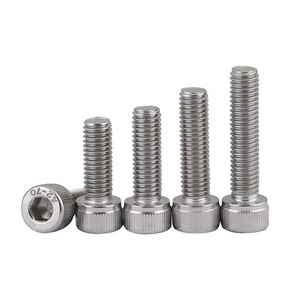
Metric M1.4 through M6 precision stainless socket cap hardware. Ideal for pharmaceutical manufacturing assemblies, cleanroom fluidics, optical instrumentation, and precision robotics.
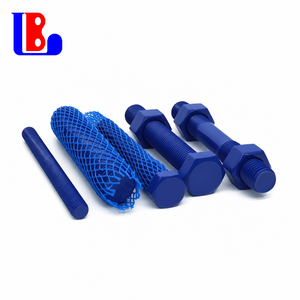
Multi-layer PTFE/Xylan fluorocarbon coated stainless bolts offering low, uniform frictional coefficient (0.08–0.12). Eliminates thread galling in high-pressure offshore connections.
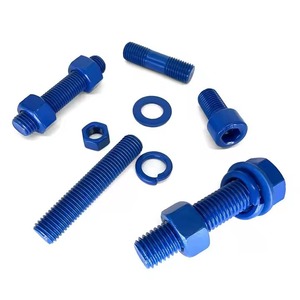
Fully matched high-temperature pressure piping studs and ASTM A194 Grade 8/8M/2H heavy hex nuts. Finished with anti-corrosion Xylan barrier protection for coastal refineries.
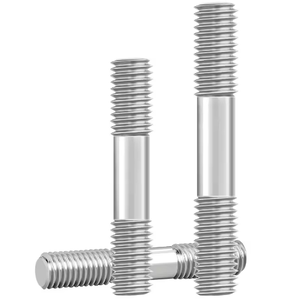
A2-70 & A4-80 corrosion-resistant tap-end and double-ended stud bolts. Designed for casing anchors, chemical pump flanges, and harsh marine equipment exposed to saline wash.
Direct mill procurement cuts intermediaries. We manufacture customized heavy hex nuts, flanged nuts, and specialty mating fasteners strictly aligned with ASME B18.2.2 and customer design schematics.
Get a QuoteThe industrial fastening landscape is shifting rapidly under geopolitical supply-chain reconfigurations, strict ESG mandates, and intensified operational parameters in green transition sectors.
Procurement teams are shifting away from standard AISI 304/316 austenitic fasteners toward 2205 Duplex and 2507 Super Duplex nuts. With higher yield strengths (up to 550–620 MPa), engineers specify smaller bolt diameters and thinner flange dimensions. This lowers overall system weight while providing superior resistance to Chloride Stress Corrosion Cracking (CSCC).
In accordance with ISO 10204 3.1/3.2, major EPC contractors in LNG and nuclear systems mandate continuous heat-number stamping alongside digital traceability portals. Mill source verification and Positive Material Identification (PMI) via XRF analysis are now non-negotiable contract prerequisites to eradicate fraudulent metallurgical certificates.
European and North American supply chains are enforcing Scope 3 greenhouse gas reporting. Fastener manufacturing plants utilizing electric arc furnaces (EAF) powered by renewable grids and recycled scrap stainless steel gain preferential vendor listing under global Carbon Border Adjustment Mechanisms (CBAM).
Modern bolting must withstand extreme hydrostatic loads, subzero cryogenics, and hyperbaric deep-sea conditions. Explore how modern cold-heading and hot-forging techniques reshape thread integrity.
Unlike conventional cut tapping that tears the grain flow of high-alloy steels, modern hex nut production uses cold thread-forming and precision tapping. This process yields continuous metallurgical grain lines along root radii, boosting fatigue life by over 30% and eliminating stress concentrations that cause premature fatigue fracturing.
Cold-welding and thread galling represent the single most common failure mode in austenitic stainless pairings. Factory application of advanced thermoset PTFE coatings, Xylan fluoropolymer systems, and vacuum-deposited WS2 (tungsten disulfide) dry lubrication maintains predictable clamp loads under lower make-up torques without messy wet anti-seize paste.
The introduction of nitrogen-alloyed austenitics like Nitronic 50 and Nitronic 60 provides up to twice the yield strength of standard 316 stainless at room temperature. These grades deliver outstanding galling resistance even under high clamping pressures, making them ideal for valve stems, pump shafts, and marine marine propulsion joints.
| Material Grade | UNS / EN Spec | Yield Str. (MPa min) | Tensile Str. (MPa min) | Hardness Range | Primary Application Profile |
|---|---|---|---|---|---|
| SS 304 / A2-70 | UNS S30400 / 1.4301 | 450 | 700 | HRB 80 – 95 | Food processing, architectural trim, clean municipal water, non-acid environments. |
| SS 316L / A4-80 | UNS S31603 / 1.4404 | 600 | 800 | HRB 85 – 98 | Coastal infrastructure, marine deck fasteners, chemical storage tanks, pulp washing. |
| Duplex 2205 | UNS S32205 / 1.4462 | 550 | 750 – 1000 | HRC 28 – 32 | Sour-gas transmission pipelines, chemical tanker holds, seawater reverse osmosis units. |
| Super Duplex 2507 | UNS S32750 / 1.4410 | 650 | 850 – 1100 | HRC ≤ 32 (NACE) | Subsea manifold bolting, aggressive acid injection, risers, heat exchangers. |
| Inconel 718 | UNS N07718 / 2.4668 | 1030 | 1240 | HRC 36 – 44 | Aerospace jet turbines, cryogenic storage vessels, extreme high-temp gas valves. |
| Hastelloy C276 | UNS N10276 / 2.4819 | 355 | 790 | HRB 90 – 100 | Wet chlorine gas, hypochlorite handling, sulfuric and hydrochloric chemical synthesis. |
Founded in 2010, our integrated manufacturing infrastructure bridges cold heading, heavy hydraulic hot-forging, and precision multi-axis CNC turning within our Mumbai and Rajkot hubs.
Equipped with high-speed multi-station cold formers for high-volume standard hex hardware, plus 400-ton induction-heated hot-forging presses for large-diameter superalloy heavy hex nuts up to M100 / 4 inches.
In-house laboratories feature calibrated universal tensile machines, Charpy V-notch impact testers operating down to -196°C, optical emission spectrometers (OES), XRF alloy analyzers, and salt spray fog chambers.
Certified by TÜV Rheinland to Pressure Equipment Directive (PED) 2014/68/EU Annex I Paragraph 4.3. Fully audited manufacturing routines guarantee total metallurgical compliance for critical European and US pressure boundaries.
Direct freight networks to Europe, North America, the Middle East, and APAC. Export-grade packaging includes rust-inhibiting VCI liners, individual thread caps, and heat-treated ISPM-15 export wooden crates.
Straightforward answers addressing material chemistry, dimensional codes, galling mitigation, and testing documentation for procurement managers and piping specialists.
Heavy hex nuts (governed by ASME B18.2.2) are slightly larger and thicker across the flats (width across flats, WAF) than regular hex nuts of the corresponding nominal diameter. This extra bulk provides larger thread engagement depth and wider bearing surface areas. This increased area dissipates high pre-loads without bearing face crushing or thread shear, making heavy hex nuts mandatory for high-pressure flange connections under ASTM A194 specifications.
Galling happens when friction strips away the microscopic chromium oxide protective film on mating stainless surfaces, causing metal asperities to lock and weld together. Preventative measures include:
• Material pairing: Combine components of differing alloy hardness, such as an A4-80 bolt with a Nitronic 60 or phosphor bronze nut.
• Factory dry coatings: Specify thermoset fluoropolymer coatings (PTFE, Xylan 1070/1424) or molybdenum disulfide (MoS2) dry lubricants.
• Speed control: Avoid high-speed impact wrenches that generate excessive frictional heat during make-up.
Our standard EN 10204 3.1 certified mill dossier includes quantitative proof of the specific production lot: chemical melt ladle analysis, heat-treatment cycle logs, mechanical tensile and yield results, Charpy impact absorption energies (if required), Rockwell/Brinell hardness verification, visual thread dimensional reports, and raw material heat trace numbers.
Yes. Beyond stock dimensional standards (DIN, ISO, ASME), our Rajkot plant operates dedicated multi-axis CNC machining lines. We produce custom-dimensioned collar nuts, slotted castle nuts, spherical seat nuts, and extra-thick coupling sleeves directly from client CAD or 2D technical drawings in low-volume exotic alloys or high-volume standard grades.
Yes. For offshore upstream and refinery service exposed to H2S-containing environments, we control both chemistry and heat-treatment cycles to maintain strict core and surface hardness boundaries (such as 28 HRC or 32 HRC max, depending on the alloy family). This mitigates the risk of sulfide stress cracking (SSC) and hydrogen embrittlement.
To receive an expedited quote within 12 to 24 hours, include: (1) Specific material grade or UNS designation, (2) Standard code (e.g., ASME B18.2.2 or DIN 934), (3) Thread pitch and nominal diameter, (4) Surface finishing or anti-corrosion barrier coatings, (5) Total quantity with optional project safety spares, and (6) Required certification tier (EN 10204 3.1 or 3.2).
Connect directly with our engineering sales specialists in Mumbai and Rajkot for detailed technical tenders, drawing assessments, and volume freight schedules.
Get a Quote