
Engineered to ASTM, ASME, DIN, and customer-specific drawings. Available in standard 17-4PH (UNS S17400) alongside companion high-performance alloy grades ready for export to major hubs across India.
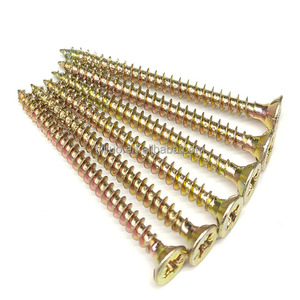
Precision countersunk screws hardened to H900 and H1150 conditions. High shear strength combined with robust fatigue performance for structural cabinetry and assembly framing.
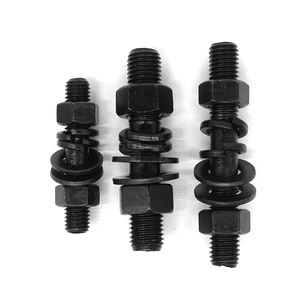
Fully threaded and double-ended stud bolts engineered for high-pressure valve bonnet bolting, refinery flanges, and deep-well pumps in corrosive processing media.
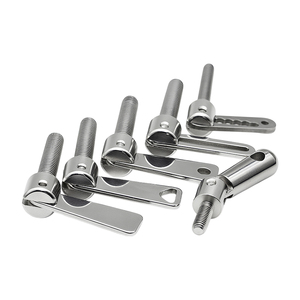
Custom engineered 17-4PH quick-release mechanism bolts for offshore instrumentation brackets, adjustable marine apparatus, and vibration-sensitive mechanical mountings.
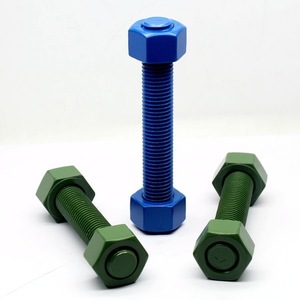
Engineered for extreme offshore salinity and aggressive chemicals. Combines 17-4PH substrate core tensile strength with PTFE non-galling, low torque-drag coating barrier.
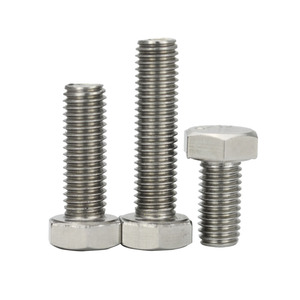
Fully threaded metric and UNC hex head bolts forged from solution-annealed 17-4PH round bar stock, designed for structural piping flanges and high-pressure steam turbines.
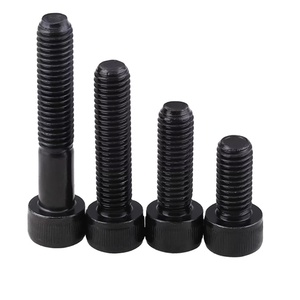
High-strength socket head Allen bolts delivering superior mechanical yield comparable to Class 12.9 carbon steel, coupled with superior atmospheric corrosion endurance.
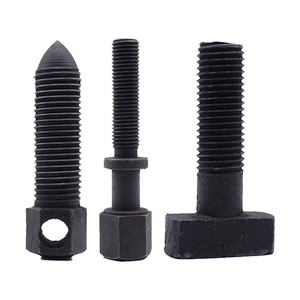
Custom drawing-based 17-4PH components machined via multi-axis CNC. Tight mechanical tolerances and tailored head shapes for power generation and aerospace applications.
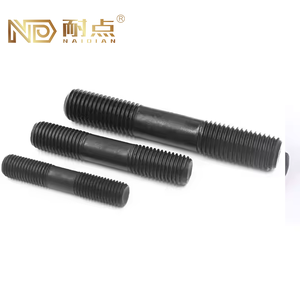
Heavy structural studs engineered for dynamic stress cycles. Available with passivated, zinc nickel, or black oxide finishes for specialized industrial equipment assemblies.
17-4PH (Precipitation Hardening), scientifically cataloged as UNS S17400, AMS 5643, and ASTM A564 Grade 630, represents an exceptional martensitic chromium-nickel-copper precipitation-hardening stainless steel alloy. In high-integrity bolting and structural fastening, 17-4PH bridges the mechanical gap between the superior corrosion resistance of austenitic grades (such as AISI 316L) and the high yield strengths of quench-and-tempered alloy steels (such as AISI 4140, ASTM A193 B7, or Grade 10.9/12.9).
The alloy achieves its high yield and tensile ratings through copper-rich sub-microscopic precipitate dispersion inside the low-carbon martensite matrix during heat treatment. Depending on the targeted tempering temperature, designers can tailor 17-4PH fasteners across a wide spectrum of tensile strengths, yield characteristics, impact resistance profiles, and stress corrosion cracking (SCC) thresholds.
Technical Metallurgy Note: Cold heading versus hot forging alters the dislocation density within 17-4PH bar stock. Cold forged parts require rigorous full solution annealing (Condition A: 1040°C ± 15°C followed by air or liquid quench) prior to final precipitation aging to avoid asymmetric strain relief and micro-cracking across bolt-to-shank transitions.
Fastener engineers designing assemblies for oil and gas upstream systems, supercritical thermal power, subsea valves, or chemical manufacturing must match the precise precipitation-hardened condition to their functional stress and environmental boundaries:
| Heat Treatment Condition | Aging Temperature (°C) | Tensile Strength Rm (MPa / ksi) | Yield Strength Rp0.2 (MPa / ksi) | Elongation A5 (%) | Hardness (Brinell / HRC) | Primary Industrial Use Case |
|---|---|---|---|---|---|---|
| Condition A (Annealed) | Solution Only (1040°C) | 1035 / 150 | 760 / 110 | 12 | 360 HB / 38 HRC Max | Base stock ready for machining and post-forming age treatment. |
| Condition H900 | 480°C (1 Hour) | 1310 / 190 | 1170 / 170 | 10 | 420 HB / 44 HRC | Maximum tensile and yield; ideal for defense, aerospace actuators, and high-load shear pins. |
| Condition H1025 | 550°C (4 Hours) | 1070 / 155 | 1000 / 145 | 12 | 350 HB / 38 HRC | Balanced toughness-strength ratio for high-pressure valve stems, pump shafts, and studs. |
| Condition H1150 | 620°C (4 Hours) | 930 / 135 | 725 / 105 | 16 | 280 HB / 28 HRC | Superior impact toughness and cryogenic performance; reduced risk of embrittlement. |
| Condition H1150D (Double) | 620°C + 620°C | 860 / 125 | 725 / 105 | 16 | 260 HB / 24-28 HRC | Mandatory under NACE MR0175 / ISO 15156 for sour service to prevent sulfide stress cracking. |
India's rapid expansion under industrial infrastructure programs has heightened the demand for high-integrity, traceable, corrosion-resistant bolting systems. 17-4PH bolts, studs, and custom hex nuts play an essential role across several regional centers:
Installed across drilling platforms, subsea pipelines, and refinery units at Jamnagar, Dahej, and Hazira. 17-4PH double-aged H1150D stud bolts prevent catastrophic sulfide stress cracking (SSC) in sour hydrocarbon service.
Indian valve producers build for critical global exports. 17-4PH stems, packing gland bolts, and flange studs deliver the high torque capacity needed to seal high-pressure steam and toxic petrochemical media.
HAL, ISRO contractors, and defense manufacturers demand Condition H900 fasteners. These components offer high shear resistance, controlled thread pitch tolerances, and documented vacuum-melt material pedigree.
Material selection in marine, chemical, and structural piping environments requires balancing mechanical yield with pitting resistance:
Procurement teams sourcing 17-4PH specialty fasteners for import into major Indian ports (Nhava Sheva, Mundra, Chennai) face evolving regulatory landscapes. The Ministry of Steel and the Bureau of Indian Standards (BIS) have expanded Quality Control Orders (QCO) to cover high-grade fastener alloys. Importers must ensure mill test certificates demonstrate strict compliance with ASTM A564 / ASME SA564 or DIN EN 10088-3.
Direct shipments must include heat number markings, dimensional reports mapped to ASME B18.2.1 / DIN 931, and full third-party test verification. This documentation helps clear customs swiftly and protects tier-1 EPC contractors from operational delays.
Our integrated manufacturing plants in Rajkot and supply management offices in Mumbai blend European pressure vessel approvals with precise metallurgy to support mission-critical projects.
ISO 9001:2015 certified, alongside PED 2014/68/EU approval via TÜV Rheinland for pressure-containing equipment.
Standard EN 10204 3.1 inspection documentation with every batch, plus optional 3.2 inspection witnessed by DNV, Lloyds, or TÜV.
Multi-station hot forging, cold heading, and modern CNC bar turning to deliver standard sizes and custom drawing designs.
Optical emission spectrometry (PMI), Charpy impact testing down to cryogenic levels, micro-hardness arrays, and NACE compliance testing.
Common procurement and technical questions answered by our materials and application engineering staff.