
Explore our certified range of studs, hex bolts, specialty fasteners, and anti-corrosive surface technologies
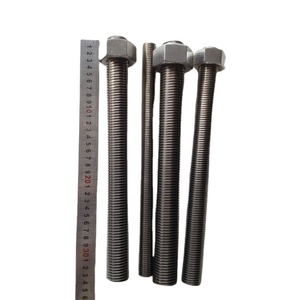
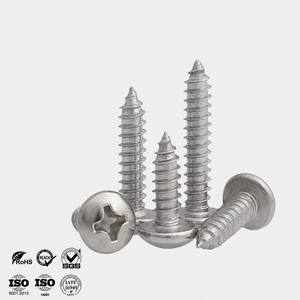
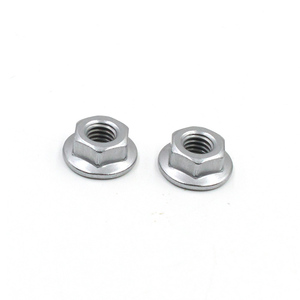
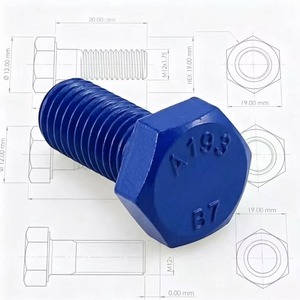
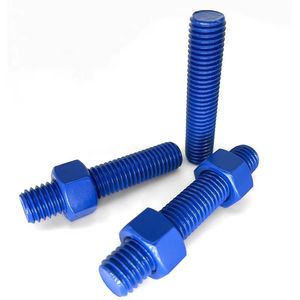
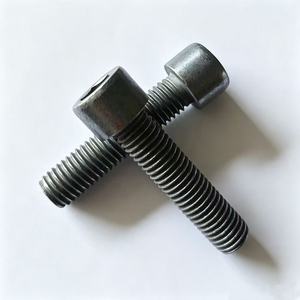
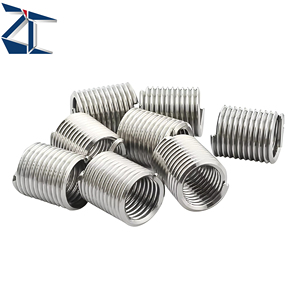
The standard specification ASTM A193 Grade B7 covers heat-treated Chromium-Molybdenum alloy steel intended for high-pressure, elevated-temperature service in boilers, pressure vessels, valves, flanges, and fittings. Engineered from heat-treated AISI 4140/4142 bar stock, Grade B7 bolts undergo intensive quenching and tempering cycles (oil quenched from not less than 830°C and tempered at a minimum of 593°C / 1100°F) to achieve a uniform martensitic microstructure. This provides the structural tenacity needed to sustain extreme tensile stresses without catastrophic creep or brittle relaxation over continuous service lifetimes.
When engineering fasteners for international energy complexes, understanding standard cross-compatibility between Western design codes (ASME Section VIII, Division 1/2 and ASME B16.5) and the Eurasian regulatory space is critical. Russian design documentation frequently references GOST 20700-75 (fasteners for pressure vessels and piping operating at temperatures from -70 to 650°C) and material grades such as 35KhM (35ХМ) or 40Kh (40Х). Below is the structural material comparison demonstrating baseline parity:
| Standard / Grade | C (%) | Cr (%) | Mo (%) | Min. Tensile (MPa / ksi) | Min. Yield (MPa / ksi) | Hardness (HBW / HRC) |
|---|---|---|---|---|---|---|
| ASTM A193 B7 (≤ 2-1/2") | 0.37 – 0.49 | 0.75 – 1.20 | 0.15 – 0.25 | 860 MPa / 125 ksi | 720 MPa / 105 ksi | 321 HBW max / 35 HRC max |
| GOST 35KhM (35ХМ) | 0.32 – 0.40 | 0.80 – 1.10 | 0.15 – 0.25 | 835 MPa / 121 ksi | 685 MPa / 99 ksi | 241 – 302 HBW |
| GOST 40Kh (40Х) | 0.36 – 0.44 | 0.80 – 1.10 | — | 980 MPa / 142 ksi | 785 MPa / 114 ksi | 269 – 311 HBW |
| ASTM A320 L7 (Low Temp) | 0.38 – 0.48 | 0.75 – 1.20 | 0.15 – 0.25 | 860 MPa / 125 ksi | 720 MPa / 105 ksi | Charpy ≥ 27 J at -101°C |
While standard A193 B7 is engineered for service between -29°C (-20°F) and 427°C (800°F), Arctic and Siberian regional operations impose sub-zero impact challenges. In regions where ambient design temperatures plunge beneath the standard ductile-to-brittle transition temperature (DBTT), our technical teams deliver fully dual-certified ASTM A193 B7 / ASTM A320 L7 fasteners. Through proprietary micro-alloy vacuum degassing, controlled sulfur containment (<0.015%), and calibrated Charpy V-notch testing down to -60°C or -101°C, these fasteners prevent brittle cleavage fractures during rapid pressure surges in permafrost zones.
The industrial landscape across the Russian Federation features extreme geographic diversity, high operational pressures, and aggressive production environments. Fastener manufacturing plants serving this territory must adapt mechanical geometries and surface coatings to withstand heavy climatic and chemical exposure.
Liquefied natural gas compression trains, boil-off gas condensers, and cryogenic cold boxes operating at Yamal, Arctic LNG 2, and Sakhalin require high-integrity dual-certified A320 L7/A193 B7 bolting paired with ASTM A194 Grade 4 or Grade 7 nuts, treated with multi-layer Fluoropolymer systems to eliminate sea-spray ice adhesion.
Major petrochemical complexes (e.g., Kirishi, Omsk, and Ufa refineries) run deep catalytic hydrocracking and vacuum distillation systems. Flange joints handling sour crude (H₂S-laden feedstocks) require Grade B7M fasteners adhering to strict NACE MR0175 / ISO 15156 hardness ceilings (22 HRC maximum) to mitigate Sulfide Stress Cracking (SSC).
Thermal power plants (GRES) and district boiler infrastructure rely on B7 threaded studs for high-pressure steam distribution headers operating at 350°C to 450°C. Controlled thread rolling prevents thread stripping and galling under extreme cyclic thermal loading during Siberian seasonal heating transitions.
Additionally, for installations exposed to cyclic freezing and thawing combined with salt spray along maritime transport corridors like the Northern Sea Route (NSR), standard black-oxide finishes fail rapidly. Our production plant equips A193 B7 fasteners with advanced thermoset PTFE/Xylan 1424 resin coatings and Zinc-Nickel electroplating, delivering upwards of 1,500 to 3,000 hours of neutral salt spray resistance (ASTM B117) without micro-flaking.
Procurement dynamics within Russia and the wider Eurasian Economic Union (EAEU) have undergone fundamental transformations. Capital project directors, EPC contractors, and mechanical replacement divisions face several structural adjustments:
1. Dual Standard Harmonization (EAC TR CU 032/2013 vs. ASME): Infrastructure constructed across Russia historically integrated western engineering procurement guidelines utilizing ASME B16.5 Class 150 to Class 2500 flanges alongside domestic GOST 33259-2015 flange arrays. Consequently, factories must maintain tooling calibrated for both imperial threads (UNC, UN, 8UN series to ASME B1.1) and metric coarse/fine pitch series (to GOST 8724 / ISO 261). Supplying plants must provide comprehensive material documentation proving compliance with Technical Regulation of the Customs Union TR CU 032/2013 (Safety of Pressure Equipment).
2. Diversification of Supply Chains & Third-Party Auditing: The sudden disengagement of European fastener mills led to severe lead-time constraints for critical Cr-Mo and exotic alloy hardware. Russian enterprise buyers now rely on integrated manufacturers in India and Asia with dedicated hot-forging, continuous-quenching, and automated CNC threading setups. However, requirements for independent quality verification have expanded: inspection packages now regularly demand witnessed physical testing by independent verification authorities, alongside fully traceable EN 10204 Type 3.2 mill test reports containing verified melt heat-numbers.
3. Demand for Pre-Torqued, Low-Friction Coatings: Maintenance efficiency during short Arctic construction windows is a top operational metric. Traditional cadmium and grease-lubricated studs are being replaced by factory-applied dry-film PTFE fluorocarbon barriers. These low-friction coatings establish stable friction coefficients (µ = 0.08 – 0.12), enabling predictable torque-tension relationships, eliminating bolt galling, and allowing rapid assembly via hydraulic tensioning rigs without on-site anti-seize paste application.
Sourcing ASTM A193 B7 stud bolts, heavy hex bolts, and precision components from TorqBolt Inc. guarantees verified engineering accuracy, high metallurgical integrity, and full transparency across the production lifecycle. Built on our dual-location infrastructure—headquartered in Mumbai with advanced production facilities in Rajkot, India—our capabilities directly support mission-critical installations:
Certified under ISO 9001:2015 with Pressure Equipment Directive PED 2014/68/EU certification approved by TÜV Rheinland. Complete traceability from original billet melt heat to boxed consignment guarantees full audit readiness for international engineering contractors.
Covering standard diameters from M12 through M100 (1/2" up to 4" imperial) with thread lengths up to 6 meters. In-house high-speed cold heading, induction-assisted hot forging for large-diameter heads, continuous grain-flow thread rolling, and multi-axis CNC machines for bespoke engineering drawings.
Internal metallurgical facilities handling lot-by-lot Positive Material Identification (PMI via XRF/OES), room & sub-zero Charpy impact impact validation down to -101°C, tensile testing, micro-hardness arrays (Vickers/Rockwell), magnetic particle examination (MPI), and intergranular corrosion diagnostics.
Beyond carbon and alloy steels (B7, B7M, B16, L7, L7M), TorqBolt specializes in manufacturing high-alloy and corrosion-resistant fasteners in Nickel 200, Monel 400, Inconel 625/718, Hastelloy C276, Titanium Grade 2/5, and Duplex/Super Duplex 2205/32750 alloys, serving as a unified supply point for severe operating conditions.
Key technical, testing, and delivery questions addressed by our engineering specialists
Speak directly with our engineering and export team for project quotes, dual-certification inquiries (B7/L7/B7M), or bespoke fastening requests.
Contact Us