Direct mill fabrication, stockholding, and certified export pathways servicing San Francisco, Richmond, Martinez, Oakland, and Silicon Valley engineering projects.
The standard specification ASTM A320 / A320M governs alloy steel and stainless steel bolting materials for low-temperature service in pressure vessels, valves, flanges, and fittings. In the critical energy corridors, deep-water terminals, and high-tech manufacturing nodes of the greater San Francisco Bay Area, Grade L7 is the benchmark specification for structural and pressure containment integrity under combined cryogenic exposure and seismic vibration.
Manufactured primarily from heat-treated chromium-molybdenum alloy steel (AISI 4140 / 4142 chemistry), ASTM A320 Grade L7 undergoes an exact liquid quench followed by uniform tempering at a minimum of 1100°F (593°C). This thermal protocol induces a fully transformed, fine-grained tempered martensitic microstructure capable of withstanding extreme mechanical loading without exhibiting ductile-to-brittle transition failures when temperatures drop below freezing.
Unlike standard ASTM A193 Grade B7 fasteners—which share an identical room-temperature mechanical profile but carry no low-temperature impact guarantees—every production lot of ASTM A320 Grade L7 requires mandatory Charpy V-Notch (CVN) testing per ASTM A370. Test specimens excised from the core of finished stud bolts or cap screws must achieve a minimum absorbed energy of 20 ft-lbf (27 Joules) at -150°F (-101°C), with no individual specimen dropping below 15 ft-lbf (20 Joules). For Bay Area installations involving liquefied atmospheric gases, ethylene transfer, and marine LNG bunkering, this low-temperature toughness prevents catastrophic brittle cleavage under sudden hydrodynamic shocks.
| Bolting Grade | Base Metallurgy | Min. Tensile (ksi) | Min. Yield 0.2% (ksi) | Impact Test Temp. | Min. Charpy Impact Energy | Typical Bay Area Use Cases |
|---|---|---|---|---|---|---|
| ASTM A320 L7 | AISI 4140/4142 Cr-Mo | 125 ksi (860 MPa) | 105 ksi (725 MPa) | -150°F (-101°C) | 20 ft-lb (27 J) avg | LNG piping, refinery chill loops, subsea valves |
| ASTM A320 L7M | AISI 4140/4142 (Hardness controlled) | 100 ksi (690 MPa) | 80 ksi (550 MPa) | -100°F (-73°C) | 20 ft-lb (27 J) avg | NACE MR0175/ISO 15156 sour crude & gas |
| ASTM A320 L43 | AISI 4340 Ni-Cr-Mo | 125 ksi (860 MPa) | 105 ksi (725 MPa) | -150°F (-101°C) | 20 ft-lb (27 J) avg | Heavy diameters > 2.5 inches requiring high hardenability |
| ASTM A320 B8 Cl. 2 | AISI 304 Stainless (Strain Hardened) | 100–125 ksi | 65–100 ksi | -325°F (-198°C) | Impact exempt (Austenitic) | Cryogenic nitrogen in Silicon Valley fab cleanrooms |
| ASTM A193 B7 | AISI 4140/4142 Cr-Mo | 125 ksi (860 MPa) | 105 ksi (725 MPa) | Ambient only | No mandatory CVN testing | High-temperature, non-cryogenic thermal service |
An ASTM A320 L7 bolting assembly is only as reliable as its mating female thread. Code specifications under ASME B31.3 (Process Piping) and ASME Section VIII (Boiler and Pressure Vessel Code) mandate that Grade L7 studs be paired exclusively with heavy hex nuts manufactured to ASTM A194 Grade 4 (Carbon-Molybdenum) or ASTM A194 Grade 7 (Chromium-Molybdenum, heat treated). Grade 7 nuts receive identical thermal cycling and impact qualification to prevent differential thermal contraction and shear failure across the thread flanks during rapid chilling cycles.
Atmospheric exposure across San Francisco Bay, stretching from the Golden Gate Strait down to Silicon Valley, introduces dense marine salinity and coastal fog. While corrosion mitigation is imperative, improper electroplating or uncontrolled acid pickling creates extreme susceptibility to Hydrogen-Induced Stress Cracking (HISC) in through-hardened alloy steels (Rockwell C28 to C35).
To eliminate embrittlement risks, high-integrity factories and exporters serving the San Francisco market utilize multi-stage protective systems:
Engineering compliance demands tailored specifically to the chemical, maritime, clean energy, and advanced electronics hubs of the San Francisco Bay.
Richmond, Martinez, and Rodeo facilities transitioning from fossil crude to hydrotreated vegetable oil (HVO) and sustainable aviation fuel (SAF). ASTM A320 L7 fasteners anchor hydrocrackers, isomerization units, and cold hydrogen separation headers operating under high pressure and low thermal margins.
Wafer fabrication plants in San Jose, Santa Clara, and Fremont require ultra-pure liquid nitrogen (LN2), argon, and helium utility distribution. ASTM A320 L7 and companion cryogenic austenitic studs secure cryogenic cold boxes, cryogenic valve manifolds, and vacuum-jacketed spool joints without micro-leakages.
Harbor bunkering infrastructure, marine loading arms, and vapor recovery systems handling cryogenic hydrocarbon carriers. Grade L7 provides high shear and tensile strength against dynamic wave motion, seismic harbor faults, and rapid boil-off gas thermal differentials.
San Francisco water and gas distribution pipelines cross major fault zones (San Andreas and Hayward). High-ductility A320 L7 bolting delivers high Charpy impact energy absorption, preventing brittle rupture during seismic ground displacement events across flexible ball joints and flanged tie-ins.
Emerging decarbonization corridors in Northern California deploying 700-bar liquid hydrogen (LH2) dispensing networks. A320 L7 stud bolts support cryogenic high-pressure pumping stations, vaporizers, and stationary fuel-cell balance-of-plant manifolds.
South San Francisco biotech campuses maintaining ultra-low temperature bioreactors, blood plasma processing plants, and bulk liquid carbon dioxide / nitrogen storage headers operating continuously under ASME B31.3 cryogenic piping parameters.
Procurement teams and mechanical contractors across Northern California have evolved their supply-chain criteria far beyond nominal dimensional compliance. Three strategic trends dominate the regional marketplace:
1. Decarbonization Mandates & Refinery Transformation: With the San Francisco Bay Area Air Quality Management District (BAAQMD) enacting strict emissions controls, local refineries have accelerated shifts toward renewable hydroprocessing. This requires bolting capable of surviving elevated pressures paired with aggressive hydrogen and renewable feedstock acids, leading to an increased demand for ASTM A320 L7M with verified NACE MR0175 / ISO 15156 sour-service hardness limits (235 HBW / 22 HRC maximum).
2. Counterfeit Prevention & Total Digital Traceability: Major engineering, procurement, and construction (EPC) contractors managing Bay Area infrastructure now enforce mandatory EN 10204 3.1 mill test certificates traceable to the original melting heat, with positive material identification (PMI) verified via portable X-ray fluorescence (XRF) or optical emission spectrometry (OES) upon port arrival. Fasteners with unverified melt origins or non-compliant mechanical testing are rejected at the staging yard.
3. Supply-Chain De-risking & Just-In-Time Staging: Because warehouse footprints in San Francisco, Oakland, and San Jose carry premium commercial rents, project managers rely on verified global manufacturers with streamlined air-freight and ocean-freight forwarding channels via the Port of Oakland or San Francisco International Airport (SFO), utilizing pre-inspected inventory buffers for scheduled turnaround shutdowns.
Why Bay Area project directors, valve OEMs, and piping fabricators partner with our global manufacturing and export infrastructure.
Fully accredited quality management system with Pressure Equipment Directive (PED 2014/68/EU) approval by TÜV Rheinland for European and global pressure code compliance.
Every lot shipped with exhaustive test certificates verifying chemical melt analysis, tensile, yield, elongation, reduction of area, and Charpy impact energy down to -150°F.
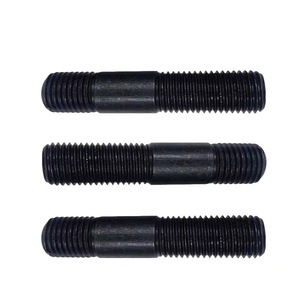
Combining heavy upset forging lines for standard heavy hex heads and multi-axis CNC machining centers for complex, custom, and drawing-specific tap-end and double-ended studs.
Beyond alloy steels, our foundries produce identical fasteners in Inconel 718/625, Hastelloy C276, Monel 400, Titanium Gr. 5, and Duplex 2205/32750 for extreme environments.
Direct answers addressing inspection codes, metallographic requirements, logistics, and installation specifications in the San Francisco industrial territory.
No. While both grades are tempered from AISI 4140/4142 alloy steel and share identical tensile (125 ksi) and yield (105 ksi) ratings at room temperature, ASTM A193 B7 does not require Charpy V-Notch impact testing at low temperatures. In contrast, ASTM A320 L7 requires verified toughness testing at -150°F (-101°C). Substituting B7 in cryogenic or low-temperature flanged joints violates ASME B31.3 and Section VIII codes, creating severe risk of brittle fracture under thermal shock or seismic ground accelerations.
Per ASTM A320 standards, studs and bolt heads must be permanently stamped with the manufacturer's unique identification symbol (identifying the mill) alongside the grade mark "L7". If ordering the sour-service variant, it must be marked "L7M". Furthermore, mating nuts must carry the symbol "7" or "7M". Unmarked bolting or fasteners lacking heat traceability stamps will fail receiving inspections across major Bay Area refineries and municipal utility sites.
We eliminate hydrogen embrittlement by adhering to stringent processing windows: utilizing mechanical descaling or grit-blasting instead of uninhibited hydrochloric acid pickling prior to coating application. For electro-plated or hot-dip galvanized parts, fasteners undergo mandatory de-embrittlement baking at 375°F to 400°F (190°C to 205°C) within four hours of plating. For marine installations around San Francisco Bay, we frequently recommend fluoropolymer (PTFE) or mechanical zinc coatings to avoid acid immersion entirely.
Every shipment is delivered with comprehensive EN 10204 3.1 inspection certification including: exact heat and melt numbers, chemical composition analysis, heat-treatment records (austenitizing, quench, and tempering parameters), room-temperature tensile and yield test results, hardness values (Rockwell C), and certified Charpy V-Notch impact energy absorption at -150°F. Third-party witnessed EN 10204 3.2 inspection (by DNV, Lloyd's Register, ABS, or TÜV) can be furnished upon request.
In accordance with ASME B1.1, stud bolts up to 1.0 inch in diameter are furnished with Unified National Coarse (UNC) Class 2A thread fit. For stud diameters 1-1/8 inches and larger, the 8-Thread Series (8UN) Class 2A is standard. Continuous thread rolling is utilized rather than cut threads to maintain unbroken grain flow along the root radius, which substantially enhances fatigue life in vibrating and seismic environments.
Standard diameter stud bolts (1/2" to 2-1/2") in plain finish or PTFE coating are dispatched rapidly from stock or production batches within 5 to 10 working days. Air freight consignments clear through San Francisco International Airport (SFO) in 3 to 5 business days, while volume sea container shipments enter through the Port of Oakland with seamless customs brokerage, palletized and shrink-wrapped in seaworthy wooden crates for direct transport to your staging yard.
To accelerate your quotation process and prevent technical clarifications, ensure your engineering requisition includes the following technical parameters: