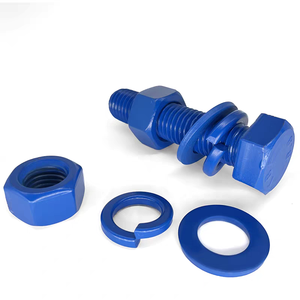
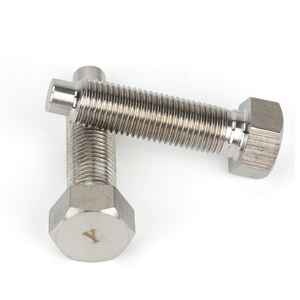
Engineered to international ASME, ASTM, and DIN codes. Fully compatible with tropical marine environments, sour service oil and gas wells, cryogenic handling, and severe mechanical stress.
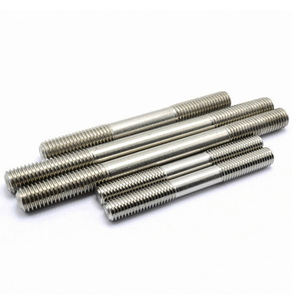
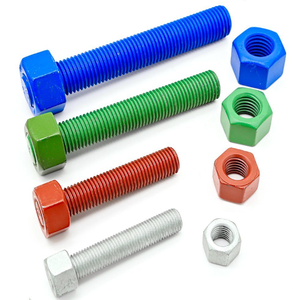
A rigorous examination of chromium-molybdenum alloy bolting, Charpy impact mechanics, and brittle fracture prevention in tropicalized cryogenic systems.
In high-risk mechanical joints, piping networks, and pressure vessels operating under sub-zero or severe pressure differentials, fastener selection cannot be treated as an afterthought. ASTM A320 Grade L7 is an alloy steel bolting specification covering quenched and tempered chromium-molybdenum materials (AISI 4140 / 4142 chemistry) intended specifically for low-temperature service. Unlike ambient-temperature grades such as ASTM A193 B7, ASTM A320 L7 mandates stringent notch-toughness verification through Charpy V-Notch impact testing conducted at -150°F (-101°C), ensuring that the crystalline structure resists catastrophic brittle fracture under sudden pressure surges or seismic vibration.
The metallurgical integrity of ASTM A320 L7 bolting stems from its carefully balanced chemical formulation and precise thermal treatment cycle. Liquid quenching from the austenitizing range followed by tempering at a minimum temperature of 1100°F (593°C) homogenizes the microstructure into fine tempered martensite. This ensures optimum tensile strength (125 ksi / 860 MPa min for diameters up to 2-1/2 inches) and a minimum yield strength of 105 ksi (725 MPa), combined with superior ductile behavior. When paired with complementary ASTM A194 Grade 4 or Grade 7/7M heavy hex nuts, these fasteners eliminate thread stripping, relieve stress concentrations, and maintain joint clamping force even through repetitive cryogenic thermal cycling.
| Property / Specification | ASTM A320 Grade L7 | ASTM A320 Grade L7M | ASTM A193 Grade B7 | Mating Nut Standard |
|---|---|---|---|---|
| Base Material / Chemistry | AISI 4140 / 4142 (Cr-Mo Alloy) | AISI 4140 / 4142 (Controlled Hardness) | AISI 4140 / 4142 (Cr-Mo Alloy) | AISI 4140 (Gr. 7) / Carbon-Mo (Gr. 4) |
| Low Temp Impact Test | Required: -150°F (-101°C) | Required: -150°F (-101°C) | Not Required (Ambient Only) | A194 Gr. 7 / 7M / Gr. 4 Impact Tested |
| Min. Impact Energy (Longitudinal) | 20 ft-lbf (27 Joules) avg / 15 ft-lbf min | 20 ft-lbf (27 Joules) avg / 15 ft-lbf min | N/A | Per ASTM A320 / A194 supplementary |
| Tensile Strength (Min) | 125 ksi (860 MPa) [≤ 2.5"] | 100 ksi (690 MPa) | 125 ksi (860 MPa) [≤ 2.5"] | Proof Load: 150 ksi (1035 MPa) |
| Yield Strength (0.2% Offset) | 105 ksi (725 MPa) [≤ 2.5"] | 80 ksi (550 MPa) | 105 ksi (725 MPa) [≤ 2.5"] | Yield matched to bolting elasticity |
| Hardness Limit | 321 HBW / 35 HRC Max | 235 HBW / 99 HRB (22 HRC Max) | 321 HBW / 35 HRC Max | Gr 7: 248-352 HBW | Gr 7M: 159-237 HBW |
| Sour Gas Service (NACE MR0175) | Not Suitable (Hardness > 22 HRC) | Fully Compliant (H2S Sour Service) | Not Suitable | ASTM A194 Grade 7M / 2HM Required |
How international energy engineering, subsea processing, and power infrastructure projects in Luzon, Visayas, and Mindanao rely on A320 L7 bolting solutions.
With the operational expansion of the Batangas LNG terminals, First Gen Floating Storage and Regasification Unit (FSRU), and Linseed Field LNG hub, ASTM A320 L7 stud bolts secure cryogenic cryogenic unloading arms, submerged combustion vaporizers (SCVs), boil-off gas compressors, and vacuum-insulated manifold lines handling liquefied natural gas at -162°C.
Batangas & Pagbilao Energy HubsThe Malampaya offshore field located in the Northwest Palawan Basin operates in deepwater environments where high hydrodynamic swell, ocean-bed temperature drops, and high internal reservoir pressure converge. A320 L7 and L7M studs paired with high-build fluoropolymer barrier coatings lock subsea Christmas trees, manifold spools, and subsea isolation valves (SSIV).
Offshore Palawan BasinIn Limay and Mariveles, Bataan—home to the Petron Bataan Refinery and JG Summit Olefins Complex—process units feature chilled fractionation columns, refrigeration heat exchangers, and cryogenic propylene/ethylene storage spheres. A320 L7 fasteners deliver fail-safe bolted joint sealing against thermal contraction and cyclic pressure shocks.
Limay & Mariveles, BataanThe Philippines is the world's third-largest geothermal energy producer (Tiwi, Mak-Ban, Leyte, Tongonan, and Palinpinon fields). While high-enthalpy geothermal wells utilize Inconel and Duplex alloys, the auxiliary condensation loops, chilling exchangers, and gas removal vacuum lines rely on A320 L7/L7M bolting to resist embrittlement and micro-cracking.
Leyte, Laguna & Bicol GeothermalIndustrial gas infrastructure across Cavite, Laguna, Cebu, and Cagayan de Oro (operating cryogenic air separation units producing LOX, LIN, and Liquid Argon) requires ASME B31.3 compliant low-temperature bolting for cryogenic tanker offloading manifolds, vacuum-insulated evaporators (VIE), and high-pressure liquid cylinder pumping heads.
Metro Manila, Cebu & Northern MindanaoIn maritime industrial corridors like Subic Bay, Batangas Port, and Cebu Shipyards, marine gas carriers and bunkering vessels need emergency replacements for cryogenic piping flanges and cargo valve manifolds. Our A320 L7 stud bolts with advanced PTFE/Fluoropolymer coatings resist salty sea spray and chloride stress attack.
Subic Freeport & Mandaue PortKey economic, regulatory, and environmental forces shaping infrastructure development and structural fastening standards across the Philippines.
As domestic reserves in the Malampaya gas field transition into later production phases, the Philippine Department of Energy (DOE) is accelerating downstream LNG framework laws. This expansion has initiated massive foreign and local EPC investments into regasification units, onshore transmission pipelines, and LNG satellite distribution hubs, driving unprecedented demand for ASTM A320 L7 cryogenic fasteners.
The Philippine archipelago presents an aggressive tropical maritime environment characterized by intense UV radiation, high ambient humidity (averaging 75-85%), and high-salinity air. Unprotected carbon and alloy steels suffer accelerated atmospheric pitting. Local procurement managers now mandate dual-performance solutions: A320 L7 low-temperature substrates shielded by multi-layer PTFE, Xylan®, or ceramic fluorocarbon barrier systems.
Major international operators and domestic EPC consortiums (contracting under JGC, Chiyoda, Fluor, or local conglomerates like San Miguel and First Gen) have eliminated uncertified commodity hardware. Sourcing requires complete heat traceability, Positive Material Identification (PMI), Charpy impact test logs at -101°C, and EN 10204 Type 3.1 / 3.2 inspection witnessed by agencies such as Lloyd's Register, DNV, or SGS.
Combining state-of-the-art hot forging, CNC machining, and comprehensive cryogenic testing laboratories under certified European and American quality systems.
Approved by TÜV Rheinland for critical European and international pressure equipment applications, ensuring compliance with ASME Boiler and Pressure Vessel Codes.
Integrated manufacturing plants in Rajkot and Mumbai operating advanced quality management controls with 100% heat-to-part metallurgical traceability.
Every consignment arrives with certified laboratory test reports (MTC) detailing chemical spectroscopy, mechanical tension, hardness, and sub-zero impact results.
Strategic logistics partnerships enabling swift sea-container transit and expedited air-freight direct to Port of Manila, Batangas, Subic Freeport, and Cebu.
In-depth technical and commercial answers addressing common engineering challenges, import compliance, and material selection in the Philippines.
Send your bill of materials, dimensional specifications (ASME B18.2.1 / B16.5 / B18.2.2), coating requirements, and test certificate requirements to our technical sales team for an immediate response within 24 hours.
Inquire Now