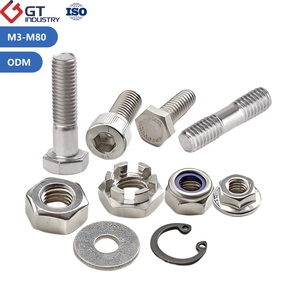
Ultra-high yield strength (120 ksi min) age-hardened bolting resisting severe hydrogen embrittlement and deep-reservoir H₂S.

Engineered for high-pressure sour gas, marine extraction, and extreme thermal cycling across Kazakhstan's downstream, midstream, and subsea pipelines.
Ultra-high yield strength (120 ksi min) age-hardened bolting resisting severe hydrogen embrittlement and deep-reservoir H₂S.
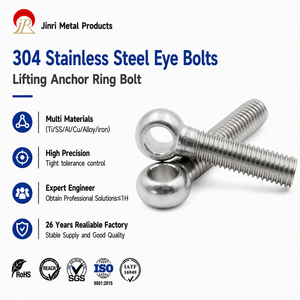
Austenitic marine-grade articulated lifting anchors designed for offshore platform modular logistics and heavy valve positioning.
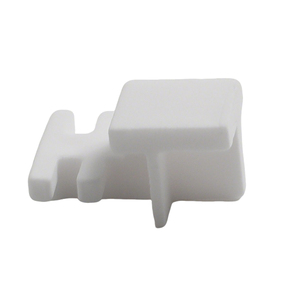
High-dielectric structural fasteners withstanding up to 1600°C in industrial furnace installations and catalytic reform heaters.
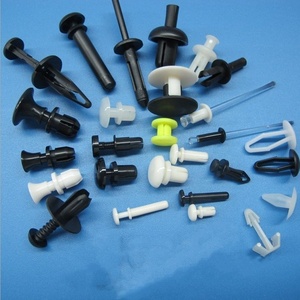
Impact-modified polyamide vibration-damped harness fixtures and clips engineered for severe transport equipment panels.
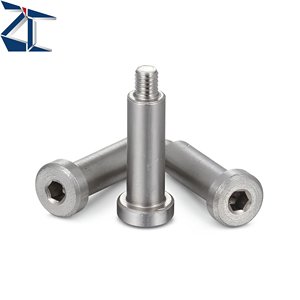
Ground concentric shaft screws ensuring tight mechanical clearances in petrochemical pump rotary assemblies and valve trims.
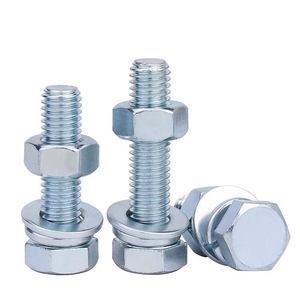
Hot-dip galvanized structural carbon steel mating hardware for industrial building arrays and heavy transport scaffolding.
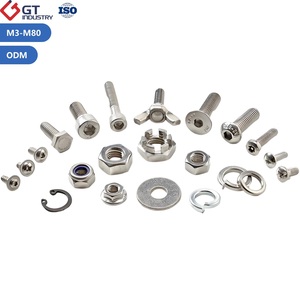
Nickel-copper fasteners resilient against hydrofluoric acid alkylation systems, brine wash towers, and marine salt encrustation.
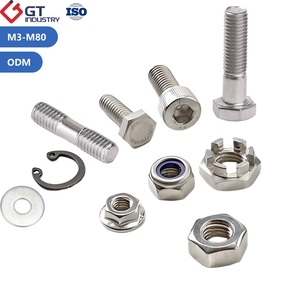
Molybdenum-rich nickel alloy bolts offering immunity to wet chlorine gas, ferric chlorides, and high-concentration sulfuric acid.
A systematic analysis of AISI 4140/4142 Chromium-Molybdenum quenched and tempered bolting material under extreme ductile-to-brittle transition temperatures (DBTT).
The operating envelope of onshore extraction fields in Western Kazakhstan (Atyrau, Mangystau, and Aktobe regions) presents one of the harshest ambient thermal spectrums globally. Winter temperatures frequently drop to −40°C to −50°C, coinciding with reservoir operating pressures reaching up to 10,000 psi (690 bar). Under such conditions, standard carbon steel bolting grades (such as ASTM A193 B7) encounter their Ductile-to-Brittle Transition Temperature (DBTT), leading to catastrophic micro-cleavage failure under transient pipeline pressure surges.
ASTM A320 Grade L7 specifically counters this brittle fracture mechanism. TorqBolt enforces strict liquid quenching from an austenitizing temperature of no less than 845°C, followed by tempering at a minimum of 593°C (1100°F). This produces an entirely tempered martensitic microstructure characterized by high impact resistance and homogeneous carbide dispersion. Each heat lot undergoes mandatory Charpy V-Notch impact testing at −101°C (−150°F), satisfying the stringent baseline of 20 ft-lbf (27 Joules) energy absorption for standard 10mm × 10mm specimens.
| Property Parameter | ASTM A320 Grade L7 (Standard) | ASTM A320 Grade L7M (Sour Service) | Test Standard Compliance |
|---|---|---|---|
| Base Chemistry | AISI 4140 / 4142 (Cr-Mo Alloy Steel) | AISI 4140 / 4142 (Controlled Carbon) | ASTM A320 / ASME SA320 |
| Minimum Yield Strength (0.2%) | 105 ksi (725 MPa) | 80 ksi (550 MPa) | ASTM A370 Tensile Verification |
| Tensile Strength Range | 125 ksi (860 MPa) min | 100 - 125 ksi (690 - 860 MPa) | ASTM E8/E8M Longitudinal Specimen |
| Charpy V-Notch Impact Test | 20 ft-lbf (27 J) min at −101°C | 15 ft-lbf (20 J) min at −101°C | ASTM E23 V-Notch 3-Specimen Average |
| Maximum Hardness Limits | 321 HBW (35 HRC) max | 235 HBW (22 HRC max - NACE MR0175) | ASTM E10 Brinell / ASTM E18 Rockwell C |
| Recommended Mating Nut | ASTM A194 Grade 7 / 7L or Grade 4 | ASTM A194 Grade 7M (100% Tested) | ASME B18.2.2 Heavy Hex Geometry |
Mapping high-strength low-temperature fastening solutions to the specific mechanical stressors of the Caspian shelf, Tengiz processing units, and trans-continental distribution manifolds.
Tengiz represents one of the deepest high-pressure supergiant fields worldwide, carrying sour gas with up to 16% hydrogen sulfide (H₂S). Fasteners deployed on Future Growth Project (FGP) wellhead manifolds and pressure vessels require ASTM A320 Grade L7M compliance with strict 22 HRC ceiling limits, suppressing sulfide stress cracking (SSC) under high reservoir drawdowns.
Located in the northern shallow waters of the Caspian Sea, Kashagan endures pack-ice dynamics alongside extreme summer-to-winter thermal excursions (−36°C to +40°C). Bolting configurations on D-Island and R-Island require PTFE fluoropolymer or hot-dip galvanized ASTM A320 L7 studs to eliminate atmospheric chloride corrosion while maintaining mechanical resilience against freezing seawater spray.
Karachaganak requires handling ultra-high pressure sour gas reinjection loops up to 550 bar. Fasteners for ASME B16.5 and B16.47 Series A flanges utilize Grade L7 studs combined with ASTM A194 Grade 7 heavy hex nuts, guaranteeing joint integrity under thermal cycling and preventing flange separation during periodic plant turnarounds.
How strict technical local content regulations, pipeline hydrogen-blending conversions, and sour service standards are reshaping Kazakhstan's procurement frameworks.
Tighter environmental enforcement across the Caspian basin necessitates 100% individual hardness testing of fastener lots. Procurement now mandates L7M grades with comprehensive metallographic documentation verifying the total absence of untempered martensite.
Joint ventures operating under Tengizchevroil (TCO), NCOC, and KPO prioritize suppliers offering direct manufacturing transparency, complete mill heat traceability, and strategic in-country stocking alliances to support Kazakhstan's localization metrics.
Modernization of the Central Asia–Center (CAC) gas trunk system involves evaluations for synthetic gas and hydrogen transportation. TorqBolt supplies low-alloy and nickel-stabilized fasteners tested specifically for sub-surface embrittlement prevention.
Harsh steppe winds generate dust abrasion on offshore and onshore installations. The adoption of Multi-layer Xylan® / PTFE fluorocarbon coatings over sacrificial zinc phosphating has replaced standard oiling to ensure accurate torque coefficients.
TorqBolt Inc. operates high-precision manufacturing centers equipped with horizontal induction forging heaters, high-speed multi-station cold heading machinery, and CNC machining centers. Unlike standard distributors, we exercise complete metallurgical control from certified raw ingot to final packaging.
Every metric ton of chromium-molybdenum steel selected for our ASTM A320 L7 production is sourced with full ladle refining, vacuum degassing, and documented heat lot identity. Our products are exported worldwide to oil majors, EPC contractors, and pressure vessel fabricators across North America, the North Sea, the Middle East, and Central Asia.
Key technical answers addressing customs clearance, GOST/EAC conformity, metallurgy, and sour service bolting requirements in Kazakhstan.
Send your project schedule, bill of materials (BOM), size distribution, and specific NACE or impact requirements to our global engineering desk for an immediate commercial proposal.
Get a Quote