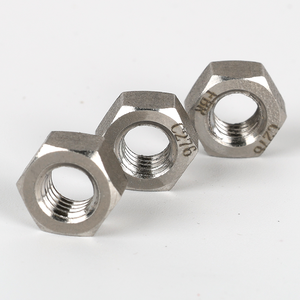
GB 6170 Hastelloy C276 Nickel-Based Alloy Hex Nuts (Tensile Strength 700 MPa)
Material: UNS N10276 / DIN W.Nr. 2.4819
Proof Load: High fatigue resistance, galling-proof

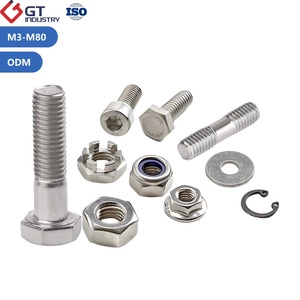
Manufactured using cold forging, hot forging, and 5-axis CNC machining routes to ASTM B574, ASME SB-574, DIN 933, DIN 934, and ISO 4014 international standards.
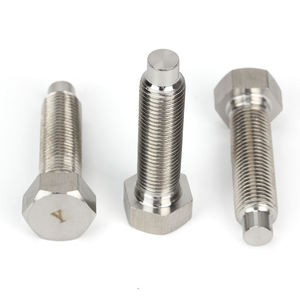
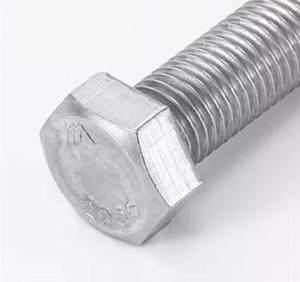
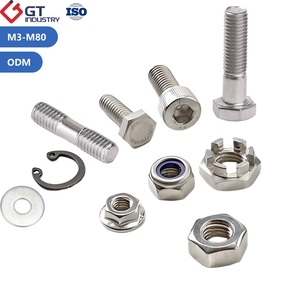
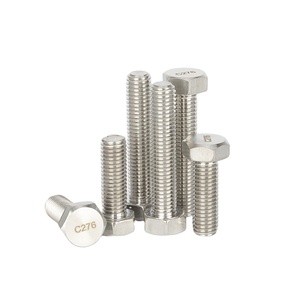
In high-reliability industrial hubs throughout the Greater Toronto Area (GTA) and southern Ontario, mechanical failure of a single pressure boundary fastener can result in catastrophic unscheduled shutdowns, hazardous environmental emissions, or regulatory intervention by the Technical Standards and Safety Authority (TSSA). Hastelloy C276 (UNS N10276 / DIN W.Nr. 2.4819) is recognized as the ultimate nickel-molybdenum-chromium superalloy engineered to eliminate localized pitting, crevice attack, and stress corrosion cracking (SCC) in aggressive halide and acid environments.
The chemical composition of Alloy C276 distinguishes itself through approximately 57% Nickel, 16% Molybdenum, 15.5% Chromium, 3.5% Tungsten, and an ultra-low Carbon content (≤ 0.010%). This precise balance suppresses the formation of grain-boundary carbide precipitates in the weld and heat-affected zones during hot-working or field welding, allowing the alloy to be deployed safely in as-formed mechanical systems. The inclusion of tungsten synergistically enhances the pitting resistance equivalent number (PREN), yielding scores consistently exceeding 68—more than double that of 316L stainless steel (approx. 25) and significantly outperforming Duplex 2205 (approx. 35).
| Alloy Grade | UNS / DIN | Yield Strength 0.2% (MPa) | Tensile Strength (MPa) | PREN Value | Critical Pitting Temp (CPT) | Primary Corrosive Media Resistance |
|---|---|---|---|---|---|---|
| Hastelloy C276 | N10276 / 2.4819 | 355 - 415 | 750 - 810 | PREN 68 - 72 | > 85 °C (185 °F) | Wet Chlorine gas, FeCl3, HCl, H2SO4, Sour Gas (H2S) |
| Inconel 625 | N06625 / 2.4856 | 460 - 520 | 880 - 930 | PREN 48 - 52 | 75 °C (167 °F) | High-temp oxidation, seawater, pitting fatigue |
| Super Duplex 2507 | S32750 / 1.4410 | 550 - 620 | 780 - 880 | PREN 42 - 45 | 65 °C (149 °F) | High mechanical chloride stress, brackish cooling |
| Monel 400 | N04400 / 2.4360 | 240 - 340 | 550 - 620 | Indicative | < 35 °C | Hydrofluoric acid (HF), rapid marine flow velocities |
| AISI 316L Stainless | S31603 / 1.4404 | 220 - 290 | 520 - 600 | PREN 23 - 25 | < 20 °C (68 °F) | Mild atmospheric moisture, organic non-halide acids |
From an applied mechanics perspective, TorqBolt manufactures C276 bolts using either cold work-hardened bars or controlled induction hot forging followed by solution heat treatment (1150 °C rapid water quench). This guarantees uniform grain refinement conforming to ASTM E112 (size 5 or finer). For high-pressure flange joints conforming to ASME B16.5 and ASME B16.47 Series A/B, rolled threading guarantees continuous grain-flow along the thread root, maximizing fatigue endurance and minimizing stress concentration under cyclic thermal loads.
How TorqBolt’s CE-certified Alloy C276 bolting supports southern Ontario’s power, chemical manufacturing, life sciences, and municipal infrastructure networks.
Southern Ontario operates one of the largest nuclear power networks in the world, with extensive life-extension initiatives at Darlington and Pickering Nuclear Generating Stations. Hastelloy C276 studs, hex nuts, and heavy fasteners are specified in auxiliary heavy-water moderator heat exchangers, boric acid delivery systems, and emergency coolant containment piping where radiation fields, high temperatures, and chemical stabilizers rule out lower-grade austenitic steels.
Toronto Water oversees massive wastewater treatment plants, including the Ashbridges Bay Treatment Plant and R.C. Harris Water Treatment Plant. The introduction of concentrated ferric chloride (FeCl3) coagulants, gaseous chlorine, and sulfur dioxide scrubbers exposes submerged bolts and duct flanges to extreme crevice corrosion. TorqBolt C276 fasteners resist localized acidic hypochlorite pitting indefinitely, eliminating recurring structural replacements.
Connecting the petrochemical plants of Chemical Valley (Sarnia) directly to distribution hubs in Mississauga, Oakville, and North York, pipeline pump terminals and sour crude distillation towers require pressure fasteners compliant with NACE MR0175 / ISO 15156. C276 studs prevent sulfide stress cracking in wet H2S gas lines and multi-product transfer manifolds operating under extreme seasonal temperature variations.
Mississauga and Toronto house one of North America’s premier biomedical corridors. Batch chemical reactors synthesizing active pharmaceutical ingredients involve concentrated hydrochloric acid catalysts and halogenated solvent mixtures. TorqBolt C276 glass-lined vessel clamping bolts, agitator flange bolts, and autoclave fasteners eliminate iron contamination and withstand intense CIP (Clean-in-Place) caustic cycles.
Ontario’s industrial decarbonization and sulfuric acid recovery units employ flue gas desulfurization (FGD) wet scrubber ductwork. The condensation of sulfurous acid and hydrochloric acid creates an aggressive low-pH dew-point environment. Fasteners fabricated from Alloy C276 ensure that expansion joints, damper valves, and duct flanges maintain structural airtightness without premature failure.
Marine logistics across the St. Lawrence Seaway and Lake Ontario encounter high humidity, de-icing salt runoff, and aggressive liquid bulk chemical loading operations. Port facilities utilize C276 marine hardware for chemical offloading arms, manifold swivel connections, and ballast pump mountings where splash-zone galvanic corrosion destroys conventional 300-series stainless hardware.
Combining world-class forging and machining facilities in Rajkot and Mumbai, India, with rapid international freight routes directly into Toronto Pearson International Airport (YYZ) and CP/CN Intermodal Terminals.
Manufactured in full compliance with European Pressure Equipment Directive 2014/68/EU Annex I Paragraph 4.3.
Every heat number undergoes rigorous X-ray fluorescence spectrometry to verify Ni, Mo, Cr, and W chemistry before cold/hot forging.
Cryogenic Charpy impact testing guarantees no brittle fracture during severe sub-zero Canadian winter freeze-thaw cycles.
Complete mill test certificates supplied with third-party witnessing options (Bureau Veritas, DNV, SGS, Lloyd's Register).
Gall resistance and controlled friction are critical when torquing superalloy bolts under sub-zero Canadian field conditions. In addition to clean passivated C276 hardware, TorqBolt provides certified surface engineering:
Addressing engineering specifications, Canadian compliance regulations, testing requirements, and cross-border delivery logistics.
Every shipment is accompanied by a certified EN 10204 3.1 Mill Test Certificate detailing chemical ladle and product analysis, heat treatment batch parameters, yield and tensile strength, elongation, reduction of area, Rockwell hardness, and Charpy V-notch impact test results. If required by your client or TSSA inspector, EN 10204 3.2 third-party inspection (witnessed by DNV, TUV, or Lloyd's Register) can be provided.
While Ontario utilizes Canadian Registration Numbers (CRN) under CSA B51, pressure equipment engineers recognize PED 2014/68/EU Annex I compliance as proof of manufacturing excellence and mechanical material verification. Because TorqBolt produces directly to ASME Section II Part B specifications (such as ASME SB-574 for Alloy C276), our technical data packages readily satisfy TSSA review standards.
Yes. As an austenitic nickel-chromium-molybdenum alloy with a face-centered cubic (FCC) crystalline matrix, Hastelloy C276 does not exhibit the ductile-to-brittle transition temperature characteristic of ferritic or martensitic steels. It retains excellent notch toughness, ductility, and impact energy down to cryogenic temperatures (-196 °C / -320 °F), completely immune to cold embrittlement in outdoor Ontario installations.
Nickel superalloys possess natural adhesion tendencies under contact pressure. To prevent thread binding or seizing, TorqBolt manufactures nuts and studs with precise thread pitch tolerances (Class 2A/2B or 6g/6H), mirror rolled-thread root finishes, and can supply mating nuts in differential hardness conditions or coated with Xylan PTFE / anti-seize dry lubricants to stabilize friction coefficients.
For standard sizes (M8–M36 or 3/8" to 1-1/2" diameter studs and heavy hex bolts), stock can be dispatched via expedited air freight directly to Toronto Pearson International Airport (YYZ) within 4–7 business days, including customs documentation. Containerized and heavy project cargo is coordinated via consolidated sea-air freight through Montreal or Vancouver intermodal rail networks.
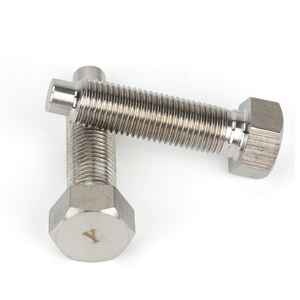
Yes. Beyond international ASME, ASTM, DIN, and ISO dimensional catalogs, our high-precision CNC multi-axis milling and turning center routinely machines custom dog-point bolts, counter-sunk socket screws, stepped studs, and oversized structural fasteners engineered for specialized proprietary pump and valve casings.
Absolutely. For refining and sour gas pipelines throughout Ontario and western export facilities, we provide Hastelloy C276 fasteners heat-treated to strict solution-annealed conditions, guaranteeing maximum hardness levels do not exceed NACE MR0175 limits (typically 35 HRC maximum for solid solution nickel alloys), ensuring resistance to sulfide stress cracking.
Fasteners are classified under Harmonized System (HS) code 7318.15 (threaded bolts, screws, and studs) and 7318.16 (nuts). TorqBolt provides all required Canadian customs invoicing (CCI), NAFTA/CUSMA transit manifests, packing lists, and Certificates of Origin to facilitate swift clearance through the Canada Border Services Agency (CBSA).
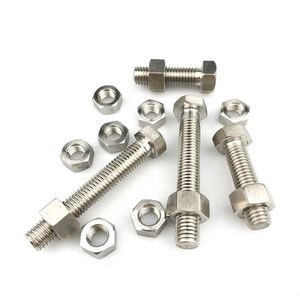
Whether you require standard ASME B18.2.1 heavy hex bolts, DIN 975 all-thread rods, or custom CNC-machined drawing components, our metallurgy and applications engineering team delivers fully documented, CE-certified bolting packages tailored to your project schedule.