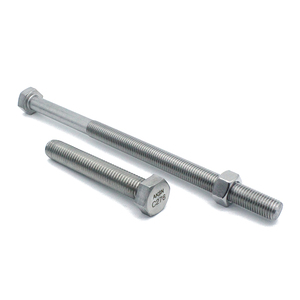
Incoloy 925 926 High Quality Alloy Steel Bolts, Valve Pipeline Joints
Grade: UNS N09925 / 1.4529 | ASME B16.5 & API 6D Bolting

Manufactured to ASTM B805, ASME B18.2.1, and DIN Standards with Complete Heat-Batch Traceability
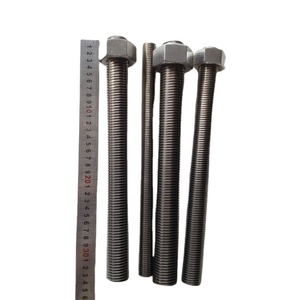
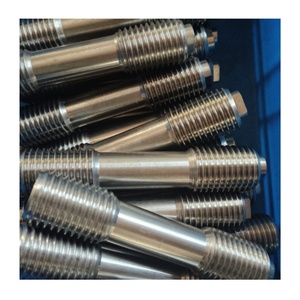
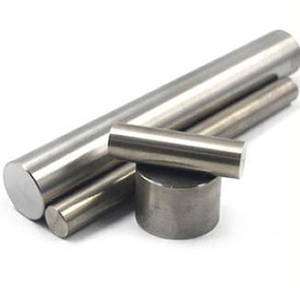
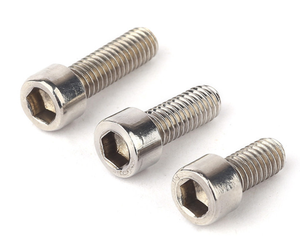
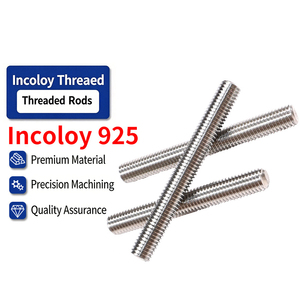
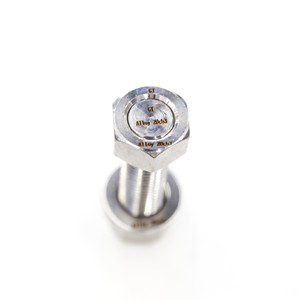
In modern extreme chemical, subsea, and energy extraction engineering, structural fastener failure is predominantly driven by galvanic phenomena, stress-corrosion cracking (SCC), and hydrogen-induced embrittlement. Standard 304 and 316-grade stainless steels lack the mechanical yield capacity and thermodynamic threshold required to survive high-temperature brine, sulfur-laden matrices, and acidic hydrocarbon extractions. Incoloy 925 (UNS N09925 / 1.4529 derivative family) is an age-hardenable, precipitation-strengthened nickel-iron-chromium superalloy expressly developed to resolve this mechanical-corrosion paradox.
Manufactured strictly to international boiler codes and European standards (CE Certified and PED 2014/68/EU Directive Compliant), Incoloy 925 contains an intricate chemistry balanced between approximately 42–46% Nickel (Ni), 19.5–22.5% Chromium (Cr), and 2.5–3.5% Molybdenum (Mo), enhanced with 1.5–3.0% Copper (Cu). The primary metallurgical advancement in Incoloy 925 over traditional solid-solution alloys like Incoloy 825 is the precise controlled addition of Titanium (1.9–2.4%) and Aluminum (0.1–0.5%). During our specialized precipitation-hardening heat treatment cycles (1365°F / 740°C aging), sub-microscopic gamma prime [γ′ - Ni3(Al, Ti)] intermetallic phases nucleate uniformly throughout the austenitic grain matrix. This mechanism yields extraordinary yield strengths up to four times greater than standard austenitic alloys while retaining superb impact toughness down to sub-zero temperatures.
| Property Designation | UNS N09925 (Incoloy 925) | Incoloy 825 (UNS N08825) | Super Duplex (UNS S32750) |
|---|---|---|---|
| Precipitation Strengthened | Yes (via Gamma Prime γ′ Ni3[Ti, Al]) | No (Solid Solution Only) | No (Two-phase Ferritic-Austenitic) |
| Tensile Strength (MPa) | 1,150 – 1,310 MPa | 690 – 850 MPa | 750 – 1,000 MPa |
| Yield Strength (0.2% Offset) | 830 – 1,050 MPa | 250 – 400 MPa | 550 – 750 MPa |
| NACE MR0175 / ISO 15156 | Fully Certified (Hardness ≤ 35 HRC) | Approved (Low Yield Only) | Conditional (Temperature Limited) |
| Max Geothermal Temperature | Up to 540°C (1000°F) | Up to 450°C (840°F) | Brittle Phase Risk > 250°C |
The Federal Democratic Republic of Ethiopia represents one of the fastest modernizing engineering corridors in Sub-Saharan Africa. The government's strategic focus on renewable green power, agricultural beneficiation, and national industrial infrastructure demands bolting hardware engineered beyond commercial catalog limits. Below are the focal localized application environments for our CE Certified Incoloy 925 fasteners across the Ethiopian territory:
Ethiopia's Great Rift Valley (including the Aluto-Langano, Corbetti, and Tendaho geothermal prospects) operates in deep, high-enthalpy geothermal wells. The extracted fluids possess extreme concentrations of hydrogen sulfide (H2S), chlorides, carbon dioxide (CO2), and volcanic siliceous muds at temperatures exceeding 300°C. Incoloy 925 stud bolts secure steam separators, turbine casings, and wellheads, resisting both sour sulfide stress cracking and catastrophic pitting.
With major agricultural megaprojects, domestic production of urea, ammonium phosphate, and sulfuric acid processing systems (such as the Yayu and Dire Dawa chemical initiatives) requires robust acid handling. Incoloy 925’s copper addition grants exceptional passivity in boiling sulfuric and phosphoric acids, ensuring process reactor flange bolts do not deteriorate between maintenance shutdowns.
Massive hydroelectric assets—symbolized by the Grand Ethiopian Renaissance Dam (GERD) and Gibe III—deploy critical submerged hydraulic gate pivots, turbine valve linkages, and high-pressure bypass lines. Incoloy 925 offers immense mechanical fatigue life combined with near-zero crevice corrosion in oxygen-depleted sub-surface aqueous zones.
Industrial procurement protocols in Ethiopia are undergoing an architectural transition. Historical dependencies on uncertified, non-traceable carbon and standard stainless hardware imported without structural verifications resulted in frequent shutdowns, hazardous fluid leaks, and costly unplanned outages across the Addis Ababa, Hawassa, and Dire Dawa industrial parks. Three fundamental procurement trends now govern industrial supply chains:
Transition to Whole-Life Cycle Costing (LCC): Major state-backed utilities like Ethiopian Electric Power (EEP) and international EPC contractors operating under AfDB and World Bank financing models have eliminated lowest-bidder models for critical flange interfaces. The catastrophic risk of wellhead or pipeline gasket failures far outweighs fastener acquisition prices. Incoloy 925's decades-long service life without localized pitting or chloride stress corrosion makes it the definitive investment for 30+ year infrastructure plans.
Stringent Third-Party Verification (EN 10204 3.2 Mandates): Ethiopian engineering consultants are now mandating absolute provenance. Hardware entering the customs corridor via the Ethio-Djibouti freight route must be accompanied by non-negotiable EN 10204 Type 3.1 or 3.2 inspection certifications endorsed by global inspection bureaus (SGS, TÜV Rheinland, Bureau Veritas). Our products guarantee heat-batch optical emission spectrometry (OES) traceability engraved directly on each fastener shank.
Forging nickel superalloys requires thermodynamic mastery. Cold-forging nickel alloys with severe work-hardening rates leads to internal micro-voids, whereas incorrect hot-forging temperatures trigger precipitation of deleterious eta (η) or sigma (σ) brittle intermetallics. TorqBolt operates cutting-edge induction-controlled forging lines combined with state-of-the-art CNC precision bar-turning centers:
Grain-Flow Optimized Thread Rolling: Rather than machining or cutting threads—which shears the austenitic grain boundaries—our heavy studs and hex bolts utilize precision hydraulic thread rolling post-solution annealing. This cold-working process induces beneficial compressive stresses into the thread roots, radically elevating fatigue strength and thread shear resistance under extreme fluctuating torque loads.
NACE MR0175 Solution Treatment and Dual-Aging: For sour-service projects requiring NACE compliance, raw bars undergo solution annealing at 1800°F (980°C) with water quenching, followed by a primary age-hardening at 1365°F (740°C) for 8 hours, furnace cooling to 1150°F (620°C), and holding for 8 hours. This precise schedule guarantees that rockwell hardness strictly complies with the ≤ 35 HRC threshold, preserving fracture toughness and resisting hydrogen embrittlement.
Certified by TÜV Rheinland for pressurized boilers, process pipework, and safety pressure boundaries.
Ultrasonic, Liquid Penetrant (DPI), Magnetic Permeability, and Optical Emission Positive Material Identification.
Xylan® / PTFE Fluoropolymer, Hot-Dip Galvanizing, Cadmium-Free Zinc Flake, and Passivated finishes.
Robust seaworthy / air-freight packaging customized for swift clearance through Ethiopian Customs Authorities.
Direct Metallurgical Answers for Piping Specialists, Project Directors, and Procurement Officers
Speak directly with our senior metallurgical engineers to review project specifications, request EN 10204 3.1/3.2 documentation, or obtain competitive delivery schedules for your job site in Ethiopia.
Contact Us