CE Certified Pickled and Passivated Fasteners Exporter & Exporters in the Mumbai Market

Engineered Surface Integrity • ASTM A380 & ASTM A967 Compliance • Direct Export Logistics via Nhava Sheva (JNPT)

100%
Free Ferrite Decontamination
Zero
Hydrogen Embrittlement Risk
EN 10204
3.1 & 3.2 Mill Certification
PED / CE
TÜV Rheinland Certified QA
Engineered Fastener Inventory

Precision Pickled & Passivated Bolting Systems

TorqBolt Inc. stocks and custom-manufactures fully pickled and passivated bolts, socket screws, and structural fasteners engineered for subsea, offshore, chemical processing, and marine applications across domestic and international markets.
Super Duplex 2507 / 254SMO Bolts for Offshore Systems
Super Duplex 2507 / 254SMO Bolts for Offshore & Pump Systems
PREN > 42, ASTM A479/A182, Nitric-HF Pickled for complete passive layer renewal in marine pump environments.
View Product Details
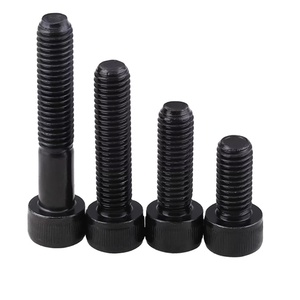
Grade 12.9 Carbon Steel Hex Socket Head Cap Screws
Grade 12.9 High-Tensile Carbon Steel Hex Socket Cap Screws
High-tensile precision Allen bolts, de-embrittled post chemical treatment, strict dimensional tolerance per ASME B18.3.
View Product Details
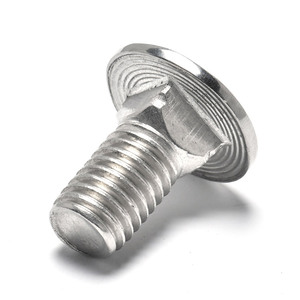
Marine Grade SUS316 Rust-Proof Carriage Bolt
Marine Grade SUS316 Rust-Proof Coastal Carriage Bolts
Passivated via Citric/Nitric baths complying with ASTM A967 to maximize chromium oxide formation in coastal marine splashezones.
View Product Details
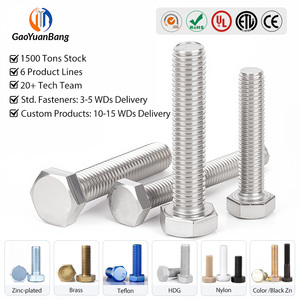
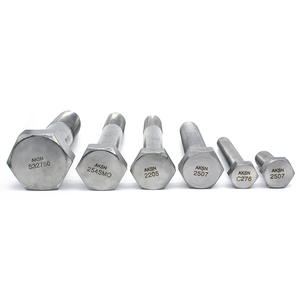
DIN933 2205 2507 Duplex Stainless Steel Hex Bolt
Corrosion Resistant DIN933 2205 / 2507 Duplex Hexagon Bolts
Full thread M6-M36 DIN 933 profile. Completely scale-free passivated surface resisting pitting in sulfide-rich sour gas units.
View Product Details
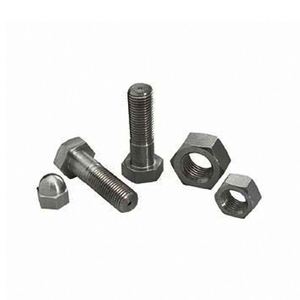
Carbon Steel Hexagon Bolts 12.9 Grade M36 Hex Bolt Hex Nut
Grade 12.9 Heavy Duty Structural Hexagon Bolts & Nuts
Heavy structural bolting sets (M32-M36) tailored for heavy plant construction, infrastructure, and high dynamic shear loading.
View Product Details
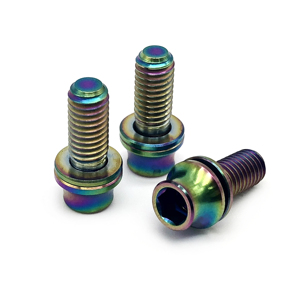
Gr5 Titanium Bicycle Hex Socket Tapered Head Cap Bolt
Grade 5 Ti-6Al-4V Titanium Lightweight Tapered Socket Screws
Ultra-lightweight, acid-pickled for titanium oxide purity. 100% bio-compatible and corrosion immune in chloride-dense environments.
View Product Details
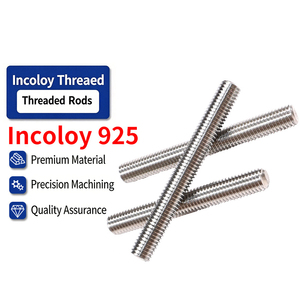
Incoloy 925 Unequal Length Double-Ended Stud Bolt
Incoloy 925 (UNS N09925) Double-Ended Studs & Threaded Rods
High-strength age-hardened nickel alloy studs pickled and passivated for deep sour gas and downhole exploration equipment.
View Product Details
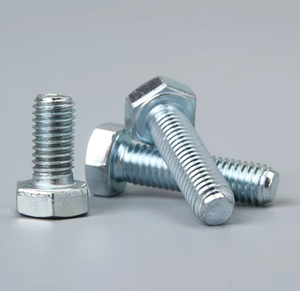
Grade 8.8 Alloy Steel Hex Head Bolts Fasteners
Zinc Plated Grade 8.8 High Strength Alloy Steel Hex Head Bolts
General industrial and construction fasteners, ISO 898-1 certified with controlled sacrificial zinc plating and passivation.
View Product Details

Metallurgical Fundamentals: Pickling and Passivation in CE-Marked Fasteners

In high-integrity industrial bolting, corrosion failure rarely stems from bulk alloy deficiency; instead, it is initiated by surface micro-contamination. During hot-heading, cold-forging, threading, and heat-treatment cycles, stainless steel, duplex, and nickel alloy fasteners accumulate embedded free iron, rolling lubricants, and high-temperature thermal scale (wüstite, magnetite, and chromite oxides). If left untreated, these impurities deplete the localized chromium concentration beneath the oxide layer, precipitating galvanic micro-cells, micro-pitting, and rapid Crevice Corrosion Cracking (CCC).

As a premier CE Certified Pickled and Passivated Fasteners Exporter based in Mumbai, TorqBolt Inc. implements a dual-stage, electrochemically balanced chemical decontamination protocol complying strictly with ASTM A380 / A380M (Standard Practice for Cleaning, Descaling, and Passivation of Stainless Steel Parts) and ASTM A967 / A967M (Chemical Passivation Treatments for Stainless Steel Parts).

1. Pickling (Chemical Descaling and Weld/Heat Scale Elimination)

Pickling involves immersing fasteners in an aqueous blend of nitric acid ($HNO_3$) and hydrofluoric acid ($HF$) or engineered sulfuric solutions. This process actively strips away 15 to 40 micrometers of the alloy's contaminated surface layer. Unlike purely abrasive shot-blasting—which can peen particulate free iron directly into the thread roots—acid pickling entirely dissolves tramp iron particles, weld tints, and chromium-depleted parent metal, restoring homogenous chemical stoichiometry.

2. Passivation (Induced Chromium-to-Iron Oxide Film Formation)

Following neutralizing rinses, fasteners undergo controlled immersion in nitric or ultra-pure citric acid solutions. Passivation does not remove metal; rather, it preferentially extracts residual elemental iron ($Fe$) atoms from the immediate surface matrix while elevating Chromium ($Cr$) and Molybdenum ($Mo$) concentration. Exposed to oxygen, this surface naturally forms an impervious, self-healing passive film of Chromium Oxide ($Cr_2O_3$) measuring 1.5 to 3.5 nanometers in thickness. This passive barrier renders the fastener noble, drastically increasing the critical pitting temperature (CPT) and critical crevice corrosion temperature (CCT).

Alloy Family & Grade Standard Treatment Specification Typical Acid Concentration & Bath Temp Passive Film Metric (Cr/Fe Ratio) Target Industry / Exposure Severity
Austenitic 316L / 317L ASTM A967 Nitric 2 / Citric 4 20-25% $HNO_3$ @ 50°C-55°C, 30 min $\ge 1.8$ Chemical Scrubbers, Coastal Railings, Food Equipment
Duplex 2205 (S32205) ASTM A380 Code D / ASTM A967 15% $HNO_3$ + 3% $HF$ @ Ambient, 20 min $\ge 2.2$ Offshore Deck Piping, Seawater Desalination Plants
Super Duplex 2507 (S32750) NORSOK M-630 / ASTM A380 Strict bath monitoring to avoid intermetallic etching $\ge 2.6$ (PREN > 42) Subsea Wellhead, Deepwater Manifolds, Marine Pumps
Inconel 625 / 718 ASTM B637 / AMS 2700 Method 1 Controlled Nitric bath with rapid alkaline neutralizer Passivated Passive Nickel-Chromium Complex Gas Turbines, Downhole Sour Wells (NACE MR0175)
Titanium Grade 2 / 5 ASTM B348 / Specialty Cleaned Nitric-HF acid pickling under zero hydrogen uptake specs $\text{TiO}_2$ Barrier Layer Aerospace Structures, Seawater Heat Exchangers

Mumbai Market Dynamics: Strategic Logistics & Industrial Applications

The Mumbai Metropolitan Region (MMR) serves as India's preeminent financial, engineering, and maritime export hub. For global and domestic EPC contractors, procuring fasteners within the Mumbai industrial corridors—stretching from the traditional trading belts of Lohar Chawl, Kalbadevi, and Khetwadi to advanced manufacturing centers in Navi Mumbai, Thane-Belapur, Taloja, and Mira-Bhayandar—yields distinct operational advantages.

1. Direct Proximity to JNPT (Nhava Sheva Port)

As the largest container gateway in India, Nhava Sheva offers containerized and LCL sailings directly to Rotterdam, Antwerp, Houston, Jebel Ali, and Singapore. Exporters in Mumbai bypass extensive domestic transit routes, mitigating transit oxidation risk, salt-air pre-exposure, and logistical delay. Certified consignments clear Indian Customs with direct port entry (DPE), arriving on European or Middle Eastern job sites within compressed turnaround times.

2. Localized Ecosystems Driving Fastener Demand

Fasteners handled in Mumbai undergo diverse service demands across domestic infrastructure and Middle East export programs:

  • Offshore Exploration (Bombay High & Western Offshore): ONGC installations, FPSO vessels, and subsea pipelines in the Arabian Sea demand UNS S31803/S32205 stud bolts passivated against marine biological fouling and micro-galvanic pitting under high-salinity wave action.
  • Refining and Petrochemical Corridors (Jamnagar, Dahej, Hazira, Trombay): Giant refineries (such as BPCL Trombay and coastal petrochemical complexes) operate under aggressive sour crude environments, requiring ASTM A193 B8M / B7M fasteners treated for hydrogen embrittlement relief and verified per NACE MR0175/ISO 15156.
  • Marine & Naval Shipbuilding (Mazagon Dock Shipbuilders Limited): Surface combatants and submarine components require non-magnetic, passivated Copper Nickel (70/30, 90/10) and high-yield stainless structural fastenings capable of resisting high hydrostatic pressure and cavitation corrosion.
  • Industrial Desalination & Effluent Plants: Coastal municipal plants throughout Western India deploy Super Duplex 2507 stud bolts to mitigate pitting in extreme high-chloride brackish brines.

Emerging Market Trends: Stricter Environmental and ESG Compliance

The fastener market in Mumbai is witnessing a massive transition. Historically, industrial cleaning in small manufacturing belts relied on hazardous open-bath nitric-HF formulations lacking emissions scrubbing or rinse-water reclamation. Modern international EPCs now mandate:

  1. Citric Acid Passivation (ASTM A967 Citric Methods): Citric acid is non-toxic, biodegradable, and approved under European REACH initiatives. Citric passivation selectively chelates iron without fuming or releasing hazardous volatile organic compounds (VOCs), providing equal or superior corrosion resistance for austenitic grades.
  2. Verification Via Automated Testing: Rather than assuming chemical passivity, buyers mandate verified test reports including Water Immersion (ASTM A967 Practice F), High Humidity Chamber testing, and Copper Sulfate Testing (ASTM A380 Practice B) to certify zero presence of free iron before packaging.
  3. Integration with CE & PED Mandates: As European buyers transition toward stricter enforcement of the Construction Products Regulation (CPR 305/2011/EU) and Pressure Equipment Directive (PED 2014/68/EU), fastener manufacturers in India must demonstrate full traceability from EN 10204 3.1 heat numbers back to the raw billet.
Manufacturing Excellence

TorqBolt Quality Architecture & Corporate Strengths

Headquartered in Mira Road East, Mumbai, with our dedicated heavy production plant in Rajkot, Gujarat, TorqBolt Inc. unifies hot-forging, machining, passivation, and mechanical testing under a singularly monitored ISO 9001:2015 umbrella.

TÜV Rheinland PED 2014/68/EU Approved

Our plant is systematically audited and accredited under European Pressure Equipment Directives. All fasteners intended for pressure vessels, boilers, and flange assemblies meet stringent European boundary requirements.

EN 10204 3.1 / 3.2 Traceability

Every shipment is delivered with comprehensive MTC documentation guaranteeing authentic raw mill origin, melt source, mechanical tensile/yield ratings, Charpy V-notch impact, and positive material identification (PMI).

Comprehensive In-House Testing Laboratory

Our quality verification suite includes optical emission spectrometry, intergranular corrosion testing (ASTM A262 Practices A, B, C, E), micro-hardness testing (Vickers/Rockwell), and cyclic salt spray chambers (ASTM B117).

Specialized Forming: Cold, Hot & CNC

We do not rely on a single process. From cold heading for high-speed repeatability to closed-die hot forging for complex nickel superalloys and high-precision CNC machining for bespoke prints, our forming routes prevent grain severance.

Sour Gas & NACE MR0175 Compliance

Fasteners destined for upstream oil & gas are specifically heat treated to ensure controlled hardness thresholds (e.g., maximum 22 HRC for standard carbon steel or 35 HRC for alloy 718), preventing catastrophic sulfide stress cracking.

Custom Packaging & Marine Export Crating

All pickled and passivated hardware is packed in vapor-corrosion-inhibiting (VCI) bags, sealed in heavy-duty poly-sleeves, and crated in fumigated ISPM-15 wooden boxes to ensure total surface protection during ocean transit.

Procurement Intelligence

Frequently Asked Questions: Sourcing Fasteners in Mumbai

Addressing essential technical, commercial, and logistical criteria for project managers, QA/QC inspectors, and purchase officers.

What is the critical technical difference between pickling and passivation for stainless fasteners? +
Pickling is an aggressive chemical cleaning process using strong acid blends (such as nitric and hydrofluoric acid) that strips the surface of thermal oxide scale, heat tint, and embedded iron contamination by etching away a microscopic layer of the parent metal. Passivation, on the other hand, is a non-destructive post-cleaning process (using nitric or citric acid) that does not alter dimensions; it selectively removes residual surface free iron while driving the formation of a robust, chromium-rich oxide film ($Cr_2O_3$) that provides primary corrosion immunity.
How does TorqBolt ensure zero hydrogen embrittlement during pickling of high-tensile fasteners (e.g., Grade 12.9)? +
High-tensile carbon steels and martensitic alloys (≥ 320 HV or 1000 MPa tensile strength) are acutely susceptible to Hydrogen Embrittlement (HE) when exposed to acid pickling baths due to atomic hydrogen absorption. For high-tensile grades like 12.9, TorqBolt implements inhibited acid baths with strictly limited immersion times, followed immediately by mandatory hydrogen de-embrittlement baking per ASTM F1940 / ISO 9588 at 190°C–220°C for a minimum of 8 to 24 hours prior to final release.
Can TorqBolt supply third-party witnessed inspection certificates (EN 10204 3.2) in Mumbai? +
Yes. While our standard shipments include comprehensive EN 10204 3.1 Mill Test Certificates traceable to original melts, we frequently coordinate EN 10204 3.2 inspection protocols through international inspection agencies situated in Mumbai, including Bureau Veritas, DNV GL, Lloyd's Register, TÜV Rheinland, SGS, and Velosi. Inspectors witness chemical verification, mechanical tensile pulls, impact tests, and surface passivity inspections.
Which specific tests verify that the passivated layer complies with ASTM A380 and ASTM A967? +
Passivity is verified using standardized non-destructive and chemical testing methods:
  • Water Immersion Test (ASTM A967 Practice F): Fasteners are immersed in distilled water for 24 hours; the absence of rust rings or discoloration confirms absence of free iron.
  • High Humidity Chamber Test: Exposure to 97%+ relative humidity at 38°C for 24–48 hours.
  • Copper Sulfate Test (ASTM A380 Practice B): Applied to austenitic stainless steels; unpassivated iron reduces copper ions, producing an immediate pink copper plate, whereas a passivated surface remains clean.
  • Potassium Ferricyanide-Nitric Acid Test: Used for rapid detection of trace iron on critical industrial components.
What are the lead times for exporting custom fasteners from Mumbai through JNPT? +
Standard catalog inventory (such as DIN 933 duplex bolts or A193 B8M studs) can be dispatched within 48 to 72 hours. For bespoke drawing-based items or exotic nickel alloys (Inconel 718, Hastelloy C276) requiring custom hot-heading, machining, solution annealing, and pickling/passivation, lead times generally range between 2 to 4 weeks. Ocean transit from Nhava Sheva (JNPT) takes approximately 18–24 days to major European ports and 4–7 days to the Middle East (Jebel Ali).
Can TorqBolt supply fasteners compliant with NACE MR0175 / ISO 15156 for offshore projects in the Mumbai High basin? +
Absolutely. Fasteners engineered for sour service duty across the Bombay High basin and export programs meet the strict metallurgical requirements of NACE MR0175 / ISO 15156. We maintain precise control over chemical composition, solution annealing parameters, and yield-to-tensile ratios, alongside automated hardness testing to guarantee values stay below NACE thresholds to eliminate sulfide stress corrosion risks.

Request Certified Pickled & Passivated Fasteners

Connect with our metallurgists and international export team in Mumbai. We provide rapid technical evaluations, custom drawings assessments, and formal quotations conforming to ASTM, DIN, ISO, and PED standards.

Inquire Now
Contact Us