Manufactured from premium vacuum-induction melted alloys, precipitation-hardened steels, and fluoropolymer-treated substrates designed for aerospace structural airframes, high-stress propulsion assemblies, and aggressive tropical environments.
Comparative mechanical overview of exotic alloys engineered in China and exported to Southeast Asian aviation, MRO, and maritime defense contractors.
Modern aerospace systems operating across the equatorial climates of Indonesia—such as those maintained at PT Dirgantara Indonesia (PTDI) in Bandung or MRO hubs in Soekarno-Hatta (CGK) and Surabaya (SUB)—encounter severe operating challenges. These include elevated humidity cycles, tropical thermal variation, high atmospheric salinity, and persistent cyclic mechanical fatigue. General-purpose industrial bolting rapidly suffers from premature stress-corrosion cracking (SCC), chloride pitting, and galling during routine maintenance disassemblies.
As a dedicated tier-1 & tier-2 manufacturing and export partner, our advanced China production facilities utilize double-vacuum melting processes—combining Vacuum Induction Melting (VIM) with Vacuum Arc Remelting (VAR)—to strictly eliminate metallurgical inclusions, gas porosity, and micro-segregation. Whether deploying superalloy Inconel 718 (AMS 5662/5663) for turbine hot-sections, precipitation-hardened 17-4 PH (AISI 630) for flight-control actuator couplings, or Titanium Grade 5 (Ti-6Al-4V) for lightweight aerodynamic airframe skin riveting, each batch complies with precise dimensional tolerances down to ±0.005mm.
| Material Designation | UNS / Spec Number | Tensile Strength Rm (MPa) | Yield Strength Rp0.2 (MPa) | Max Operating Temp | Primary Indonesian Engineering Use |
|---|---|---|---|---|---|
| Inconel 718 | UNS N07718 / AMS 5662 | ≥ 1275 - 1400 | ≥ 1030 - 1100 | 650 °C / 1200 °F | Aero-engine turbochargers, gas turbine blades, high-temp combustor mounts. |
| Titanium Gr. 5 | UNS R56400 / Ti-6Al-4V | ≥ 895 - 1000 | ≥ 828 | 400 °C / 752 °F | Weight-critical airframe brackets, wing spar fasteners, rotor hub links. |
| 17-4 PH (H900/H1150) | UNS S17400 / ASTM A564 | 930 - 1310 | 725 - 1170 | 315 °C / 600 °F | Hydraulic cylinder shafts, landing gear trunnions, flap actuation pins. |
| Incoloy 825 | UNS N08825 / ASTM B425 | ≥ 585 | ≥ 240 | 540 °C / 1000 °F | Exhaust duct bolting, fuel heat exchangers, offshore turbo-generator skids. |
| Super Duplex 2507 | UNS S32750 / EN 1.4410 | 750 - 1000 | ≥ 550 | 250 °C / 482 °F | Naval patrol vessel air-intake housings, coastal aviation fuel supply lines. |
| Alloy Steel 12.9 | ISO 898-1 / SCM435 | ≥ 1220 | ≥ 1100 | 150 °C / 302 °F | Heavy ground support equipment (GSE), hydraulic tooling jigs, engine test rigs. |
From central aerospace fabrication in West Java to commercial aviation maintenance corridors and remote industrial operations.
Supplying state-backed aircraft manufacturing initiatives with cold-headed titanium shear rivets, cadmium-alternative zinc-nickel alloy plated structural screws, and precision Inconel studs for regional commuter aircraft (NC212i, CN235) structural assemblies and wing-box joints.
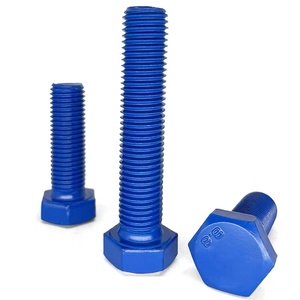
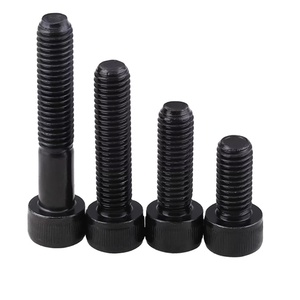
Delivering rapid-turnaround AOG (Aircraft On Ground) support parts to certified MRO workshops. Providing OEM-equivalent high-tensile socket head cap screws (Class 12.9), PTFE fluoropolymer-coated engine cradle studs, and A286 high-temperature hardware for narrow-body and wide-body airliners.
Providing exceptional saltwater immersion resistance through DIN 939 / DIN 835 studs fabricated from UNS S32750 Super Duplex and Incoloy 825. Tailored for maritime patrol helicopters, coastal radar installations, and ship-borne tethering systems exposed to heavy sea spray and tropical monsoons.
High-integrity grade 12.9 alloy steel cap screws, refractory molybdenum threaded studs, and self-locking prevailing torque hex nuts designed to maintain consistent pre-load under violent vibrational resonance encountered during aeroderivative power generation and dyno test cells.
For specialized additive manufacturing and sintering equipment in aerospace laboratory setups across Java, we provide ultra-pure 99.95% molybdenum thread studs and custom refractory fasteners capable of sustaining structural stability above 1600°C without creep or thermal distortion.
A macroeconomic and technical shift toward streamlined Asia-to-Asia aerospace supply chains under RCEP trade corridors.
Procuring proprietary European or American fasteners often results in crippling 16-to-24 week order lead times. Utilizing our modern manufacturing centers in China, standard items ship immediately from raw bar stock reserves, reaching Tanjung Priok (Jakarta) or Tanjung Perak (Surabaya) via direct ocean freight within 7 to 10 days, or 48 hours via air cargo.
Under the Regional Comprehensive Economic Partnership (RCEP) and the ASEAN-China Free Trade Area (ACFTA), Indonesian procurement departments utilize Form E certificates of origin to eliminate or drastically reduce import customs duties (BM) from 15% down to 0%-5%, drastically slashing total landed component procurement costs.
We eliminate quality disparities by adhering strictly to global technical protocols: ISO 9001:2015 certified production, TÜV Rheinland approved PED 2014/68/EU quality assurance for pressurized systems, and standard supply of EN 10204 Type 3.1 chemical-physical inspection reports with direct melt heat number traceability.
Crucial commercial, technical, and regulatory questions concerning fastener imports into Indonesia.
Yes. Every commercial batch destined for Indonesian ports (Jakarta, Surabaya, Batam, Medan) can be accompanied by an official ASEAN-China Free Trade Area Certificate of Origin (Form E). This allows your customs broker (PPJK) to claim preferential import duty exemptions, maximizing your cost savings.
Every shipment is furnished with an EN 10204 Type 3.1 Mill Test Certificate (MTC). We conduct 100% Positive Material Identification (PMI) using calibrated X-ray fluorescence (XRF) analyzers to verify chemical composition, accompanied by tensile, elongation, and micro-hardness lab test data cross-referenced directly with raw ingot melt numbers.
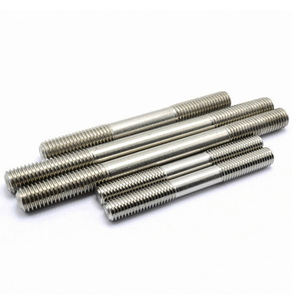
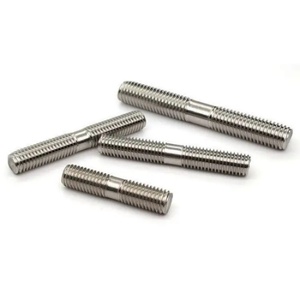
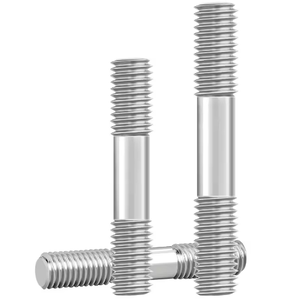
Absolutely. Beyond standard DIN, ASME, ISO, and NAS specifications, our multi-axis CNC turn-mill stations and high-speed cold-heading machines produce non-standard aerospace pins, custom tap-end double studs, and specialized hollow weight-reduction bolts based entirely on customer 2D/3D technical drawings (DWG, STEP, PDF).
For aggressive coastal marine exposure, we recommend Xylan/PTFE Fluoropolymer coatings over zinc-nickel or zinc-phosphate base layers, which easily exceed 3,000 to 5,000 hours in neutral salt spray testing (ASTM B117) without red rust, while offering a low friction coefficient (μ = 0.08 - 0.12) to completely eliminate galling during torque tightening.
Yes. We welcome third-party inspection (TPI) mandates requested by Indonesian clients. We regularly coordinate factory visits and witnessing procedures with international inspection authorities such as SGS, Bureau Veritas (BV), TÜV SÜD, and Lloyd's Register to validate dimensional tolerances, coating thickness, and packaging before dispatch.
We routinely execute shipments under FOB Shanghai/Ningbo, CIF Tanjung Priok (Jakarta), and DDP terms. Fasteners are sealed in moisture-proof VCI (Vapor Corrosion Inhibitor) bags, packaged in sturdy 25kg cartons, strapped onto ISPM 15 heat-treated fumigated wooden pallets, and wrapped in shrink stretch-film to endure tropical ocean voyages.
Combining modern metallurgical engineering, high-tonnage cold/hot forging, and rigid aerospace QA protocols.
Utilizing high-speed multi-station cold formers for structural bolts up to M30, and high-capacity induction-heated hot forging presses for high-density nickel alloys and large-diameter stud hardware up to M100+, ensuring an uninterrupted metallurgical grain flow along the bolt head fillet radius.
Unlike machined threads that shear grain lines and create micro-notches, 100% of our high-stress aerospace and turbine bolts are thread-rolled post-heat-treatment. This induces residual compressive stress at the thread root, enhancing fatigue resistance by over 300% under high cyclic flight stress.
Every fastener is degreased, chemically passivated, and individually sleeve-capped for thread protection. Shipments undergo nitrogen-flushed or silica-desiccant vacuum packaging to prevent surface oxidation, tarnish, and thread deformation during equatorial maritime transit.